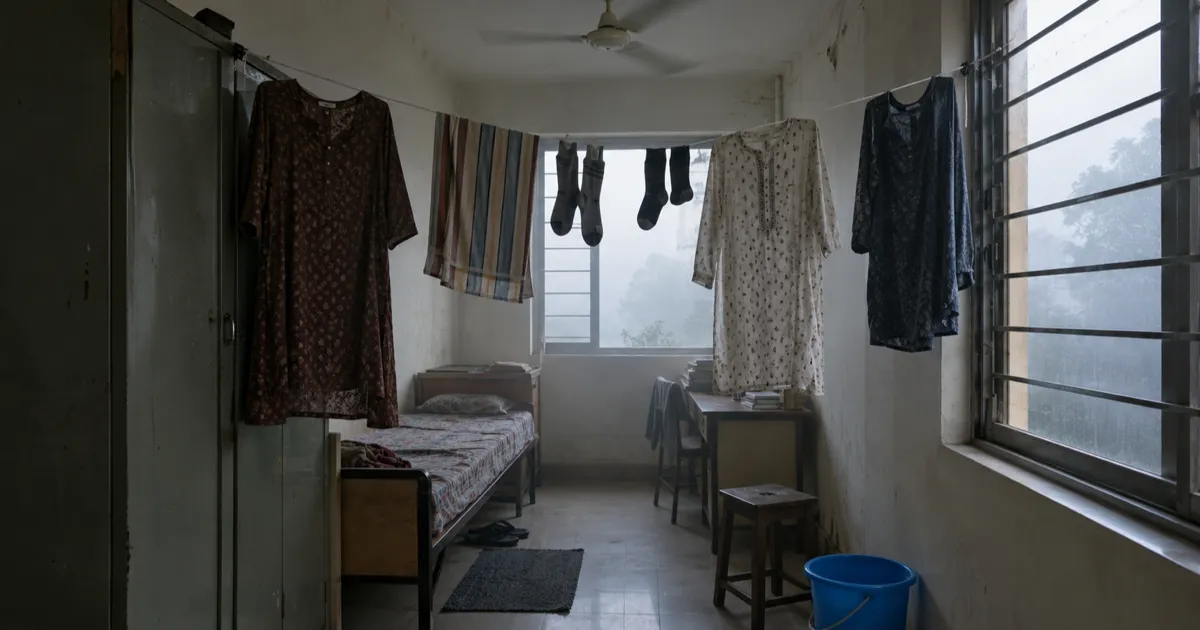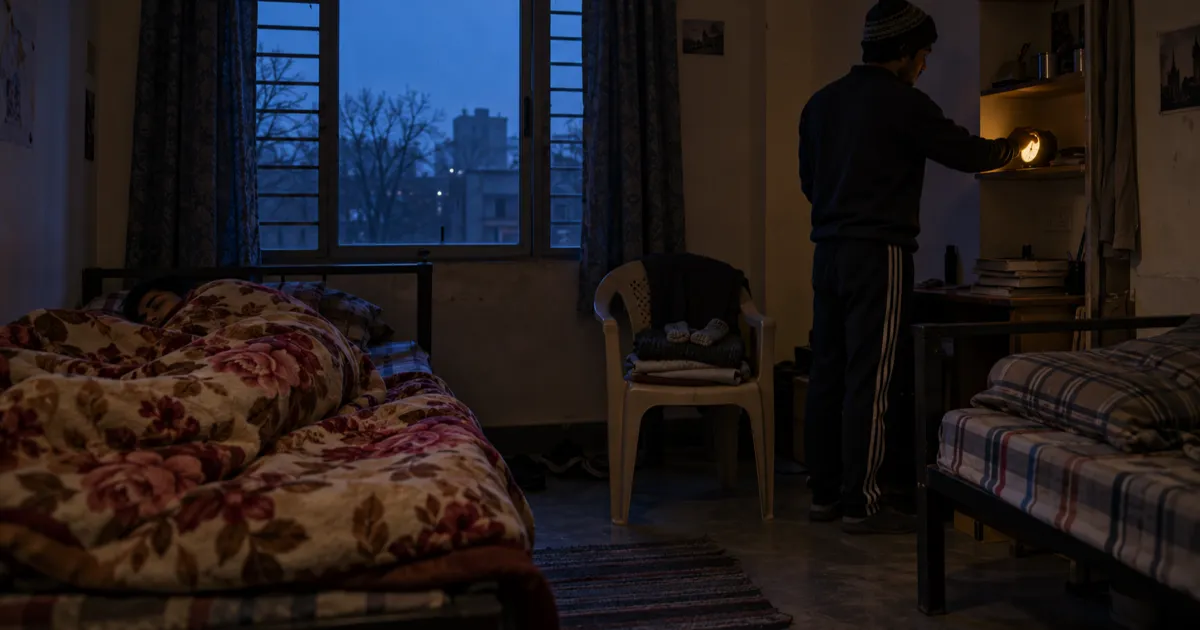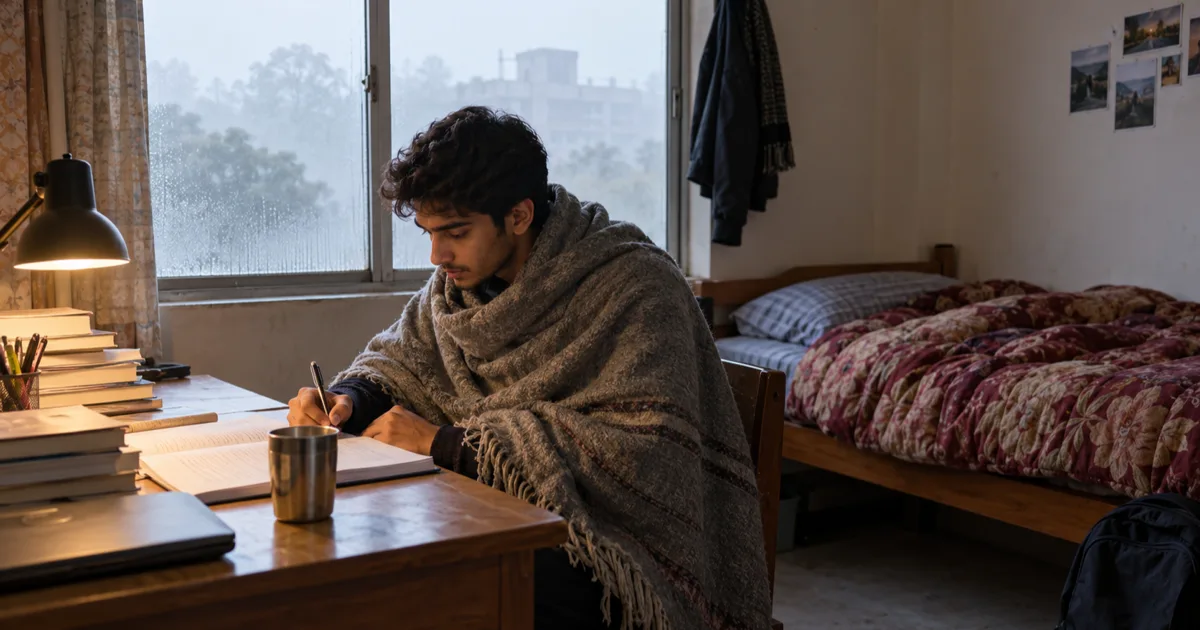
Surviving winter in a North Indian hostel comes down to three things: knowing how cold it really gets, using only the heating your hostel allows, and layering up so you need less of it. Delhi's January nights average 7.5°C at Safdarjung, and an 800W heater run 4 hours a night uses about 96 units a month. These winter hostel tips cover the cold, the rules, the real running cost and the habits that get you through to February.
We've written it for students in hostels and PGs across the cold belt, from Delhi and Jaipur to Chandigarh, Lucknow and Dehradun. If you're new to hostel living in general, our complete guide to hostel life in India covers the basics first.
| Key number | Value | Scope / data checked |
|---|---|---|
| Delhi January normal minimum | 7.5°C | Safdarjung, IMD normal, published Feb 2026 |
| Cold wave threshold (plains) | 10°C or lower and 4.5°C below normal, or 4°C or lower | IMD definition |
| Heater limit at IIT Mandi | 800W, one per room, Rs 200 a week | IIT Mandi hostel rules, Aug 2024 |
| 800W heater, 4 hours a day for 30 days | 96 units = Rs 350.40 to Rs 686.40 | Uttarakhand domestic slabs, FY 2026-27 |
| Listings that name a geyser | 13 of 25,181 | Hostel360 listings, data checked October 2026 |
How cold do North Indian hostels get in winter?
Cold enough that a single blanket won't do. IMD's climatological normal for January nights at Safdarjung in New Delhi is 7.5°C, and Jaipur's is 8.4°C. In January 2026 Delhi dropped to 2.9°C on 15 January, and IMD logged cold wave conditions on 11-15 January and again on 26 January.
The days fool people. Delhi's normal January maximum is 20.1°C and Jaipur's is 22.5°C, according to IMD, so afternoons feel mild while the room you sleep in loses heat all night. Hostel rooms make it worse: bare floors, single-glazed windows, and corridors that open straight to the outside.
It helps to know what the forecast words mean. The India Meteorological Department calls it a cold wave in the plains when the minimum temperature is 10°C or lower and 4.5°C to 6.4°C below normal, or when it falls to 4°C or below. A severe cold wave is more than 6.4°C below normal, or 2°C and below. When you see either in the forecast, that's the week to have your layers, hot-water plan and medicines sorted.
Jaipur's cold starts early, too: its December normal minimum is 9.9°C, per IMD's 1991-2020 normals for the city. Records go further still. Safdarjung's lowest January reading on record is -0.6°C, set on 16 January 1935.
Which heaters and appliances do hostels allow?
There's no national rule, so your own hostel's written rules decide. Some hostels allow a small heater for a fee, many ban heaters and immersion rods outright, and almost all confiscate banned appliances and fine the student. Read the rules, then buy, never the other way round.
Three official rule books show the range:
- IIT Mandi lets students use their own heater or blower from October to February only. It must be 800W or less, one per room, and the hostel charges Rs 200 per room per week (rules 5.2 and 5.3, hostel rules dated 1 August 2024). Its rule 10.25 forbids immersion heaters, electric stoves and irons; they're confiscated and the student is fined.
- IIT Palakkad prohibits heaters with exposed heating coils and immersion rods under rule 16 of its 2022 hostel rules, and seizes them with a fine.
- NIT Meghalaya strictly prohibits electric heaters and immersion rods under rule A.16 of its hostel rules.
PGs are usually more relaxed but often charge for it, either through a separate electricity meter or a flat winter fee. Ask the owner in writing before December. Our guide to which appliances are allowed in a hostel goes through kettles, irons and induction plates too, and how PG electricity charges work explains sub-meters and shared bills.
Whatever you're allowed, buy certified. The Bureau of Indian Standards lists room heaters (IS 302 Part 2/Sec 30) and immersion water heaters (IS 302 Part 2/Sec 201) under compulsory certification, so a genuine product carries the ISI mark. Electric blankets and heating pads joined them on 1 October 2026 under the BIS Quality Control Order 2026, so look for the ISI mark there too, along with auto shut-off and overheat protection. Our hostel fire and electrical safety guide covers safe plugs, extension boards and overloads.
How much does running a heater cost in a hostel room?
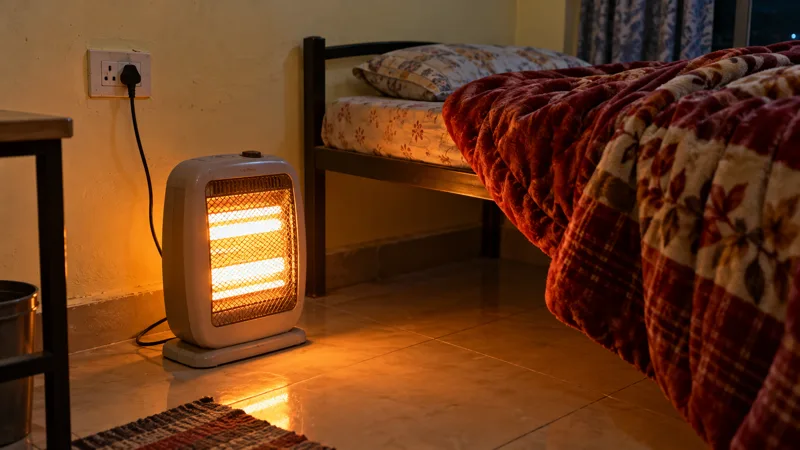
Multiply the heater's wattage by your hours, then by the per-unit tariff. An 800W heater run 4 hours a night for 30 days uses 96 units. At Uttarakhand's FY 2026-27 domestic rates, that's Rs 350.40 at the cheapest slab and Rs 686.40 at the 201-400 unit slab, before fixed charges.
Worked example: one heater, one month
Take an 800W heater, used 4 hours a night for 30 nights:
0.8 kW x 4 hours x 30 days = 96 units (kWh)
Under Uttarakhand's FY 2026-27 tariff, effective 1 April 2026, domestic energy charges are Rs 3.65 a unit for the first 100 units, Rs 5.25 for 101-200, Rs 7.15 for 201-400 and Rs 7.80 above 400. Which slab your heater's units land in depends on everything else on the same meter, and in a shared PG that's usually a lot. So the realistic range is:
- Cheapest slab: 96 x Rs 3.65 = Rs 350.40
- 201-400 slab: 96 x Rs 7.15 = Rs 686.40
Delhi works differently. Under the DERC tariff schedule effective 1 October 2021 (the latest schedule we could find), a household PG with a sanctioned load up to 5 kW is billed as domestic, and other hostels and PGs as non-domestic. Non-domestic supply up to 3 kVA costs Rs 6.00 per kVAh, so the same 96 units come to 96 x Rs 6.00 = Rs 576 before Delhi's 8% deficit and 7% pension trust surcharges. In north and north-west Delhi, Tata Power-DDL also adds a 15.99% power purchase adjustment charge from 1 May 2026.
Comparison: heater types at 4 hours a night
Wattage drives the bill, so the type of heater matters more than the brand. We worked out a month's energy cost for common heater types, using manufacturer-rated wattages from Havells' product pages and the Uttarakhand slabs above:
| Heater type (example rating) | Watts | Units a month | At Rs 3.65 | At Rs 7.15 | Fits an 800W cap? |
|---|---|---|---|---|---|
| PTC fan heater, low setting (Havells Calmy) | 600 | 72 | Rs 262.80 | Rs 514.80 | Yes, on the 600W setting |
| Halogen, middle setting (Havells Inclino) | 800 | 96 | Rs 350.40 | Rs 686.40 | Yes, on the 400W or 800W setting |
| Carbon heater (Havells Comodito) | 900 | 108 | Rs 394.20 | Rs 772.20 | No |
| Quartz heater (Havells Ember) | 1200 | 144 | Rs 525.60 | Rs 1,029.60 | No |
| Oil-filled radiator (Havells Hestio) | 2900 | 348 | Rs 1,270.20 | Rs 2,488.20 | No |
Two things stand out. First, an oil-filled radiator costs more than three and a half times as much to run as an 800W halogen, and no hostel with a wattage cap will allow one. Second, multi-setting heaters are the practical pick: a 1200W halogen or fan heater can still be used within an 800W rule on its lower settings, as long as your warden agrees. IIT Mandi's flat fee is a useful comparison: Rs 200 a week is Rs 800 for four weeks. Our guide to low-watt room heaters for a hostel room compares specific models.
How do you stay warm without breaking hostel rules?
Warm your body and your bed, not the whole room. Wear loose layers, cover your head, hands and feet, insulate the bed from below, and stop draughts at the window and door. These cost little, need no permission, and work even in hostels that ban heaters.
The National Disaster Management Authority's cold wave do's and don'ts, as circulated by Punjab's revenue department, recommend several layers of loose-fitting woollen clothing rather than one heavy layer, and covering the head, neck, hands and toes. IMD's cold wave advice adds two details: keep dry, and prefer mittens to gloves, because fingers kept together stay warmer.
Each part of the plan has its own guide in this series:
- Room: how to keep a hostel room warm without a heater, from draught-proofing to rugs.
- Bed: the best electric blankets for a single hostel bed, and whether a hot water bag, electric heating bag or heating pad suits you better.
- Hot water: if your hostel allows them, how to use an immersion rod safely in a hostel.
- Clothes: a city-by-city winter clothes list for hostel, and how to dry clothes in winter in a hostel room when there's no sun.
- Routine: how to wake up early in winter and still make an 8 AM class.
Listings rarely tell you about heating. Only 13 of the 25,181 hostels and PGs on Hostel360 (data checked October 2026) name a geyser as an amenity, which says more about how owners describe rooms than about what they have. Ask directly about geysers, heater rules and winter electricity charges before you pay a deposit.
How do you stay healthy through a hostel winter?
Keep warm, keep dry and keep air moving. NDMA's cold wave advisory warns never to burn coal indoors, because a closed room can fill with carbon monoxide, and to treat shivering as an early sign of hypothermia. Hot drinks help; alcohol doesn't.
Coal angithis still turn up in old hostels and PG rooms each winter. Don't use one in a closed room, and don't let a roommate, however cold it gets. NDMA's advisory also recommends hot fluids and avoiding alcohol, which makes you feel warmer while your body loses heat faster.
Shared rooms spread colds and flu quickly in winter. Our guide to staying healthy in a hostel covers food, sleep and hygiene, and if you do go down with something, read what to do when you fall sick in a hostel. Monsoon brings its own set of problems; the habits in our monsoon hostel survival tips about damp and drying carry over to foggy winter weeks.
What should you sort out before December?
Use October and November, while it's still mild, to get answers in writing: whether heaters are allowed and at what wattage, how winter electricity is charged, and whether there's hot water in the mornings. Then buy what the rules allow, with the ISI mark where it's required, and pack the layers from our winter clothes list for hostel.
If you're still choosing where to live, the winter answers are worth comparing between options. Our guides to the best student areas in Delhi, Jaipur and Chandigarh show where students live in each city. On Hostel360 (data checked October 2026) there are 2,007 PGs and hostels in Delhi, 2,313 in Jaipur and 521 in Chandigarh.