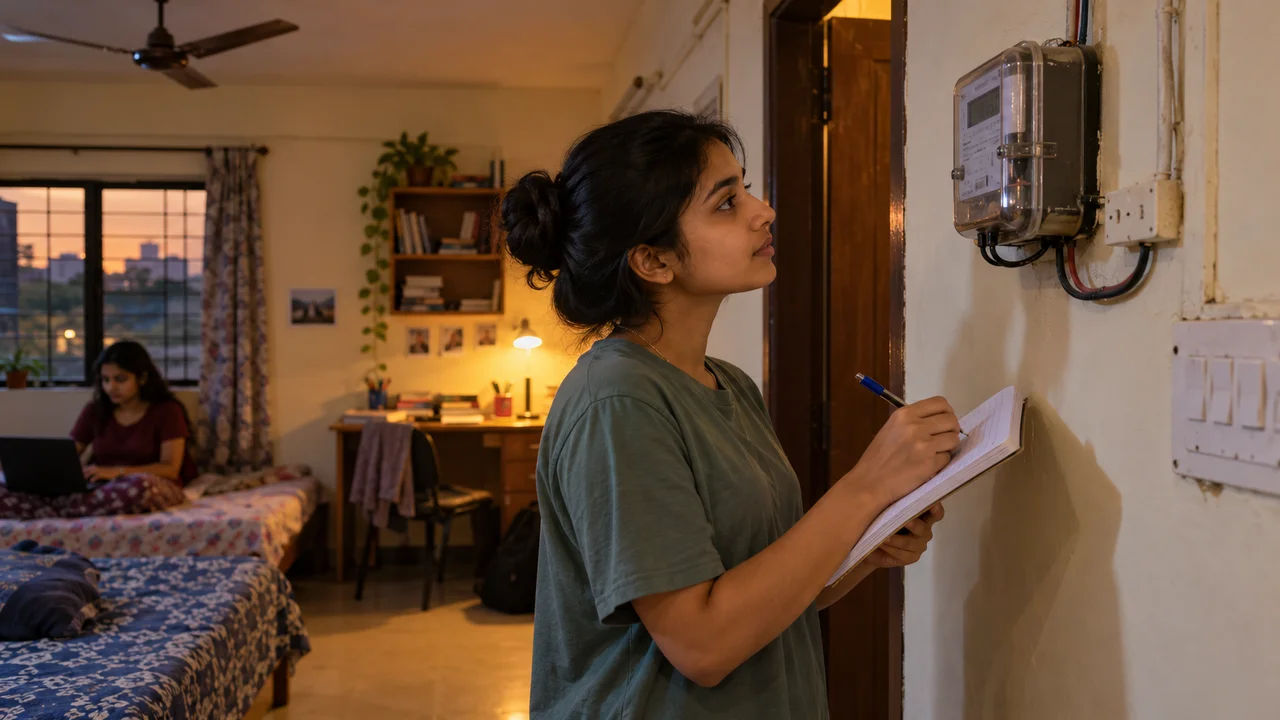
PG electricity charges are usually billed in one of four ways: included in rent, a fixed monthly add-on, a per-unit rate on a sub-meter, or a split of the building's main bill. There's no single national rule that sets what a PG owner can charge per unit, so the rate you agree in writing is what protects you. This guide walks you through how per-unit billing works, what to ask before you sign, and how to check every electricity bill in PG accommodation against real meter readings. For the wider picture of what the law does and doesn't cover, read our explainer on the rights PG and hostel residents actually have in India.
Nothing here is legal or tax advice: how a PG can bill you for power differs by state, by electricity provider and by what your own agreement says.
Key Takeaways
- Ask which billing model your PG uses (included, fixed, per-unit or split) before you pay any deposit.
- Get the per-unit rate, the split rule and the reading date written into your agreement or receipt.
- Photograph the sub-meter on move-in day and on every billing date so you can check your share yourself.
- In the Tata Power-DDL area of Delhi, tenants can get their own prepaid meter without a landlord NOC; elsewhere, check your local provider.
- No general per-unit cap has been verified for PGs, so practices vary and your written terms matter most.
How do PGs charge for electricity?
PGs generally use one of four models, and each one puts the risk on a different person. If electricity is included in rent, the owner carries the cost of heavy use. With a per-unit sub-meter, you pay for what your room actually uses. The table below sets out what to check for each.
| Billing model | How it works | What to check |
|---|---|---|
| Included in rent | One monthly amount covers rent and power | Whether AC, heaters or other appliances carry an extra charge |
| Fixed add-on | A flat electricity fee on top of rent | Whether the fee can change mid-stay, and with how much notice |
| Per-unit sub-meter | Your room's units multiplied by an agreed rate | The rate, the reading date and how units are split between roommates |
| Split of main bill | The building's bill divided among residents | The formula used and whether common areas are included |
Per-unit billing is the most transparent model when it's done properly, because you can check it. It's also the one that causes the most disputes when the rate or the split isn't written down.
Step 1: Ask which billing model applies before you pay
By the end of this step, you'll know exactly how electricity will be billed, before any money changes hands. Owners often treat electricity as a house rule rather than a rent term, so it may not come up unless you ask. Our guide to standard PG rules and regulations covers the other house rules worth clarifying at the same visit.
- Ask whether electricity is included, fixed, per-unit or a split of the main bill.
- If it's per-unit, ask to see the sub-meter for your room.
- Ask whether AC or room heaters are billed differently.
- Ask on which date each month the meter is read.
You've finished this step when you can explain the billing method in one sentence to a roommate.
Step 2: Get the per-unit rate and split rule in writing
A written rate is the strongest protection you have, because no general cap on PG per-unit charges has been verified. Practices vary from owner to owner and city to city. If the owner quotes a rate verbally, ask for it on the agreement, the rent receipt or at least a message you can save.
Written terms also line up with where tenancy law is heading. The PRS Legislative Research summary of the Model Tenancy Act 2021 notes that the Act requires a written agreement intimated to a Rent Authority, but it's a model law that binds only the states that adopt it. Don't assume it applies where you live.
Your written terms should cover:
- The per-unit rate, or the formula used to split the main bill
- How units are shared between roommates on one sub-meter
- The monthly reading date and when payment is due
- How much notice you'll get if the rate changes
Step 3: Record the meter reading on move-in and every month
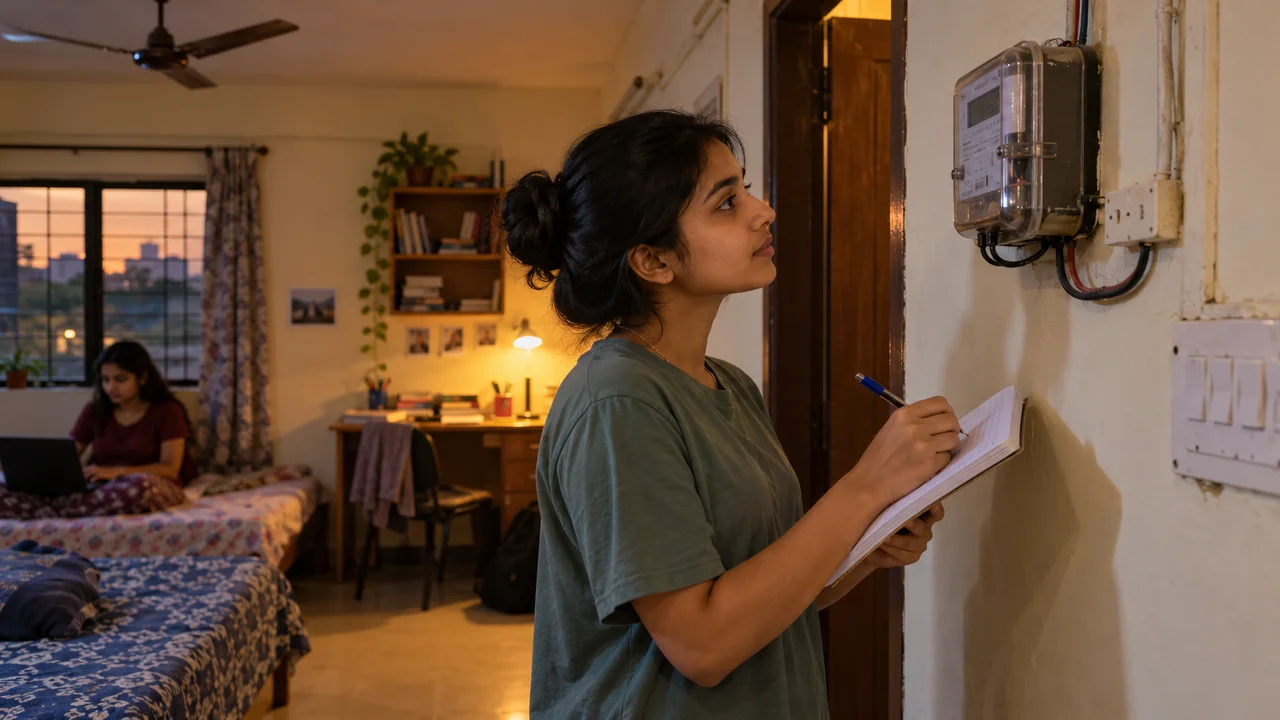
Your own dated photos of the sub-meter turn a billing argument into simple arithmetic. Without them, you're relying on the owner's numbers alone.
- Photograph the sub-meter on move-in day, with the date visible on your phone.
- Take another photo on each billing date the owner gave you.
- Keep the photos in one album and note the reading in a shared note with roommates.
- Photograph it again on move-out day, before the final settlement.
The move-out reading matters most, because electricity dues are often adjusted against the deposit at the end of a stay.
Step 4: Check your share against the bill
Your share should equal this month's reading minus last month's reading, multiplied by the agreed rate, then split by the agreed rule. If the figure the owner asks for is different, ask how it was worked out.
- Subtract the previous reading from the current one to get units used.
- Multiply by the written per-unit rate.
- Divide between roommates using the agreed split.
- For a main-bill split, ask to see the provider's bill for the same period.
Raise any mismatch politely and in writing, with your photos attached. Keep billing disputes separate from personal ones. If a disagreement with seniors in a student PG turns into intimidation, that's a different issue, and our guide to the anti ragging helpline number and complaint process explains where to report it.
Step 5: Know when you can get your own meter
In some areas, a tenant can apply for a separate meter in their own name, but this depends entirely on the electricity provider. Delhi's Tata Power-DDL area is one documented example.
According to the Tata Power-DDL prepaid tenant FAQ, a tenant can get their own prepaid meter with a rent agreement or a recent rent receipt plus ID, without a landlord NOC. Domestic tariff applies, and the security deposit is Rs 3,000. This applies only in the TPDDL area of Delhi. Other providers set their own rules, so check with yours before you plan around it.
A bill in your own name has a side benefit. The UIDAI list of supporting documents accepts utility bills no older than 3 months as address proof. It also accepts a rent, lease or leave-and-licence agreement, registered or unregistered, which helps if the PG bill stays in the owner's name.
Common mistakes to avoid
The most common mistake is agreeing to "electricity extra" without a rate. It sounds harmless during a room visit, but it leaves the per-unit charge open to change. Ask for the number and write it down.
Skipping the move-in reading. Students often settle in first and remember the meter weeks later. By then, you can't separate your units from the previous occupant's. Take the photo on day one.
Running heavy appliances on weak wiring. Heaters, kettles and extension boards push up both the bill and the risk. Our guide to hostel fire safety and electrical safety in PGs covers what to check in your room's sockets and wiring.
Paying in cash with no receipt. Without a record, you can't prove what you've already paid at move-out. Ask for a receipt that lists electricity separately from rent.
Bottom line
Per-unit billing is fair when the rate is written down and both sides can see the meter. Agree the model and the rate before you pay, photograph the sub-meter every month, and check your share with simple arithmetic. Where your provider allows it, a meter in your own name removes the guesswork. This article is general information, not legal or tax advice, so check your state's rules and your own agreement before acting on any dispute.
Since electricity dues often get settled at move-out, it's worth reading up on how PG notice periods and lock-ins work, and if you're in a college hostel instead, the UGC position on hostel fee refunds covers what you can get back.