PG owner harassment, including walking into your room without warning, is not something you have to accept: entering a dwelling to intimidate or annoy you is house-trespass under the Bharatiya Nyaya Sanhita, and threats, stalking and sexual harassment are separate crimes. The fair standard for a planned entry is 24 hours' written notice, in daylight, with a stated reason. Below: where the line sits, which law applies, and how to complain.
For other problems, such as bad food or a fire hazard, start with our overview of where to file a PG or hostel complaint. This post covers privacy, intimidation and harassment by an owner, warden or staff.
| Key number | Value | Scope / data checked |
|---|---|---|
| Notice before a planned entry | At least 24 hours, in writing or electronic | Model Tenancy Act 2021, section 17 (applies only where a state has adopted it) |
| House-trespass | Up to 1 year, fine up to Rs 5,000, or both | BNS 2023, section 329(4), October 2026 |
| Criminal intimidation | Up to 2 years; up to 7 years for threats of death or grievous hurt | BNS 2023, section 351(2) and 351(3) |
| Voyeurism, first conviction | 1 to 3 years and fine | BNS 2023, section 77 |
| NCW complaint window | Within 1 year of the incident | NCW complaint instructions, October 2026 |
Can a PG owner enter your room without permission?
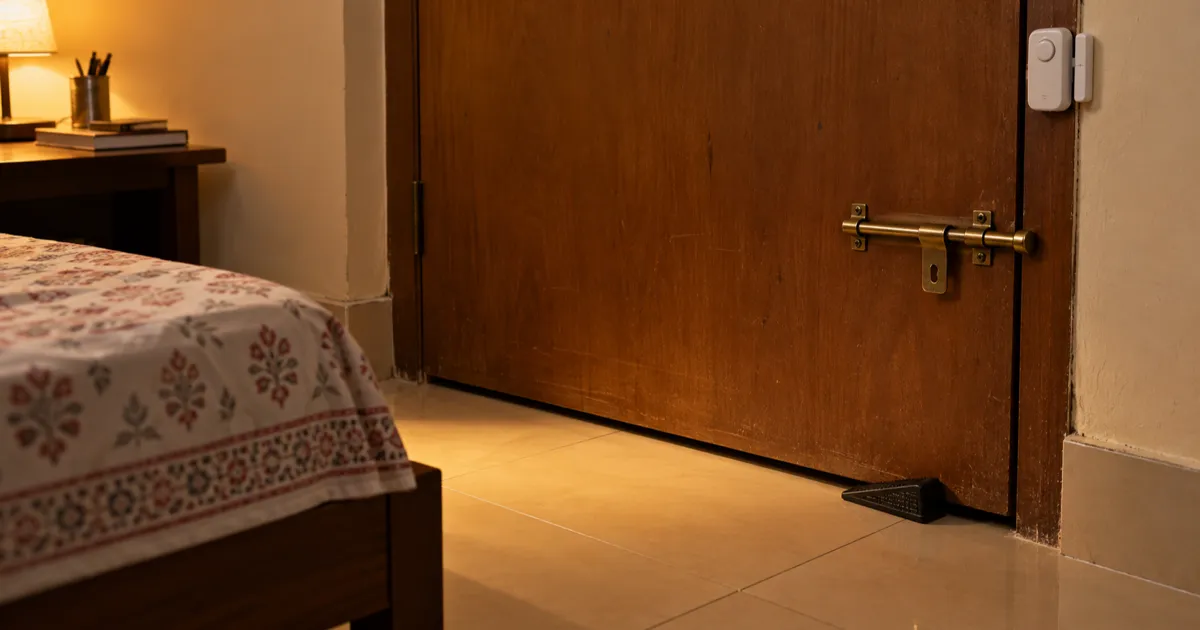
Only for a real reason and, outside emergencies, with advance notice. No central law sets a specific PG entry rule, but the Model Tenancy Act gives a fair benchmark: written notice at least 24 hours ahead, naming the day, time and reason, and no entry between sunset and sunrise. Your agreement may add its own rule.
Section 17 of the Model Tenancy Act, 2021 (MoHUA text, archived copy) allows a landlord or property manager to enter for three purposes: repairs, an inspection of whether the place is habitable, or another reasonable cause written into the agreement. Fire, flood, earthquake and similar emergencies need no notice at all.
Here is how the timing works in practice. Say the owner sends a WhatsApp message at 9:30 PM on Monday saying the plumber will check your bathroom. Twenty-four hours later is 9:30 PM on Tuesday, which is after sunset. The earliest entry that meets the standard is therefore Wednesday morning, after sunrise. A knock at 7 AM on Tuesday does not meet it.
The honest catch: PG licence vs tenancy
The Model Tenancy Act is a model law. It binds nobody until a state passes its own version. According to a PIB release on a Rajya Sabha reply of 25 July 2022, the Centre circulated it on 7 June 2021, and by July 2022 Andhra Pradesh, Tamil Nadu, Uttar Pradesh and Assam had revised their tenancy laws on its lines. Other states still run older rent laws, and the details differ by state.
Even where it applies, the Act's definition of "premises" leaves out hotels, lodging houses, dharamshalas and inns. Many PGs offer a shared room, meals and house rules under an agreement written as a licence to stay, not a lease, which may sit outside tenancy law altogether. So treat the 24-hour rule as a standard to ask for and write into your agreement. Our checklist on what to check in a PG rental agreement covers that clause.
What does not change with paperwork is criminal law. Trespass, threats, stalking, voyeurism and sexual harassment are offences whether you hold a lease, a licence or nothing in writing.
Which laws cover PG owner harassment in India?
The Bharatiya Nyaya Sanhita, 2023 covers it. Entering your room to intimidate or annoy you is house-trespass (section 329). Threats are criminal intimidation (section 351). Unwelcome sexual remarks or advances, secret filming, repeated unwanted contact and intruding on a woman's privacy fall under sections 75, 77, 78 and 79.
Most PG owner harassment fits one of six offences. Section numbers and penalties below come from the BNS text published by the Ministry of Home Affairs. The cognizable column comes from the First Schedule of the Bharatiya Nagarik Suraksha Sanhita, 2023. Cognizable means police must register an FIR; non-cognizable means they note it and send you to a Magistrate.
| What happened | BNS section | Maximum punishment | Police can register FIR directly? |
|---|---|---|---|
| Owner or staff walks in to scare, insult or annoy you | 329(2), 329(4) house-trespass | 1 year, fine up to Rs 5,000, or both | Yes, cognizable |
| Threats to throw out your things, hurt you or "ruin your name" to force payment or silence | 351(2) criminal intimidation | 2 years, fine, or both (7 years for threats of death or grievous hurt) | No, non-cognizable |
| Sexual remarks, demands or unwelcome touching (by a man, against a woman) | 75 | 3 years rigorous imprisonment (1 year for remarks), fine, or both | Yes |
| Hidden camera or watching a woman bathe or change | 77 voyeurism | 1 to 3 years and fine, first conviction | Yes |
| Following a woman, repeated calls after she said no, checking her messages | 78 stalking | 3 years and fine, first conviction | Yes |
| Words, gestures or intruding on a woman's privacy to insult her modesty | 79 | 3 years simple imprisonment and fine | Yes |
Two points keep this practical. First, intent matters: section 329 needs entry "with intent to commit an offence or to intimidate, insult or annoy". An owner who lets in an electrician after telling you is not trespassing, while one who comes in at midnight to shout about rent may well be. Second, sections 75 to 79 protect women. Male residents facing threats or forced entry rely on sections 329 and 351, which cover anyone.
What if the owner uses rent or utilities as pressure?
A rent increase on its own is a money dispute, not a crime, and it should follow your agreement. It becomes harassment when it comes with threats, a locked door or cut water and power. Handle the rent through a written dispute or consumer complaint, and the threats through the police.
Under sections 9 and 10 of the Model Tenancy Act, rent is revised as the agreement says, and a Rent Authority can settle disputes. Section 20 bars a landlord from withholding an essential supply or service. The Rent Authority can order it restored at once, must finish its inquiry within one month, and can award compensation of up to two months' rent. On a monthly rent of Rs 9,500, that ceiling is Rs 9,500 x 2 = Rs 19,000. Again, this route exists only where your state has a law on those lines and your PG counts as rented premises.
For most PG residents, a sudden mid-stay hike is better fought as a service dispute. Our guide to filing a consumer complaint against a PG or hostel online walks through that. If the pressure turns into a lockout or your bags on the street, read what to do if you are evicted from a PG without notice first.
How do you file a complaint against a PG owner for harassment?
Collect evidence first, then go to the police for anything criminal: you can report a cognizable offence at any police station, orally or electronically, and get a free FIR copy. Women can also complain to the National Commission for Women online. Keep the dates in mind, because time limits run from the incident.
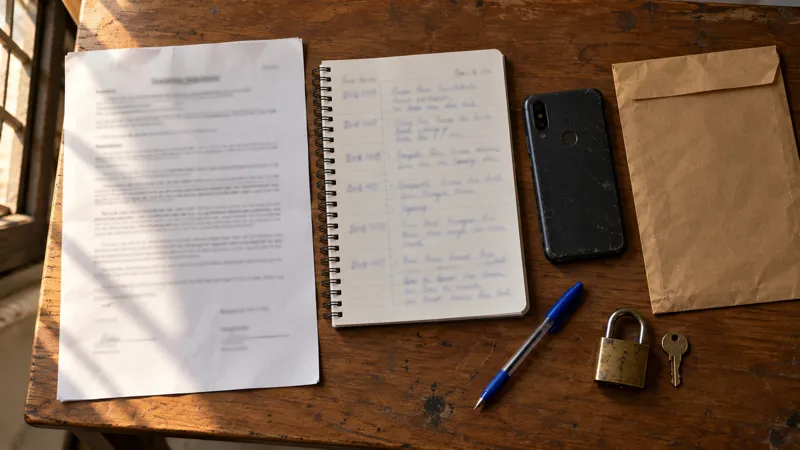
What to collect as evidence
- A dated note of each incident: time, who entered, what was said, who else saw it.
- Screenshots of WhatsApp messages, calls and any "notice" the owner sent, with dates visible.
- Photos of the door, lock or any device you found, taken without touching it.
- Names and phone numbers of roommates or neighbours who witnessed it.
- Your rent receipts, agreement and payment records, to answer any "unpaid rent" counter-claim.
The filing steps
- In danger now, call 112. It is the single emergency number listed on the NCW helplines page. Women can also call the 181 helpline listed by the Ministry of Women and Child Development.
- Report at the police station. Section 173(1) of the BNSS lets you give information about a cognizable offence orally or electronically, "irrespective of the area" where it happened. If you report electronically, sign it within three days. A woman reporting an offence under BNS sections 75 to 79 has her statement recorded by a woman officer.
- Take your free FIR copy. Section 173(2) says the copy goes to you "forthwith, free of cost".
- If the station refuses, send the written facts by post to the Superintendent of Police under section 173(4). Keep the postal receipt.
- For intimidation alone, which is non-cognizable, the officer records it and refers you to the Magistrate under section 174. A lawyer or legal aid clinic can help you file the Magistrate complaint.
- Women: add an NCW complaint. Register on the NCW complaints portal. You get a complaint number and login to track it, and NCW can follow up with the police.
For city-specific police and civic routes, see our guides to complaining about a PG owner in Bangalore and complaining about a PG owner in Delhi.
| Where to go | When to use it | How to file | Fee | Time limit |
|---|---|---|---|---|
| Police emergency | Danger right now | Call 112 | No fee | Pan-India emergency line |
| Police station (FIR) | House-trespass, stalking, voyeurism, sexual harassment | Any station, orally or electronically (BNSS 173) | FIR copy free | 1 year for offences up to 1 year, 3 years for offences up to 3 years (BNSS 514) |
| Superintendent of Police | Station refused to register | Written complaint by post (BNSS 173(4)) | Postage only | No fixed response time in the statute |
| Magistrate | Criminal intimidation (non-cognizable) | Complaint before Magistrate (BNSS 174, 223) | No fee in BNSS text; check your state's court fee rules | 3 years for offences up to 3 years (BNSS 514) |
| National Commission for Women | Harassment, stalking, voyeurism of women; police apathy | Online portal, post or by hand; helpline 14490 | None stated on the portal | Will not inquire after 1 year; acknowledgment with complaint number on acceptance |
Counting your deadline
Section 514 of the BNSS counts the limit to the day you file the complaint or the police record the information. Take an incident on 20 November 2026. House-trespass carries up to one year, so the limit is one year: 20 November 2027. Criminal intimidation under section 351(2) carries up to two years, so the limit is three years: 20 November 2029. The NCW window is also one year, to 20 November 2027. Waiting is never wise, though: evidence fades and roommates move out.
What to do tonight if it is happening now
If someone has entered or threatened you tonight, move to a common area or a friend's room, call 112 if you feel unsafe, and write down what happened. Then message the owner once, politely, asking for the entry rule in writing: that message becomes evidence either way. Before your next move, use our girls hostel safety checklist to judge a new place, and our ideas for privacy in a shared hostel room to protect your space where you are. PG owner harassment is easier to stop early, while your notes and messages are fresh. Every harassment case turns on its own facts, so this is general information and not legal advice; a lawyer, or your district legal services authority through the NALSA helpline 15100, can advise on yours.