Being evicted from PG without notice is rarely lawful: even as a licensee, you are owed your agreement's notice period and a reasonable time to leave with your belongings. If the owner locks you out, holds your things or cuts power, go to the police that night, then to a civil court or consumer commission. Below: the first night, the criminal sections, and the deadlines worked out.
If your problem is not a lockout, start with our guide on where to file a PG or hostel complaint, which maps each type of problem to the right office.
| Key number | Value | Scope / data checked |
|---|---|---|
| Deadline to sue for possession | 6 months from dispossession | Specific Relief Act 1963, s.6(2), October 2026 |
| Deadline for a consumer complaint | 2 years from cause of action | Consumer Protection Act 2019, s.69 |
| Consumer filing fee, claims up to Rs 5 lakh | Nil | Commission rules fee table, amended August 2023 |
| Wrongful confinement (locked in) | Up to 1 year, or fine up to Rs 5,000 | BNS 2023, s.127(2) |
| Cap on compensation for cut supply | 2 months' rent | Model Tenancy Act 2021, s.20, only where a state has adopted it |
Is being evicted from PG without notice legal?
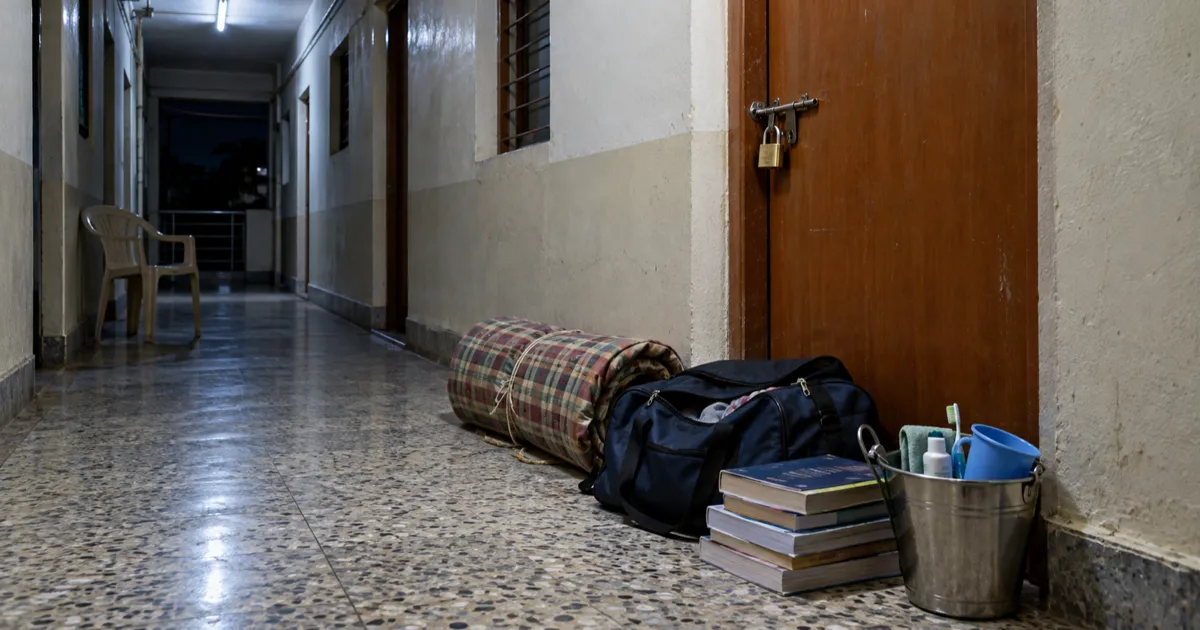
Rarely. A PG owner can usually end your stay, because most PG arrangements are licences, but only on the notice your agreement sets. Even after a licence ends, the law gives you a reasonable time to leave and to remove your goods. A padlock on your door at 10 PM with no warning meets neither test.
Under section 52 of the Indian Easements Act, 1882, a licence is permission to use someone's property that gives you no interest in it. The Act has not been extended to every state, but courts elsewhere have generally applied the same licence principles. So a PG resident has fewer rights than a flat tenant (our explainer on which laws actually protect PG residents goes deeper), but the same Act still protects you twice:
- Section 63: when a licence is revoked, the licensee gets a reasonable time to leave and to remove goods they were allowed to bring in. Throwing your bags onto the street does not fit that.
- Section 64: if you paid for the licence and are evicted through no fault of your own before you have had what you paid for, you can recover compensation from the owner.
Your agreement is the other half: read its notice clause and any reasons it lists for immediate termination. With no written agreement, your payment trail and the PG's rules sheet show what was promised. Our checklist of what to check in a PG rental agreement flags these clauses.
The Model Tenancy Act, 2021 is often quoted online, but PRS notes the Union Cabinet approved it on 2 June 2021 only as a model for states to adopt. Section 21 of MoHUA's Model Act text bars eviction mid-tenancy without a Rent Court order, yet section 2(d) excludes lodging houses from "premises". Coverage depends on your state's law and how your PG runs.
What should you do on the night of a lockout?
Stay safe first, then build a record. Do not break the lock or force your way in. Ask the owner, in writing, to open the room. If you are threatened, locked inside, or watching your things being carried off, call 112. Photograph everything, get witnesses' numbers, and find a safe place to sleep before you argue.
112 is the single nationwide emergency number under MHA's Emergency Response Support System. Use it for an active threat, not a rent argument. In order:
- Get out of danger. If staff are blocking a door or getting physical, or you are locked inside, call 112 first.
- Do not break the lock. It hands the owner a counter-complaint and muddies a clean case.
- Send one calm written message. WhatsApp and SMS both: "My room was locked at [time] on [date] without notice. My belongings are inside. Please open it or tell me in writing why." Screenshot the reply, or the silence.
- Record the scene and witnesses. A short video of the padlock, door number and any bags thrown out, plus names and numbers of roommates or the guard.
- Sleep somewhere safe. A friend, a relative, or ask your college hostel for an emergency bed.
What to collect as evidence
- Your agreement, rules sheet or listing screenshot showing the notice period
- Proof of every payment: UPI history, receipts
- Photos and video of the lock and any belongings outside
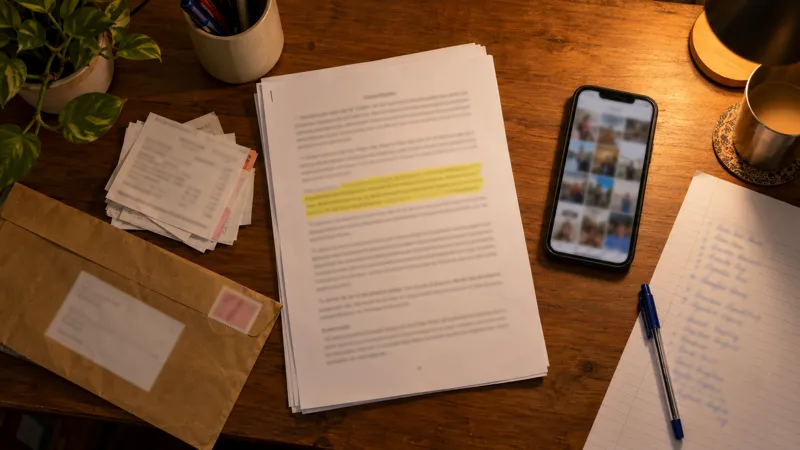
- A list of everything inside, with rough values and bills (laptop, certificates, books)
- Every message from the owner, especially threats or demands to vacate immediately
Which BNS sections cover a lockout or held belongings?
Depending on what happened, the police may look at wrongful restraint, wrongful confinement, criminal breach of trust over your belongings, mischief if things were damaged, and criminal intimidation for threats. The first three are cognizable, so an FIR can be registered. Threats and minor damage are non-cognizable and go through a Magistrate.
Sections are from the Bharatiya Nyaya Sanhita, 2023; the cognizable label is from the First Schedule of the Bharatiya Nagarik Suraksha Sanhita, 2023. The police decide which fits your facts:
| What the owner did | BNS section | Maximum punishment | Police can register FIR? |
|---|---|---|---|
| Physically blocked you from your room or the building | 126(2) wrongful restraint | Simple imprisonment up to 1 month, or fine up to Rs 5,000, or both | Yes, cognizable |
| Locked you inside | 127(2) wrongful confinement | Up to 1 year, or fine up to Rs 5,000, or both | Yes, cognizable |
| Took charge of your things, then kept, sold or used them | 316(2) criminal breach of trust | Up to 5 years, or fine, or both | Yes, cognizable, non-bailable |
| Damaged or destroyed your belongings | 324(2) mischief; 324(3) to (5) for larger losses | Up to 6 months, or fine, or both; up to 1 year if it causes loss, 2 years if the loss is Rs 20,000 or more, 5 years if Rs 1 lakh or more | No, non-cognizable, unless the loss is Rs 1 lakh or more |
| Threatened you to make you leave | 351(2) criminal intimidation | Up to 2 years, or fine, or both | No, non-cognizable |
Filing the complaint under the BNSS:
- Complain at any station, or electronically. Section 173(1) allows any station regardless of area; an electronic complaint must be signed within three days.
- Attach your evidence: timeline, item list, screenshots, witness numbers.
- Take your free FIR copy under section 173(2).
- Threats or damage only? Section 174 has the officer log it and refer you to a Magistrate.
- Refused? Post the complaint to the Superintendent of Police under section 173(4), then apply to a Magistrate.
Delhi residents can follow our guide on complaining about a PG owner to Delhi Police and the MCD. If the lockout followed weeks of the owner barging in, see your rights when a PG owner enters your room or harasses you.
Which route gets your room, belongings or money back?
Police deal with the crime, not your refund. To get back in, a civil suit under section 6 of the Specific Relief Act must be filed within six months. To recover unused rent and compensation, the District Consumer Commission is usually cheapest. Where a state has adopted the Model Tenancy Act, a Rent Authority can order cut supplies restored.
| Route | What it can do | How to start | Fee | Deadline |
|---|---|---|---|---|
| Emergency, 112 (MHA ERSS) | Threats, being locked in, belongings being removed right now | Call 112 | Free | Emergency response |
| Police station, BNSS s.173 | Cognizable offences: s.126, 127, 316 | In person or electronically, any station | Free, FIR copy free | Refusal: write to SP, then Magistrate |
| Civil court, Specific Relief Act s.6 | Getting possession back after dispossession without due process | Suit through a lawyer or legal aid | Court fee set by state law | 6 months from dispossession; no appeal |
| Rent Authority, Model Tenancy Act s.20 | Water, power and other essential supply cut | Tenant's application, only if your state has enacted it | As per state rules | Inquiry within 1 month |
| District Consumer Commission | Deficient lodging service, unused rent, compensation | e-Jagriti | Nil up to Rs 5 lakh | 2 years, CPA s.69 |
| National Consumer Helpline | Pre-litigation help with a consumer grievance | 1915, 8 AM to 8 PM | Free | Before you file |
Getting back in: the six-month clock
Section 6 of the Specific Relief Act, 1963 lets someone put out without consent or due process sue for possession, whoever owns the property. Section 6(2) shuts that door after six months and section 6(3) bars appeals. Worked example: locked out on 12 October 2026, add six months (October to April) and the window closes on 12 April 2027. The hard question is whether a PG resident had possession at all: a single locked room on a long agreement is a stronger case than a dorm bed, and a lawyer should judge it. Section 7 covers recovering specific belongings.
Getting money back: unused rent and compensation
Section 64 of the Easements Act supports claiming what you paid for and did not get. Worked example: Rs 12,000 paid for October (31 days), locked out on 12 October. Unused days are 12 to 31 October, which is 20, so Rs 12,000 x 20 ÷ 31 = Rs 7,741.94, about Rs 7,742, before compensation for hotel nights or damage. Your deposit is a separate claim: see our guide on legal action when a PG owner keeps your deposit.
The Consumer Protection Act, 2019 lists "boarding or lodging or both" as a service in section 2(42). The fee follows what you paid: five months at Rs 12,000 is Rs 60,000, under Rs 5 lakh, so the 2023 fee table makes it nil. Section 69 allows two years: from 12 October 2026, that runs to 12 October 2028. Our walkthrough on filing a consumer complaint against a PG online covers e-Jagriti.
Power or water cut to force you out
Section 20 of the Model Tenancy Act bars withholding water, electricity, lighting and sanitation. A Rent Authority can order supply restored at once, must finish its inquiry within a month, and can award up to two months' rent: on Rs 12,000, that is 2 x 12,000 = Rs 24,000. It can also fine a tenant up to twice the monthly rent for a frivolous application. This applies only where your state has an equivalent law covering your PG; elsewhere, a supply cut goes into your consumer complaint as deficient service.
What to do first thing tomorrow
Send the owner a dated demand by WhatsApp and speed post: open the room or return your listed belongings by a fixed time, and refund the unused days. File the police complaint that morning if anything cognizable happened, and diary two dates: six months and two years. If you were evicted from PG without notice and cannot afford a lawyer, call the NALSA helpline on 15100 to reach your district legal services authority. Lockout cases depend on what your agreement says, so treat this page as general information rather than legal advice and take the agreement itself to a lawyer or legal aid clinic.