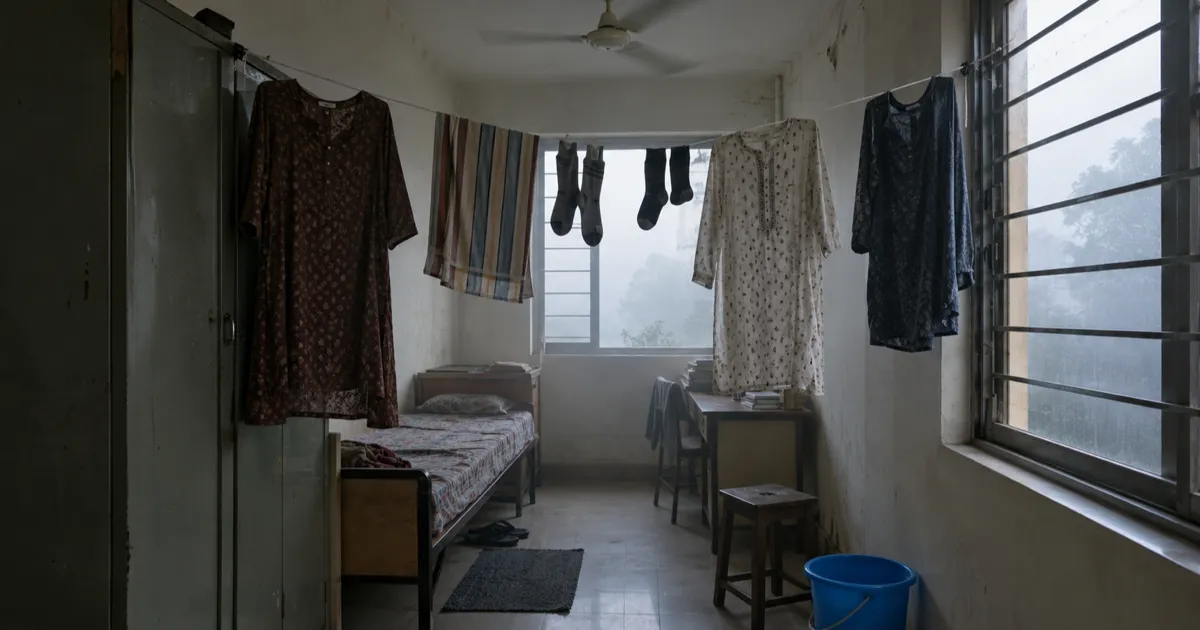
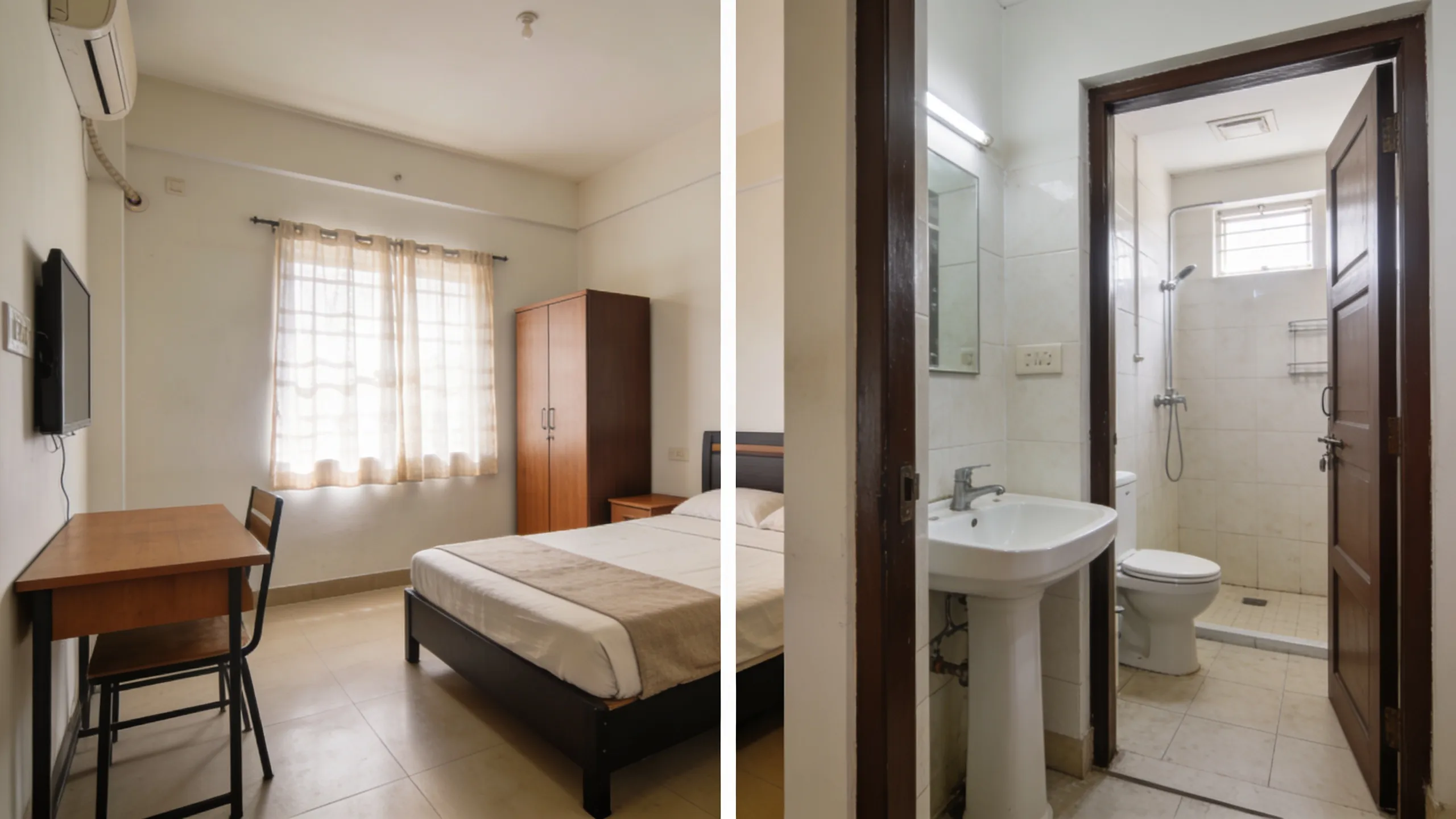
I've walked into PGs that felt like hostels and hostels that felt like hotels, the labels don't always match reality. A "PG" in Koramangala might be a 40-bed operation with bunk beds and a shared kitchen, while a "hostel" in Pune might have air-conditioned single rooms and a chef. The words have become almost interchangeable in casual conversation, and that's a problem if you're actually trying to choose between the two.
When owners list on Hostel360, I always ask them: do you run this like a hostel or a PG? The answer tells me everything about the rules, the food, the vibe, and whether a particular type of resident will thrive there or hate it within a week.
This guide is my attempt to cut through the confusion. I'll break down the real hostel vs PG difference, not the textbook definition, but what actually changes in your daily life depending on which one you pick. And at the end, I'll help you figure out which one makes sense for your specific situation.
PG & Hostel: Full Form and Quick Definition
PG full form: Paying Guest. A PG (Paying Guest accommodation) is a room rented inside someone's home or a residential property, typically with meals, laundry, and housekeeping included. PGs are popular with working professionals and students in Indian cities.
Hostel full form: The word “hostel” comes from the Latin hospitale (a place for guests). In India, a hostel is a shared-living facility with dormitory-style or shared rooms, common areas, and a warden or manager. Hostels are usually attached to colleges or run as independent commercial operations.
Now that you know the full forms, let’s break down the real differences that affect your daily life, budget, and comfort.
Let's Start with the Basics: What Is a Hostel? What Is a PG?
Before we get into the practical differences, let me clarify what these terms actually mean in the Indian context, because they're used differently here than in the rest of the world.
Hostel
In India, a hostel is typically a shared accommodation facility attached to or associated with an educational institution or run independently for students and working professionals. Think large buildings, dormitory-style rooms (2 to 8 beds per room), a common mess hall, fixed meal timings, and a warden who manages the place. College hostels are the classic example, but private hostels have exploded in cities like Bangalore, Hyderabad, and Pune over the last few years.
PG (Paying Guest)
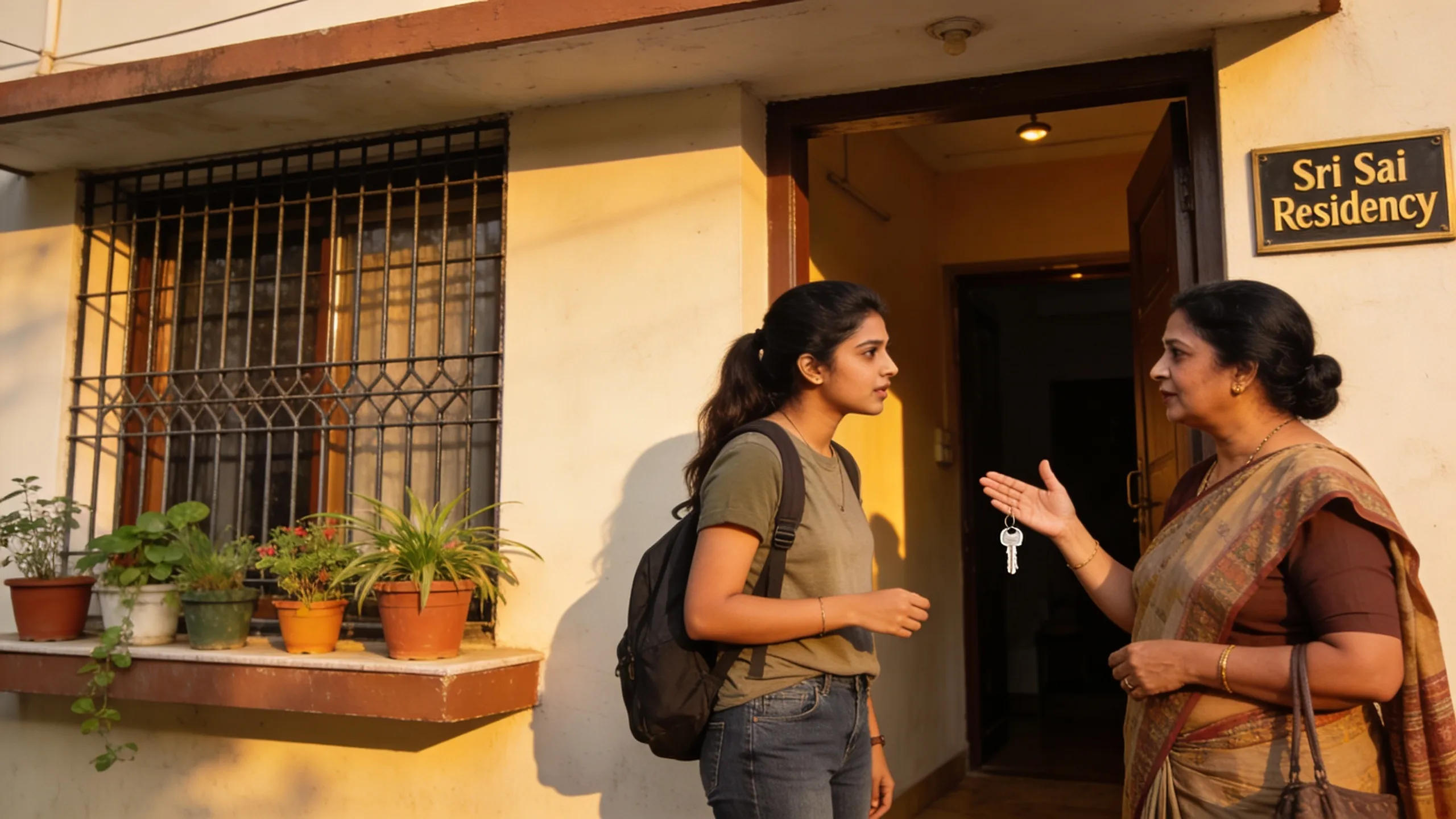
A PG is a residential property, often a converted house or apartment, where the owner rents out rooms to tenants ("paying guests"). The setup is more home-like: smaller buildings, fewer residents (usually 5 to 20), meals cooked by the owner's family or a hired cook, and a more personal relationship with the landlord. PGs are everywhere in Indian cities, from standalone houses to floors within apartment buildings.
Now, here's where it gets messy: the line between the two has blurred. Large PG chains operate buildings with 100+ residents, which are essentially hostels. And some hostels have private rooms with attached bathrooms, which feel exactly like PGs. So rather than getting stuck on the label, focus on the 10 factors below, they'll tell you what your actual living experience will be like.
The Complete Hostel vs PG Comparison, 12 Factors That Actually Matter
I've put together this table from what I've personally observed across properties in Delhi, Mumbai, Bangalore, Pune, Hyderabad, and Chennai. These aren't hypotheticals, they're patterns I've seen repeatedly.
Let me unpack the factors that cause the most confusion.
Cost: Hostels Are Cheaper, But the Gap Is Narrowing
Historically, hostels were dramatically cheaper than PGs. A bed in a college hostel might cost a modest amount a month, while a PG room in the same city started at a modest amount. That gap still exists at the budget end, but it's narrowing fast.
Private hostels in IT corridors (Whitefield, Gachibowli, Hinjewadi) now charge a modest amount for a shared room with AC and Wi-Fi, which puts them right in PG territory. And budget PGs in tier-2 cities or outer areas of metros can go as low as a modest amount.
Here's a city-wise breakdown of what you can expect to pay in 2026:
Key takeaway: If your budget is under varies by location in a metro city, you're almost certainly looking at a hostel. Between a modest amount you have options in both categories. Above a modest amount PGs offer significantly better privacy and comfort for the money.
Want to see actual listings with prices? Browse hostels and PGs on Hostel360, filter by city, budget, and room type to see what's available right now.
Food: The Factor People Underestimate
I've sat through dozens of meals at both hostels and PGs during my visits. The difference is real, and here's why.
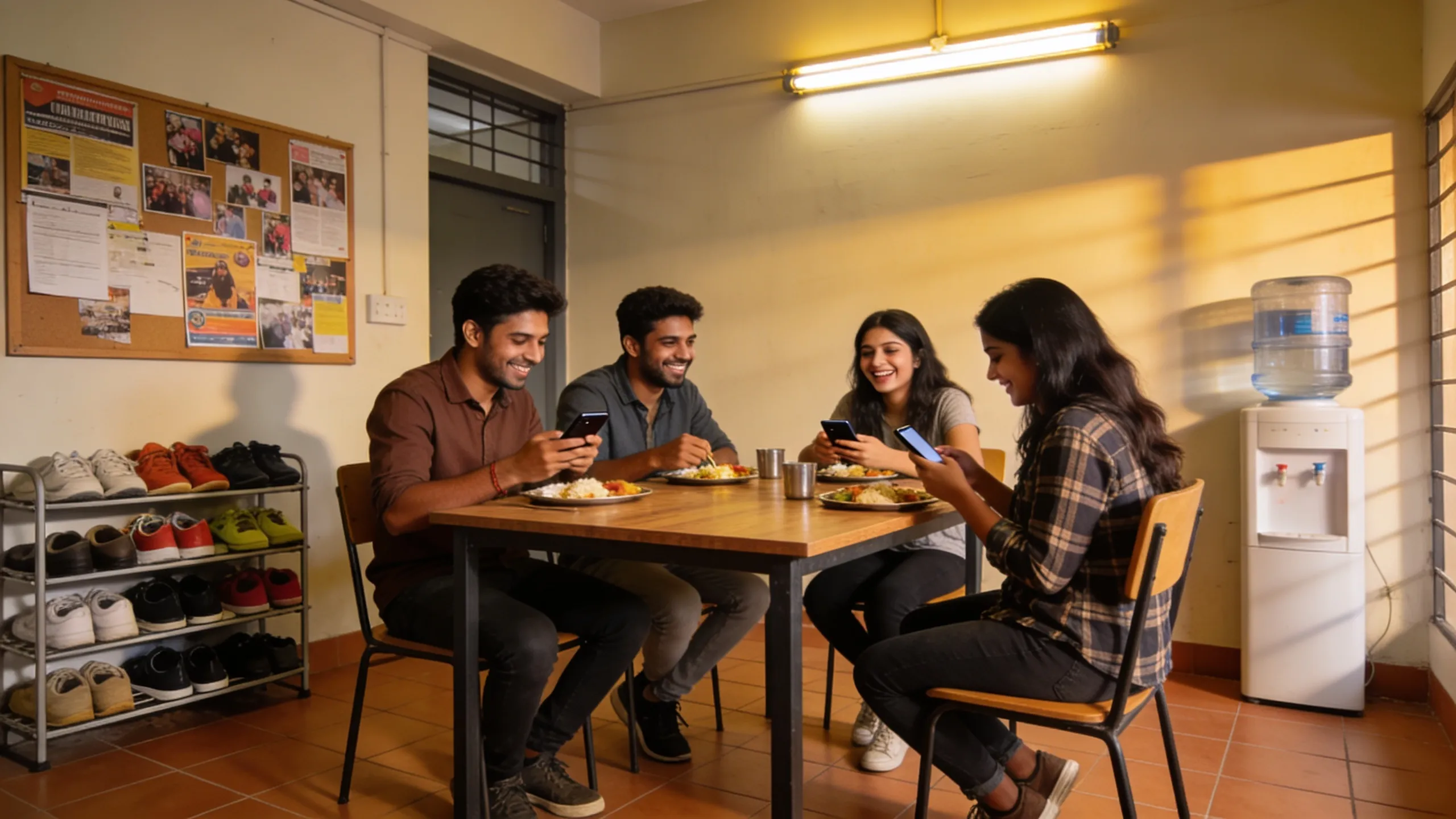
Hostel kitchens cook for 50 to 500 people. At that scale, quality control is genuinely hard. The dal is watery, the vegetables are overcooked, and the menu rotates through the same 8 dishes on a loop. I've visited hostels where residents told me they eat mess food maybe twice a week and order from Swiggy the rest of the time, which adds a modest amount to their monthly spend and wipes out the cost advantage of choosing a hostel in the first place.
PG food isn't restaurant-quality either, but because the cook is preparing for 10–20 people instead of 200, the food tends to be fresher, more varied, and closer to home-cooked. Many PG owners, especially the ones running smaller setups, take personal pride in the kitchen, it's part of how they keep residents from leaving.
My advice: Before you sign up anywhere, visit during a meal. Taste the food. Talk to residents about whether the food quality you see today is what they get every day, or if it drops once you're locked in. I've written about this in detail in the food section of our how to choose the right PG guide.
Rules and Freedom: Where Hostels and PGs Diverge Sharply
This is often the deciding factor for people, and it's where hostels and PGs are most different.
Typical hostel rules:
- Curfew: 9 PM or 10 PM gate closure (some private hostels are more relaxed, but college hostels are strict)
- Fixed meal timings, miss it and you don't eat
- Visitor restrictions, opposite gender visitors often not allowed past the lobby
- Attendance or sign-in registers
- Lights-off time in some college hostels
- Alcohol and smoking strictly banned on premises
Typical PG rules:
- Curfew: 10 PM to 11 PM in many, but negotiable in several (especially for working professionals)
- Meal timings are more flexible, many PGs keep food available for an extra hour or two
- Visitor policy depends entirely on the owner, some are relaxed, some are stricter than hostels
- No formal attendance system in most PGs
- Alcohol policy varies, strictly banned in some, tolerated (in your room, not common areas) in others
Here's the thing nobody tells you: the owner's personality matters more than any written rule. I've been to PGs where the owner is a retired army officer who runs the place like a barracks, and I've been to hostels run by young entrepreneurs who couldn't care less when you come and go. Ask the current residents about how rules are actually enforced, not what's written on the brochure.
Privacy: The Real Cost of Saving Money
In a hostel, you share your room with 1 to 7 other people. Your personal space is your bed and maybe a shelf in a shared cupboard. Bathroom queues are a daily reality. Phone calls happen in corridors or stairwells. If your roommate snores, you don't sleep.
In a PG, single rooms are common, not universal, but available at most properties for a premium. Even double-sharing rooms in PGs tend to be larger than hostel equivalents. Many PGs offer attached bathrooms, which eliminates the morning queue problem entirely.
If you work from home (even occasionally), need quiet study time, or are just someone who recharges by being alone, the privacy difference between a hostel and a PG is not a minor convenience, it's a quality-of-life issue. I've met people who switched from a a modest amount hostel to a a modest amount PG single room and said it was the best decision they made that year.
Safety: Both Can Be Good or Terrible
People assume hostels are safer because they're bigger and more "official." That's not always true. I've visited large hostels with broken CCTV cameras and guards who sleep through the night. And I've visited small PGs where the owner lives downstairs, knows every resident by name, and has better security awareness than a professional setup.
What actually matters for safety:
- Police verification of all residents, this is legally required in most states but widely skipped. Ask specifically.
- Working CCTV at entry points, not cameras mounted for show, but ones that actually record.
- Visitor management, is there a process, or can anyone walk in?
- Fire safety, fire extinguishers on each floor, clearly marked exits. This is non-negotiable, especially in older buildings.
- For women's accommodations: separate floors or buildings, female staff on-site, and a clear policy on male visitors.
Branded hostel chains and verified PG platforms tend to be better on safety because they have standard operating procedures. On Hostel360, safety verification is part of our listing process, we check for police verification, fire equipment, and security infrastructure during our in-person visits.
Which One Is Right for YOU? A Decision Guide by Persona
I've helped hundreds of people figure this out. Here's what I'd recommend based on who you are right now:
The Fresher College Student (18–20 years old, first time away from home)
Go with: Hostel
Your budget is probably tight, and the social experience of a hostel is genuinely valuable at this age. You'll make friends fast, learn to live with different kinds of people, and the structure (meal timings, curfews) is actually helpful when you're figuring out how to manage yourself for the first time. The food won't be great, but you'll survive, everyone does. College hostels also keep you close to campus, which saves commute time and money.
The Working Professional (22–30 years old, first or second job)
Go with: PG
You need to sleep properly, eat decent food, and have a space where you can decompress after work. Hostel curfews and shared dorms don't work well when you have early morning meetings or late-night deadlines. A PG single room in the a modest amount range gives you privacy, flexibility, and better food, and the month-to-month lease means you're not trapped if you switch jobs or cities.
The Budget-Conscious Saver (any age, optimising for lowest cost)
Go with: Hostel, but calculate the real cost
A a modest amount hostel sounds great until you're spending a modest amount on outside food because the mess is inedible, plus a modest amount on a gym because there's no exercise space, plus a modest amount on a co-working cafe because you can't focus in your noisy room. Add it all up. If a a modest amount PG with good food and a quiet room eliminates all those extra spends, the PG is actually cheaper. I see this math play out constantly.
The Privacy-Focused Individual (introverts, remote workers, competitive exam students)
Go with: PG (single room), no question
If you need 4–6 hours of uninterrupted focus daily, a shared hostel room will drive you mad. You'll be fighting for quiet time instead of studying or working. A PG single room with an attached bathroom and a decent desk is worth every rupee of the premium. Some PGs even have dedicated study rooms or quiet zones, ask for those specifically.
The Social Butterfly (prioritises community and experiences)
Go with: Hostel or co-living
If your biggest fear is being bored and alone in a new city, a hostel will fix that on day one. The shared spaces, the mess hall conversations, the impromptu cricket matches in the corridor, PGs rarely offer that level of organic social interaction because the groups are smaller. If you want the social life of a hostel but with better amenities, look into co-living spaces, they're designed to combine both.
What About Co-Living? The Third Option
Co-living has become a serious category in Indian metros, and it's worth mentioning because it borrows from both hostels and PGs.
A co-living space is essentially a professionally managed shared accommodation, think a hostel's scale and community focus, combined with a PG's comfort and flexibility. You get private rooms (usually), shared common areas (designed for socialising, not just existing), included meals and housekeeping, and a tech-enabled experience (app-based payments, maintenance requests, community events).
The catch? Co-living spaces are 20–40% more expensive than equivalent PGs. A single room in a co-living space in Bangalore will run you a modest amount compared to a modest amount for a PG single room in the same area.
If co-living interests you, I've written a detailed breakdown in our co-living spaces in India guide.
Registration and Legal Differences You Should Know
This is the boring-but-important section. Hostels and PGs are regulated differently in most Indian states, and knowing the basics can protect you.
- PG registration: In most states, PG operators need to register with the local municipal authority and, in some cities (Bangalore, Pune, Delhi), with the police. Every PG is required to maintain a register of tenants and conduct police verification. If a PG skips this, they're operating informally, which means less accountability if something goes wrong.
- Hostel registration: College-affiliated hostels operate under the university's licensing. Private hostels typically need a commercial or institutional use permit, fire safety clearance, and local authority registration. The compliance bar is technically higher for hostels because of the larger scale.
- Rent agreements: Under the Model Tenancy Act (which several states have adopted or adapted by 2026), any rental arrangement, including PGs and private hostels, should have a written agreement. Security deposits are capped at 2 months' rent for residential properties. If someone is asking for more, they're either unaware of the law or ignoring it.
- Your rights as a tenant: Whether you're in a hostel or PG, you're entitled to livable conditions, functional plumbing, electricity, basic safety infrastructure. If these aren't maintained, you have legal grounds to terminate the arrangement and recover your deposit.
The Bottom Line
The hostel vs PG difference isn't just about cost or room size, it's about what kind of daily life you want. A hostel gives you community, structure, and the lowest price point, but demands you sacrifice privacy and put up with institutional-grade food and rules. A PG gives you more personal space, better food, and flexibility, but costs more and can feel isolating if you don't make an effort to socialise.
Neither is universally better. The right choice depends entirely on where you are in life, what your budget looks like, and what you're willing to compromise on.
My one non-negotiable recommendation: visit before you commit. Photos lie. Listings exaggerate. But walking through a property for 20 minutes tells you everything you need to know.
If you're starting your search, browse verified hostels and PGs on Hostel360, we personally visit every property on the platform, so what you see in the listing is what you'll find when you walk in. Filter by city, budget, and room type to narrow things down fast.