

You found a PG. The room looks decent, the rent fits your budget, and the owner slides a printed agreement across the table. Most students sign it in under two minutes. That's exactly how disputes start. This PG rental agreement what to check India guide walks you through every clause, what it should say, what it often hides, and what you can negotiate before your signature locks you in.
A PG agreement is not a formality. It's the only document you can point to when the owner refuses your deposit refund, hikes rent mid-month, or changes house rules without notice. Whether you're moving into a PG in Bangalore or a shared flat in Mumbai, the clauses that matter are the same.
Rent Amount and Payment Terms
The most basic clause, yet the one most often written vaguely. Your agreement should state:
- Exact monthly rent in numbers and words (e. G., ₹8,000, Rupees Eight Thousand Only)
- Payment due date, typically the 1st or 5th of each month
- Accepted payment methods, UPI, bank transfer, cash, cheque
- Late payment penalty, if any, the exact amount or percentage
- Rent escalation clause, whether rent increases annually and by how much (5-10% is standard)
Red flag: If the agreement says "rent may be revised at the owner's discretion," that's an open invitation for arbitrary hikes. Push for a fixed percentage or a cap. If the owner refuses, get the current year's rent locked in writing at minimum.
For negotiation tactics, check the how to negotiate PG rent in India guide, it has word-for-word scripts.
Security Deposit and Refund Terms
Deposit disputes are the single biggest source of PG conflicts in India. Your agreement must cover:
- Deposit amount, usually 1-3 months' rent. Anything above 2 months is high.
- Refund timeline, when exactly you get it back after moving out. Standard is 15-30 days.
- Deduction conditions, what can the owner legally deduct from your deposit (damage, unpaid rent, unpaid electricity).
- Interest, some states require interest on deposits held longer than certain periods.
Red flag: "Deposit is non-refundable" or "Deposit will be adjusted against the last month's rent at the owner's discretion." Both are problematic. The deposit should be refundable minus legitimate, documented deductions.
Read the complete hostel and PG deposit refund rules in India for state-wise legal details.
Document the Room Condition at Move-In
Take photos and a short video of the room on your move-in day. Cover walls, floor, furniture, bathroom fixtures, and any existing damage. Share these with the owner via WhatsApp so there's a timestamped record. When you move out, the owner can't charge you for damage that existed before you arrived.
Notice Period and Lock-In Period
These two clauses control when and how you can leave.
- Notice period, how many days in advance you must inform the owner before vacating. Common range: 15-30 days.
- Lock-in period, the minimum duration you must stay. If you leave during lock-in, you forfeit part or all of your deposit.
What's reasonable:
| Clause | Fair Range | Red Flag |
|---|---|---|
| Notice period | 15-30 days | 60+ days or "one full calendar month" |
| Lock-in period | 1-3 months | 6+ months or no early exit clause |
| Lock-in penalty | Deposit forfeiture only | Additional penalty on top of deposit |
Red flag: A 6-month lock-in with no exit clause means you pay rent for 6 months regardless of whether you stay. If you must accept a lock-in, negotiate a reduced penalty, like losing only one month's deposit instead of two.
 Fair terms versus red flags, know the difference before you sign.
Maintenance and Repairs
Who pays when the geyser stops working or the bathroom tap leaks? The agreement should clarify:
- Structural repairs (plumbing, electrical wiring, ceiling leaks), owner's responsibility
- Minor repairs (tube light replacement, tap washer), often tenant's responsibility, but specify a threshold (e. G., repairs under ₹500)
- Appliance breakdown, if the PG provides a fridge, AC, or washing machine, the agreement should state who pays for repairs
- Response time, how quickly the owner must address maintenance requests
Red flag: "All repairs are the tenant's responsibility." This shifts the entire maintenance burden to you. Structural and plumbing repairs should always remain with the owner.
Electricity and Utility Charges
Electricity billing in PGs follows one of three models:
- Included in rent, simplest. No surprises. Common in PGs charging ₹10,000+/month.
- Sub-metered, you pay based on your room's consumption. Fair, but verify the per-unit rate matches the state tariff.
- Split equally, total bill divided among all tenants. You subsidize the person running the AC 24/7.
Your agreement should specify which model applies, the per-unit rate if sub-metered, and whether common area electricity (corridor lights, water pump) is included in rent or charged separately.
Red flag: "Electricity charged at ₹12/unit" when the state tariff is ₹6–₹8/unit. Some owners markup electricity as hidden income. Check your state's residential tariff online.
Food and Mess Terms
If your PG includes meals, the agreement should state:
- Number of meals per day (typically 2, breakfast and dinner)
- Meal timings, fixed windows or flexible
- Menu rotation, weekly menu displayed or owner's discretion
- Deduction for missed meals, can you opt out of mess for a month and get a rent reduction?
- Guest meal charges, if a friend visits, what's the per-meal cost?
Red flag: "Food quality and menu are at the owner's sole discretion with no adjustment for missed meals." If you're paying ₹3,000–₹4,000/month for food as part of your rent, you deserve basic accountability on quality and the option to opt out.
Guest and Visitor Policy
This clause varies wildly across PGs. Check for:
- Visiting hours, most PGs allow guests between 10 AM and 8 PM
- Overnight guests, typically not allowed in most Indian PGs
- Opposite gender visitors, many PGs restrict or ban this entirely
- Common area vs. Room, some PGs allow guests only in the common area
What to verify: The written policy should match what the owner told you verbally. Verbal promises mean nothing if the agreement says otherwise.
House Rules and Restrictions
The agreement may include rules about:
- Curfew timing (gate lock time, common: 10 PM or 11 PM)
- Cooking in rooms, allowed, restricted to certain appliances, or banned
- Smoking and alcohol, almost always banned inside the premises
- Pets, almost always not allowed
- Noise restrictions, quiet hours, typically after 10 PM
- Laundry, common machine usage rules and timings
Read these carefully. If a rule matters to your lifestyle, like coming home late for a night shift job, clarify it before signing.
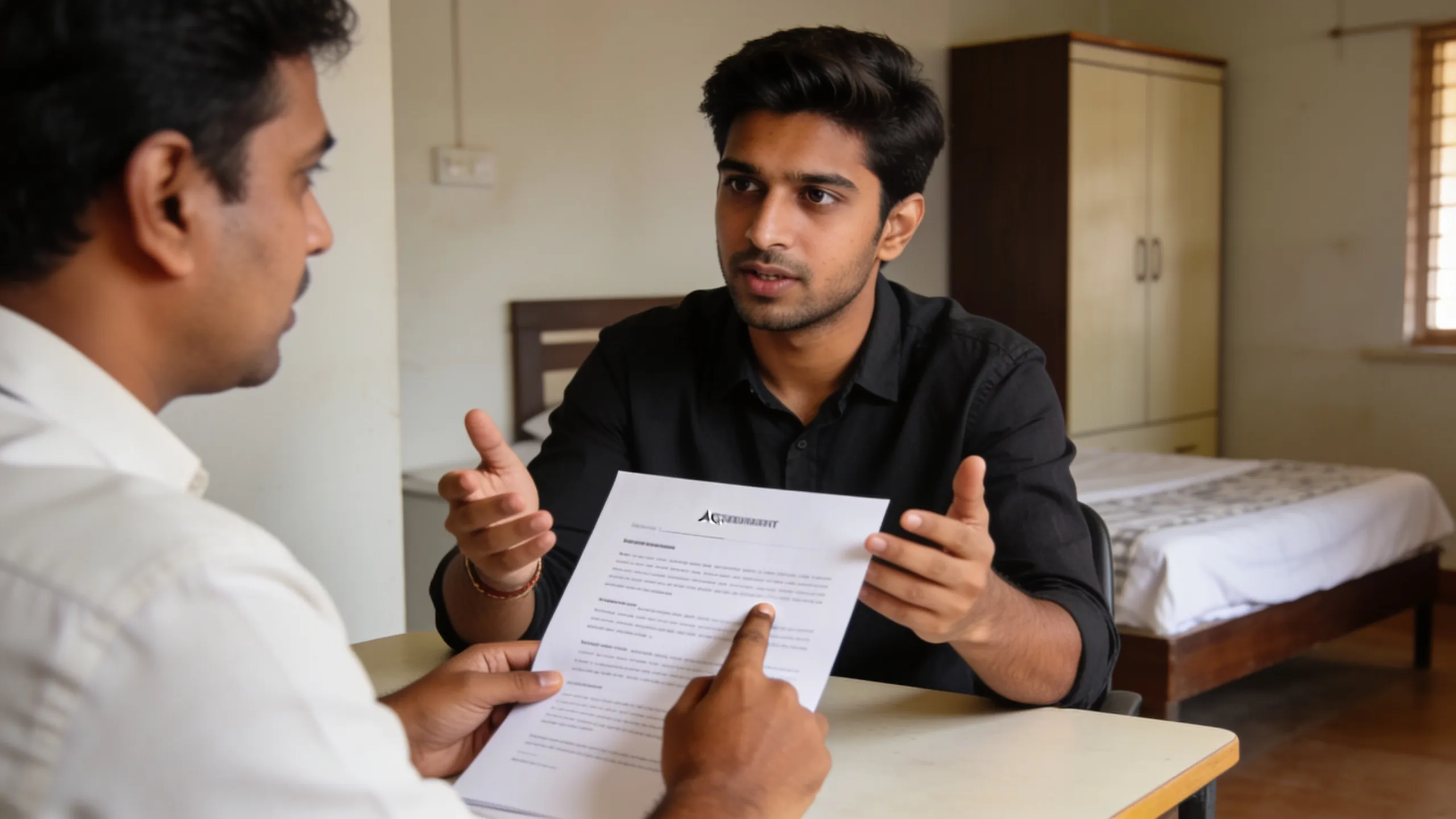 Ask questions during the room visit. Clarify rules before they become restrictions.
The Complete PG Agreement Checklist
Before signing, confirm every item on this list:
- [ ] Full name and address of owner and tenant
- [ ] Property address and room number
- [ ] Rent amount, due date, and payment method
- [ ] Rent escalation terms (fixed % or cap)
- [ ] Security deposit amount and refund timeline
- [ ] Deposit deduction conditions
- [ ] Notice period (days)
- [ ] Lock-in period (months) and penalty
- [ ] Electricity billing model and per-unit rate
- [ ] Maintenance responsibility split
- [ ] Food terms (meals, timings, quality, opt-out)
- [ ] Guest and visitor policy
- [ ] House rules (curfew, cooking, noise)
- [ ] Agreement duration and renewal terms
- [ ] Signatures of both parties on every page
- [ ] Two witness signatures
- [ ] Move-in photos shared with owner
For a full pre-move-in checklist beyond just the agreement, read our how to choose the right PG checklist.
What to Do If There Is No Written Agreement
Some PGs, especially smaller ones run by individual landlords, operate without a formal agreement. This is risky but common. If the owner refuses to sign a proper agreement:
- Draft a simple one yourself. A one-page document with rent, deposit, notice period, and both signatures is legally valid.
- Use WhatsApp as a paper trail. Send the owner a message summarizing all agreed terms. If they reply confirming, that's a basic record.
- Pay via bank transfer or UPI only. Never pay rent in cash without a receipt. Digital payments create automatic records.
- Keep all receipts. Electricity receipts, maintenance receipts, any written communication.
A verbal agreement is technically enforceable in India, but proving its terms without documentation is nearly impossible.
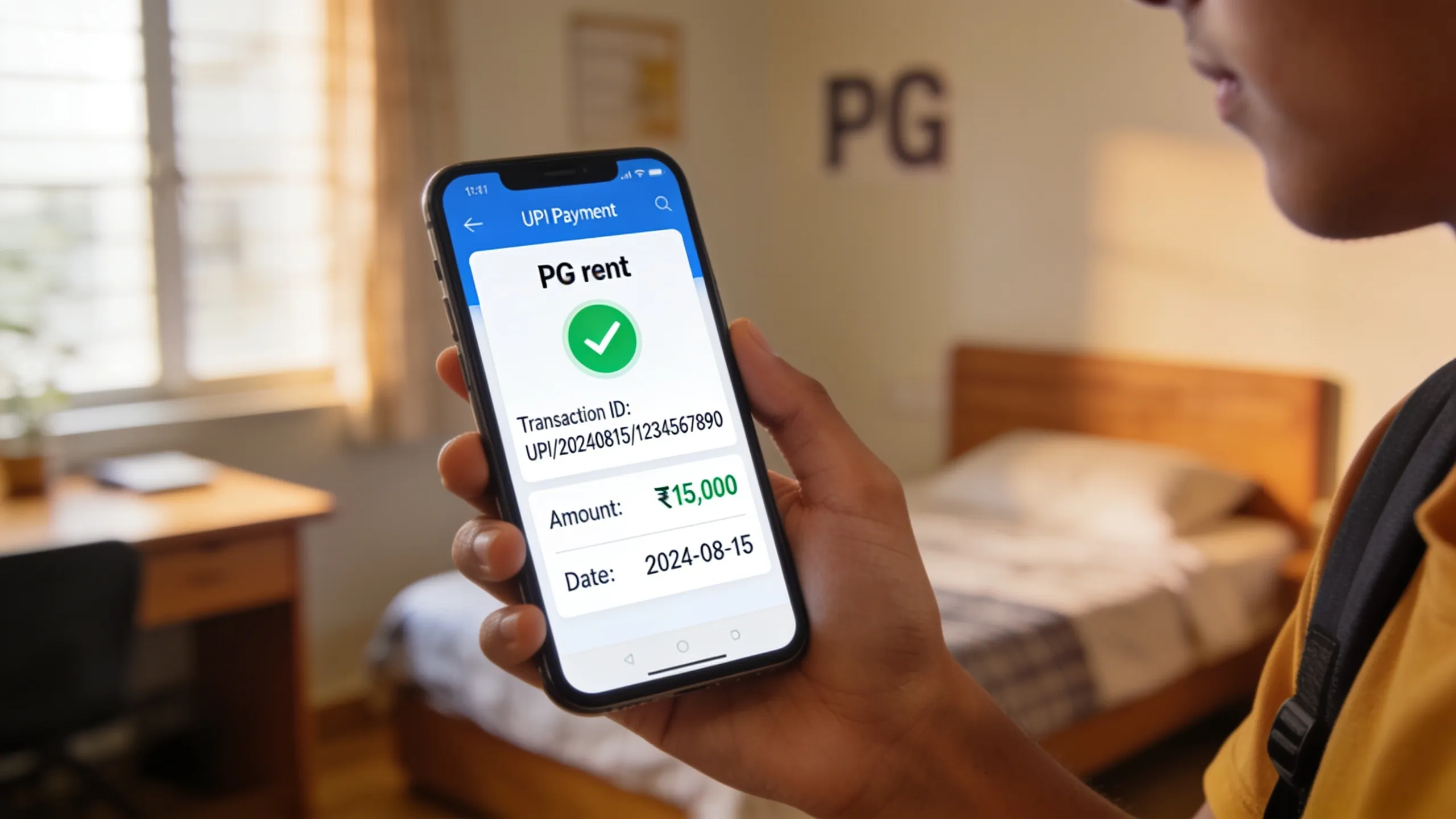 Digital payments create automatic records. Always pay rent via UPI or bank transfer, never cash without a receipt.
---
Finding a PG with transparent terms makes everything easier. Browse verified hostels and PGs on Hostel360, every listing shows rent, deposit, and house rules upfront so you know what to expect before the visit. If you are searching in Jaipur, start with the PGs and hostels in Jaipur.