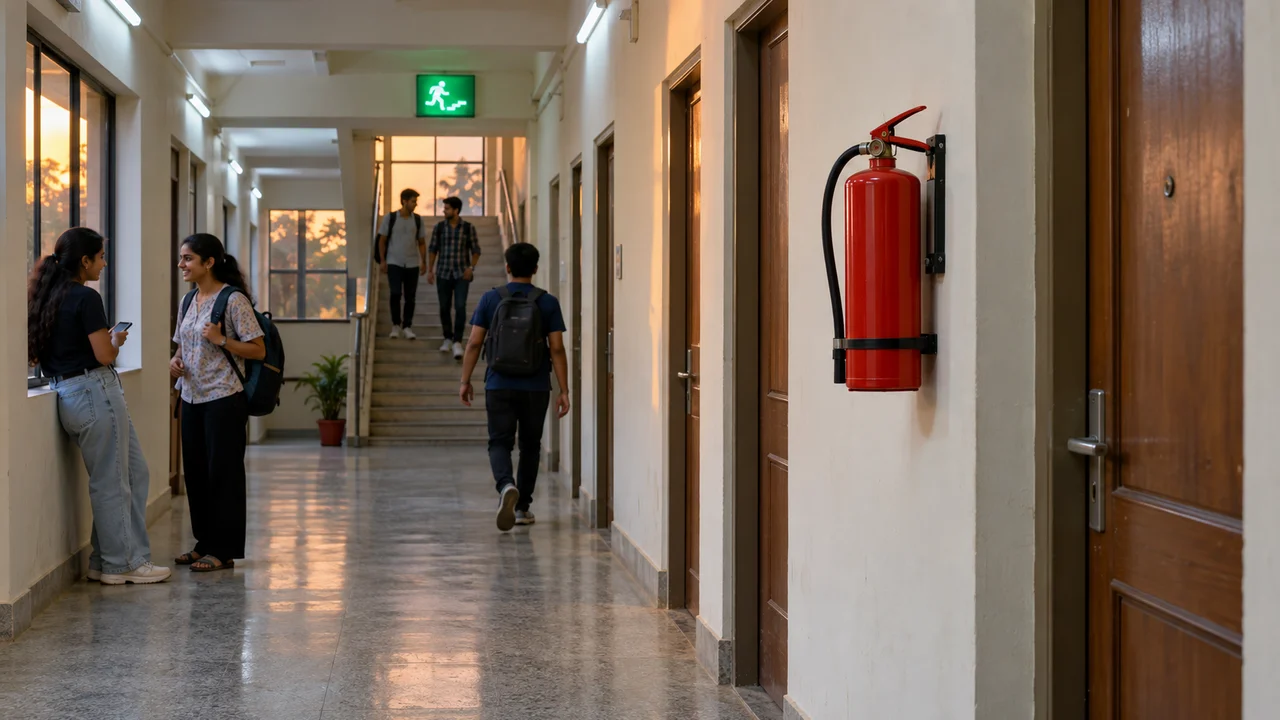
Hostel fire safety comes down to two habits: know how you'd get out of the building, and don't overload the wiring in your room. Most hostel and PG fires start with something ordinary, such as an overheated multi-plug, a forgotten heating appliance or a charger left on a mattress. This guide walks you through the checks to do on your first day, the electrical habits that keep your room safe, and what to do if something goes wrong. If you're new to shared living, our guide to hostel life in India covers the rest of the basics.
Rules on appliances, charging and room inspections vary by hostel and PG. Treat the steps below as general safety guidance, and follow your own hostel's written rules where they're stricter.
Key Takeaways
- On day one, find two ways out of your floor and check that exits aren't locked or blocked.
- Inspect sockets, switchboards and cables in your room, and report damage to the warden in writing.
- Keep heating appliances off multi-plugs, never chain extension boards, and unplug what you aren't using.
- Charge phones, laptops and vehicle batteries away from bedding, and only where your hostel allows it.
- In a fire, leave first, raise the alarm, and call 112, India's emergency number.
Before You Begin: What You'll Need
You don't need special tools for these checks. Set aside about half an hour on move-in day and bring the following:
- Your phone, with the torch working and the warden's or owner's number saved.
- A copy of the hostel rulebook or PG agreement, so you know which appliances are allowed.
- A notebook or notes app to record any faults you find, with dates.
Step 1: Map Your Escape Routes on Day One
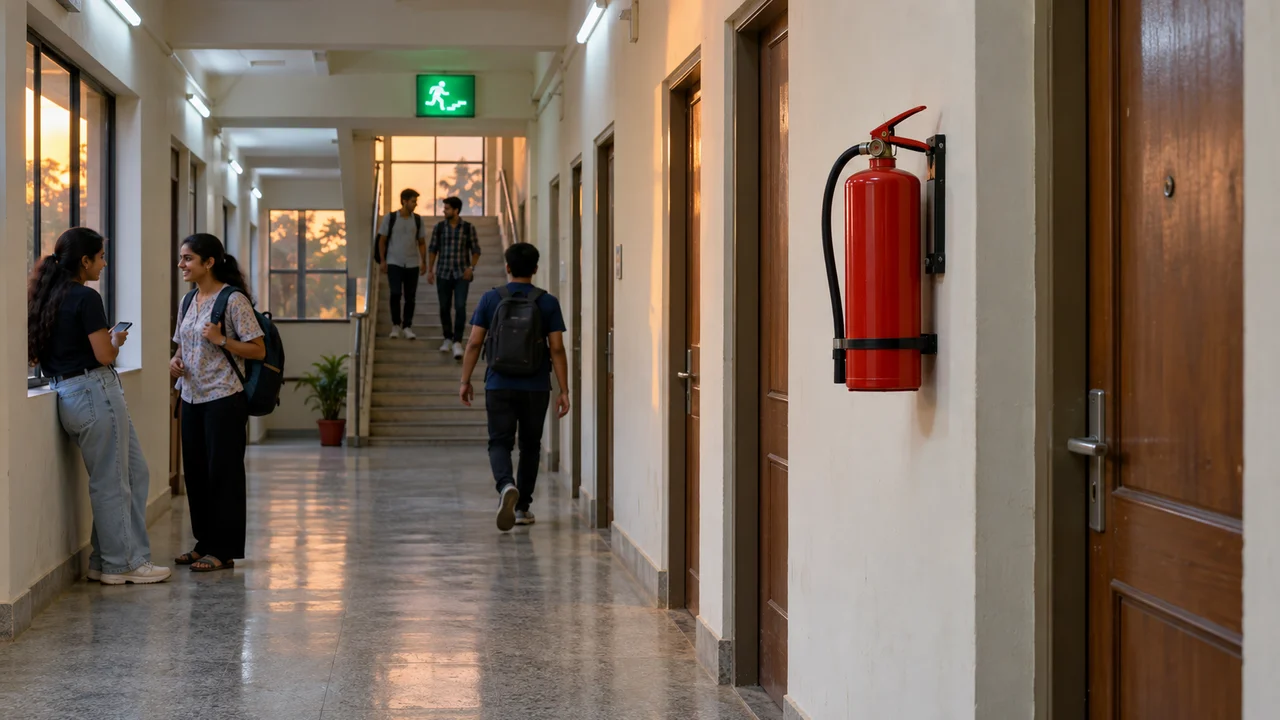
By the end of this step, you'll know at least two ways out of your floor and where the fire equipment is. In a real fire, smoke can make a familiar corridor feel unfamiliar, so learning the route in daylight matters.
- Walk from your room to every staircase and exit on your floor. Count the doors you pass, because that helps if visibility drops.
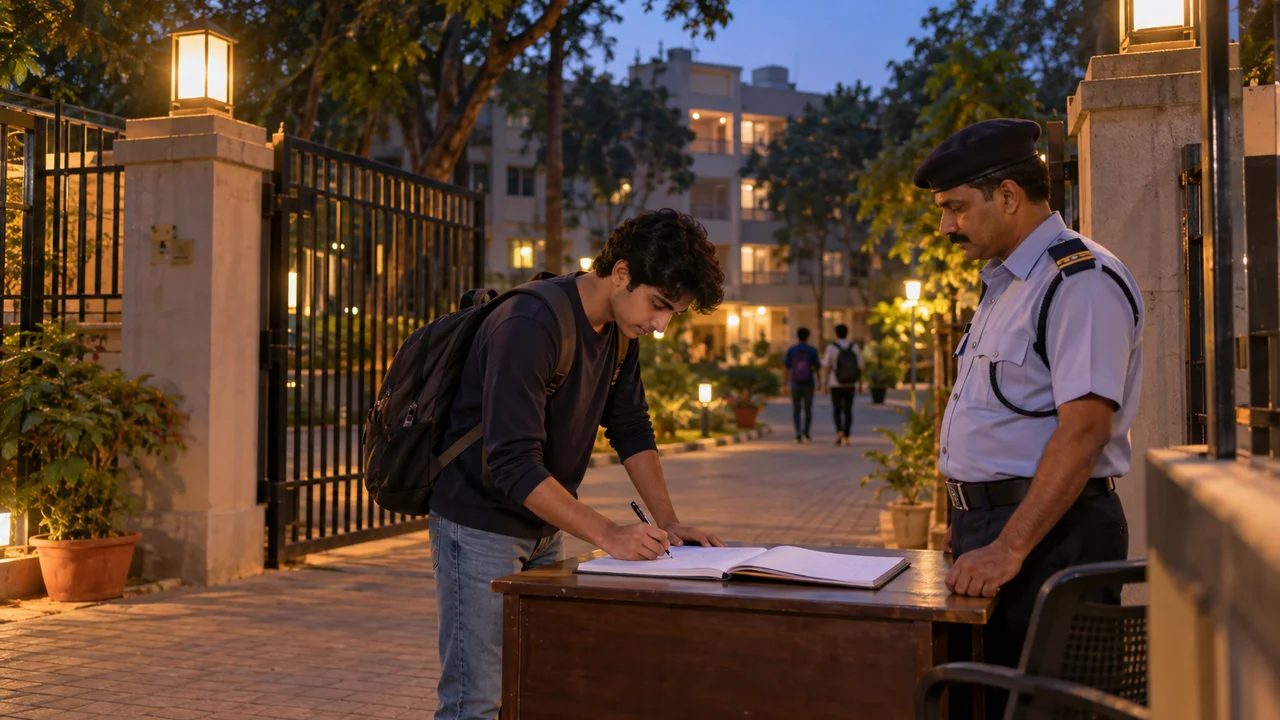
- Check whether exit doors and stair gates are locked at night. If they are, ask who holds the key and how it's opened in an emergency.
- Note where fire extinguishers, alarm points and any emergency lights are placed.
- Look for clutter: cycles, shoe racks, mattresses or stored boxes in corridors and stairways.
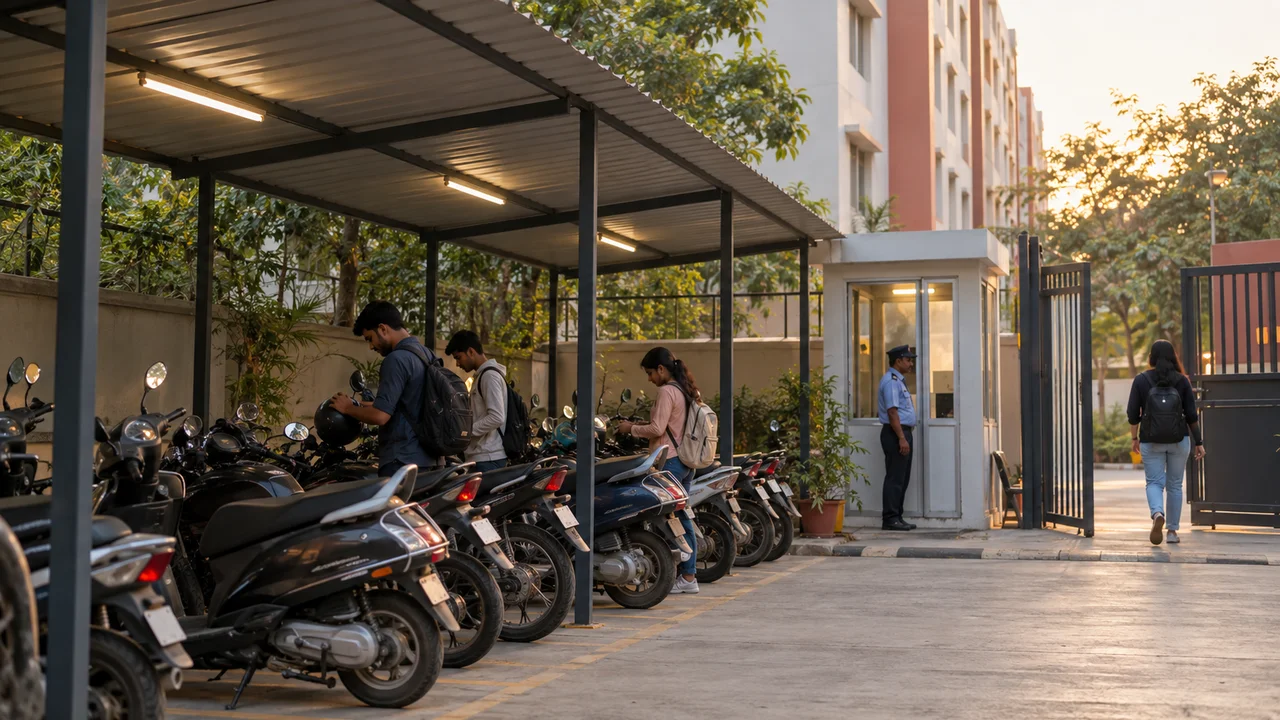
Parked vehicles are a common blockage in PGs with stilt or ground-floor parking. If you plan to keep a bike in hostel premises, park only in the marked area and never in front of a staircase or gate.
You've finished this step when you can describe two routes out without looking, and you know who to call if an exit is locked.
Step 2: Inspect the Wiring and Sockets in Your Room
This step gives you a quick picture of whether your room's electrical fittings are in decent shape. Good pg electrical safety starts with spotting problems before you plug anything in.
- Look at each socket and switchboard. Burn marks, cracked covers, loose sockets or a melted smell are signs to stop and report.
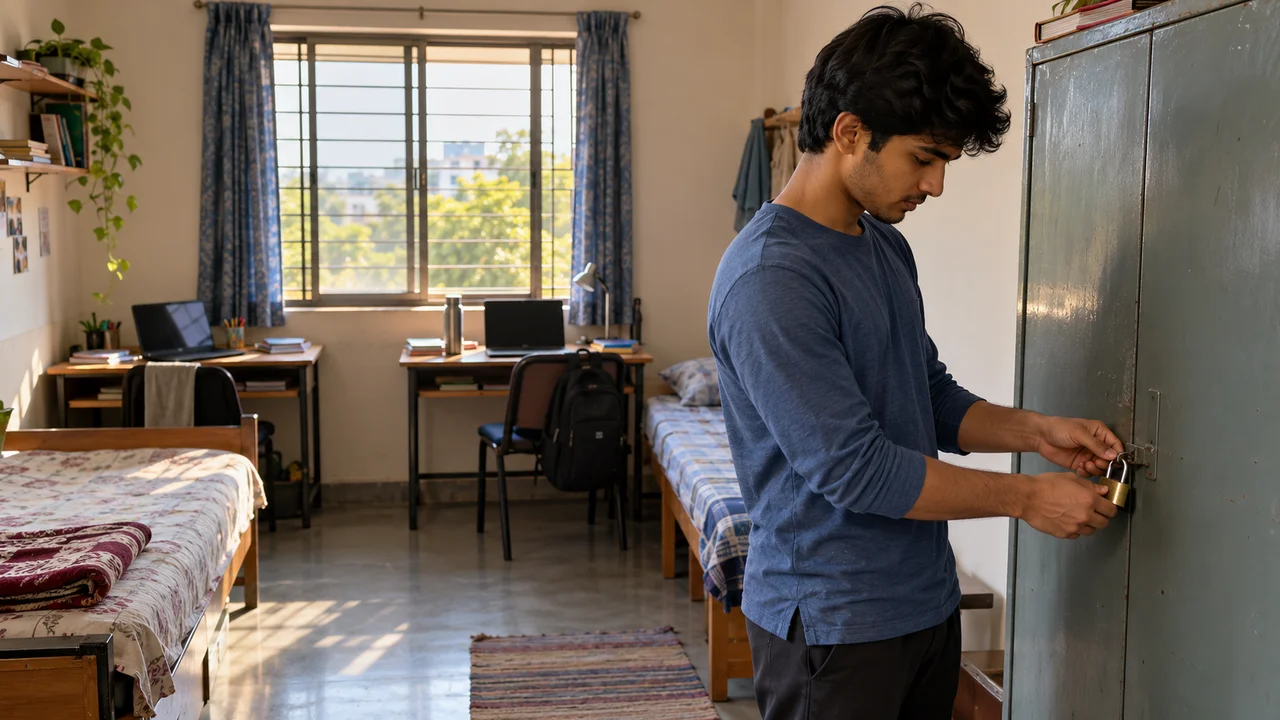
- Check for exposed or taped-up wires, especially behind beds, near the fan regulator and around the geyser in attached bathrooms.
- Find out where the room's or floor's switch-off point is, such as an MCB box, so you know how power is cut in an emergency.
- Notice whether sockets sit close to the bathroom door, a window that lets rain in, or a water cooler.
Report faults to the warden or owner in writing, by message or email, and keep a copy. Repairs to building wiring are normally the management's job, so don't open switchboards or fix wires yourself.
Step 3: Use Sockets and Extension Boards Safely
By the end of this step, you'll have a room setup that doesn't push more load through the wiring than it should. Overloaded multi-plugs are one of the most common hostel electrical risks.
- Use one good-quality extension board, and never plug a board into another board.
- Keep high-power heating appliances, like irons, kettles or heaters, on a wall socket rather than a multi-plug, and only if your hostel allows them.
- Unplug chargers and appliances when you leave the room. A switched-off board still carries risk if the switch itself is faulty.
- Keep boards on a hard surface, not under a pillow, mattress or pile of clothes, where heat can't escape.
- Replace any board or cable that feels warm, sparks or has loose sockets.
In PGs that bill electricity per unit, heavy appliances also raise your bill. Our guide to PG electricity charges explains how per-unit billing works and why it helps to agree the rate in writing.
Step 4: Handle Heating, Cooking and Charging with Care
This step covers the devices that create the most heat in a student room. Many hostels restrict heating and cooking appliances for exactly this reason.
- Follow your hostel's appliance list. If an item is banned, don't hide it under the bed, where a fault is harder to notice.
- Never leave an iron, kettle, heater or immersion rod switched on when you step out. Our immersion rod safety guide for hostels walks through safe use step by step.
- Charge phones and laptops on a desk, not on bedding. Stop using a charger or battery that swells, gets very hot or smells odd.
- Charge electric scooter or e-bike batteries only where the hostel permits, away from beds, exits and stairways, and not unattended overnight.
Room cooking is a frequent trigger for rules tightening. If you're tempted to cook to hit protein targets, it's safer to plan a high protein diet in hostel around the mess and no-cook foods.
Step 5: Know What to Do in a Fire or Electrical Emergency
By the end of this step, you'll have a simple plan you can follow under stress. The priority is getting people out, not saving belongings.
- If an appliance sparks or smells of burning, switch it off at the wall only if that's safe, then unplug it.
- If you see smoke or flames, leave the room, close the door behind you and raise the alarm by shouting and knocking on doors as you go.
- Use the stairs, never the lift. Stay low if there's smoke in the corridor.
- Call 112, the national emergency number under the Emergency Response Support System, then inform the warden or owner.
- Never throw water on an electrical fire. Leave extinguishers to trained staff unless the fire is small and you know how to use one.
Agree a meeting point outside the building with your roommates so you can quickly tell whether anyone is missing.
Common Mistakes to Avoid
The most serious mistake is assuming the building is someone else's problem. Small habits in each room add up across a floor that shares the same wiring and stairs.
- Ignoring a warm socket. Heat at a plug point is an early warning. Stop using it and report it.
- Drying clothes near lamps or heaters. Fabric close to a heat source can scorch or catch fire.
- Accepting a locked exit. If a stair door is locked at night, ask how it's opened in an emergency and raise it with management.
- Doing DIY repairs. Rewiring a plug or fixing a switchboard yourself can create a new hazard.
- Going back for belongings. Once you're out, stay out until it's declared safe.
Bottom Line
Good hostel fire safety is mostly preparation: know two ways out, check your room's wiring, keep heating devices and chargers under control, and have a plan for emergencies. Do the checks on move-in day, report faults in writing, and talk to your roommates about where you'd meet outside. It takes half an hour and protects everyone on your floor.
Keeping your room safe goes beyond wiring, so Preventing Theft in a Hostel Room covers protecting your belongings, and Sleeping Better in a Noisy Shared Room helps when a shared room makes rest hard.