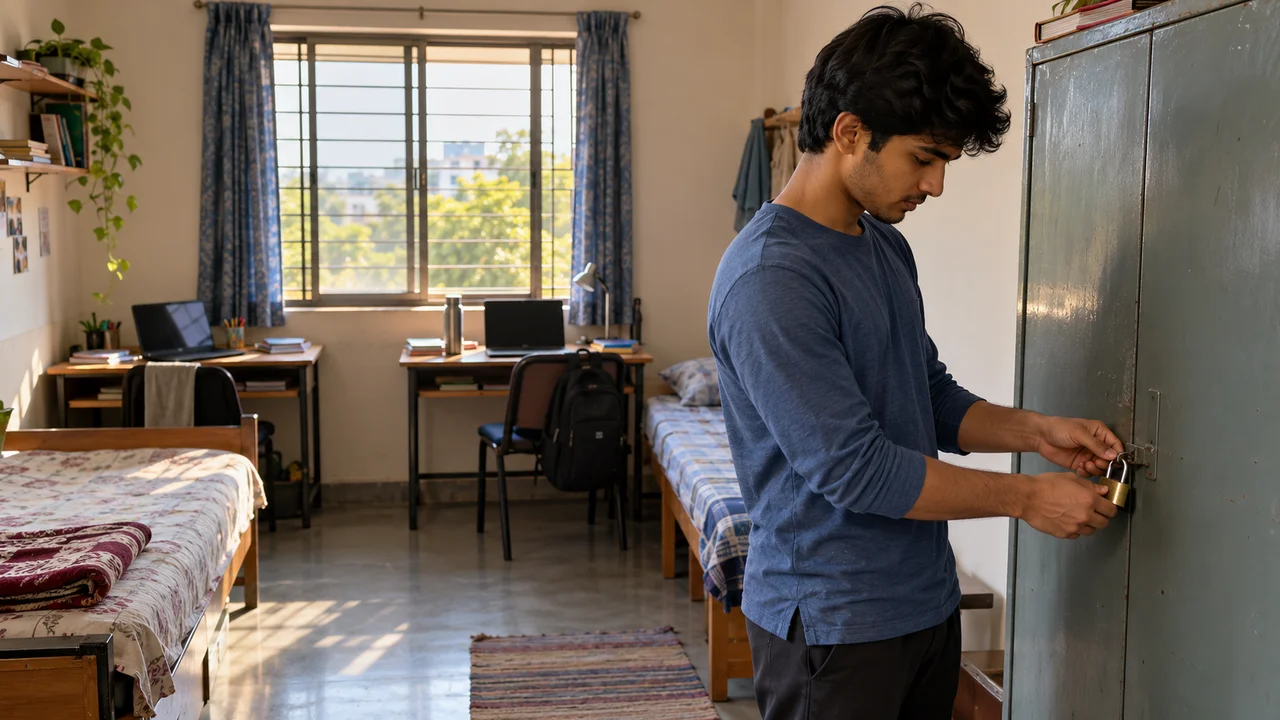
The surest way to prevent theft in a hostel room is to lock what matters, carry less into the room, and build habits that leave no easy openings. A good hostel room lock helps, but most losses come from open doors, unattended phones and shared keys. This guide walks through the steps in order, from checking the room on day one to what you should do if something does go missing.
Hostel rules on locks, lockers and liability differ a lot, so treat this as a practical checklist and confirm the details with your warden. If you're still settling in, the complete guide to hostel life in India covers the wider basics of shared living.
Key Takeaways
- Most theft in hostel rooms is opportunistic, so a locked door and a locked cupboard remove the easiest targets.
- Use a sturdy padlock you control, and ask the warden who else holds keys to your room.
- Keep little cash and few valuables in the room; store originals locked and copies online.
- Record serial numbers and photos of your gadgets so you can report and trace them.
- If something is stolen, report it in writing to the warden and, for valuables, to the police.
Before you begin: what you'll need
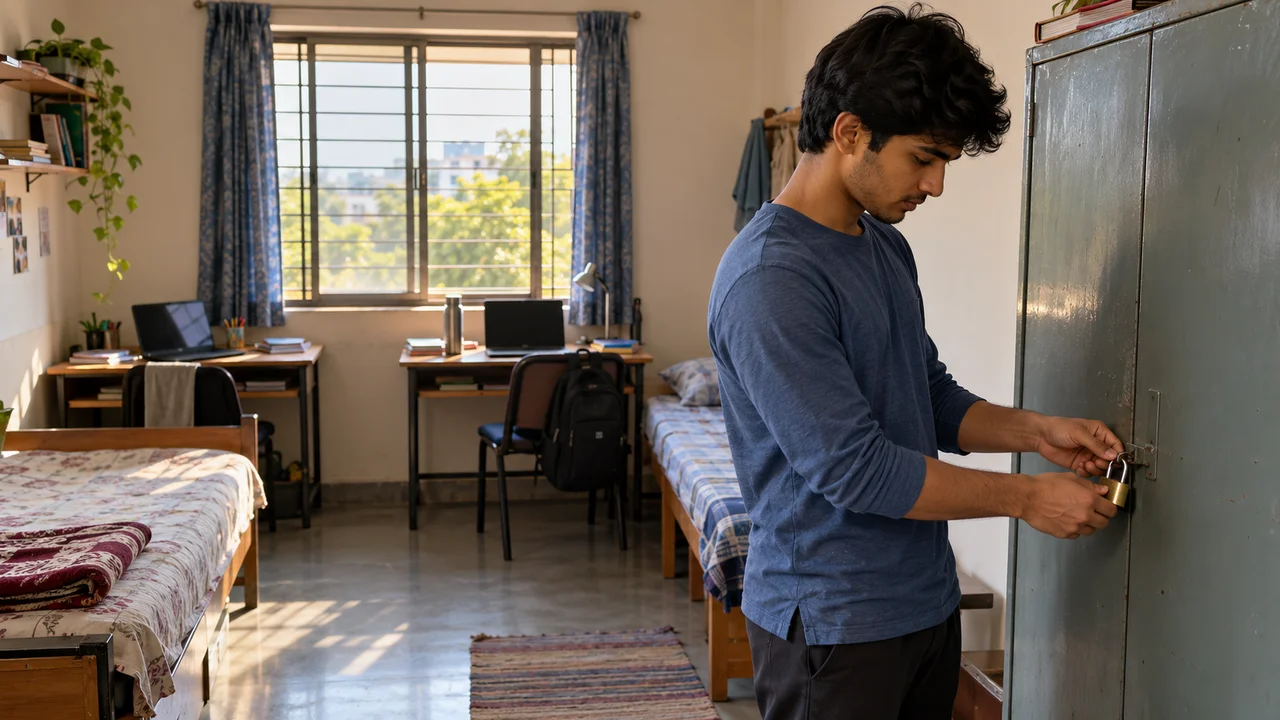
You don't need expensive gear. A few basic items and one conversation with the warden cover most of the risk.
- A solid padlock for your cupboard, and a second one for the door if the hostel allows it.
- A small lockable box or pouch for documents, spare cash and cards.
- A laptop cable lock, if your laptop has a lock slot.
- Your phone, to photograph belongings and note serial numbers.
- A copy of the hostel rules or your agreement.
Step 1: Check the room and its locks on day one
Start by finding the weak points before anyone else does. Rooms change hands often, and old keys may still be with former residents.
- Test the door lock, the latch and every cupboard. Note anything broken.
- Check windows and balcony doors, especially on lower floors or near common corridors.
- Ask the warden whether locks were changed after the last occupant and who holds spare keys.
- Report faults in writing (a message or email is fine) so there's a dated record.
You'll know this step is done when every lock works and you know exactly who else can open your door.
Step 2: Choose a hostel room lock you control
A sturdy padlock that only you can open is the single best upgrade for most rooms. Thin locks and cheap latches can be forced or opened in seconds, so pick one with a hardened shackle that fits the hasp snugly.
| Lock type | Good for | Watch out for |
|---|---|---|
| Key padlock | Cupboards, trunks, door hasps | Keep the spare key off campus or with family |
| Combination padlock | Lockers, shared cupboards | Don't use your birthday or a code others can guess |
| Laptop cable lock | Securing a laptop to a desk or bed frame | Only works if your laptop has a lock slot |
| Lockable box or pouch | Documents, cash, cards, jewellery | Lock it inside the cupboard, not out in the open |
Some hostels issue their own locks and keep a master key. That's normal, but ask how that key is stored and logged.
Step 3: Cut down what's worth stealing
The less you keep in the room, the less you can lose. Thieves in shared spaces look for small, valuable items they can pocket fast.
- Keep only a few days' cash and pay digitally for the rest.
- Leave expensive jewellery and watches at home.
- Store original certificates and ID in the locked box; keep scans in secure cloud storage.
- Don't leave cards, keys or your phone on the bed or desk when you step out.
Step 4: Build simple lock habits
Most room thefts happen in the few minutes a door is left open. A trip to the washroom, a chat down the corridor or a nap with the door ajar gives someone enough time.
- Lock the door every time you leave, even for a short while.
- Lock the cupboard whenever you aren't using it.
- Keep your phone and wallet with you in common rooms, the mess and the washroom.
- Don't let people you don't know follow you into the building or your room.
Locking the door at night also helps you rest easier; there's more on that in our tips on how to sleep in a hostel room that's noisy and shared.
Step 5: Agree on ground rules with roommates
A short, friendly agreement with roommates closes the gaps no lock can. Frame it around protecting everyone's things, not around suspicion.
- The last person out locks the door.
- Nobody lends room keys or shares the cupboard code.
- Guests don't stay in the room alone.
- Everyone tells the others if a key is lost, so the lock can be changed.
Step 6: Record your valuables
A record of what you own makes a missing item far easier to report and trace. It takes about as long as a cup of chai.
- Photograph your phone, laptop, headphones and other gadgets.
- Note serial numbers and your phone's IMEI number, which you'll find in the phone's settings or on the box.
- Keep purchase bills in a cloud folder.
- Turn on your phone's find-my-device feature and set a screen lock.
- Mark chargers and bottles with your name; these go missing often.
Step 7: Know what to do if something is stolen
Act quickly and put everything in writing. A clear, dated complaint helps the hostel inquire and gives you a record for the police, your bank or an insurer.
- Check the room carefully once, then tell the warden straight away.
- Give a written complaint listing the item, its value and when you last saw it.
- For a phone, block the SIM through your operator and lock or locate the device remotely.
- For a phone, laptop, ID or other valuables, report it to the local police and keep a copy of the complaint.
- Change passwords for any accounts that were logged in on the stolen device.
Whether the hostel takes any responsibility depends on its rules and your agreement, so read those before you assume either way.
Common mistakes to avoid
The biggest mistake is assuming a "safe" hostel means you can skip locking up. Theft in shared housing is usually about opportunity, not about the place.
- Charging your phone in a common area and walking away. Charge it in your locked room or stay with it.
- Hiding the key under the mat or on top of the door frame. Everyone looks there first. Carry it with you.
- Using damaged sockets or loose extension boards to charge gadgets. It's a safety risk as well as a nuisance; our guide to hostel fire safety and electrical safety explains what to avoid.
- Staying quiet about a broken lock. Report it the same day, in writing.
Bottom line
You can't control everyone in a hostel, but you can make your room a poor target. Lock the door and cupboard every time, keep little of value in the room, record what you own and report problems in writing. Start today with Step 1, and ask your warden how locks and spare keys are handled.
To see who is allowed into the building and when, read Hostel Visitor Rules: Parents, Friends and Overnight Guests. If you fall ill and friends are in and out of your room for a few days, Falling Sick in a Hostel: What to Do helps you plan for that week too.