Hostel curfew rules set the time by which residents must be back inside, and gate timings decide when the main entrance opens and closes. Every hostel writes its own version, so the only rule that counts is the one in your hostel's rulebook and the process your warden actually follows. This guide shows you how to find that rule, get permission for late entry, and handle the evenings when plans go wrong.
Curfews can feel strict when you've just moved out of home. They exist mainly so the hostel knows who's inside at night and can respond if someone goes missing or falls ill. If you're still settling in, our complete guide to hostel life in India covers the wider routine around rooms, food and roommates.
Key Takeaways
- Curfew and gate timings vary by hostel, block and sometimes by residents, so read your own rulebook rather than relying on what seniors say.
- Find out how entry is recorded: a register, an ID scan, a biometric device or a guard's list.
- Ask for late-entry or night-out permission before the day, in the format your warden accepts.
- If you're delayed, call ahead. A late resident who called usually gets a very different reaction from one who didn't.
- PG timings are set by the owner, so get them in writing before you pay a deposit.
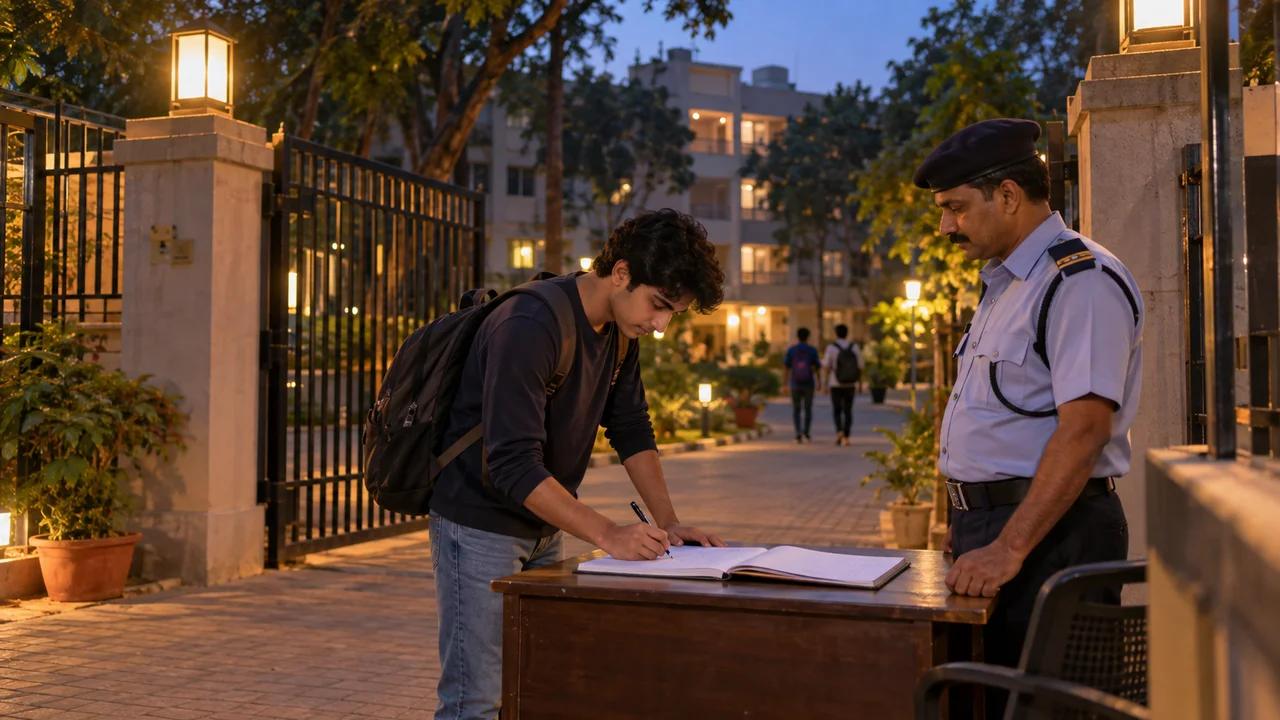
What hostel curfew rules usually cover
A curfew rule normally answers four questions: when you must be back, when the gate opens in the morning, how you get permission to stay out, and what happens if you break it. Some hostels add rules on weekend timings, exam periods and festival breaks.
The details differ widely. A university hostel might follow a rule set by the chief warden for every block. A private hostel or PG might let the owner decide. Two hostels on the same road can have very different timings, so don't assume.
| Part of the rule | What to look for |
|---|---|
| Curfew time | The latest time you can enter without permission, and whether it changes on weekends |
| Morning opening | When the gate unlocks, which matters for early trains and exams |
| Permission process | Who approves late entry or a night out, and in what format |
| Entry record | Register, ID card, biometric or guard's list |
| Consequences | Warning, parent call, fine or other action for repeated late entries |
Step 1: Find the exact rule in writing
By the end of this step, you'll know your hostel's real curfew time and where it's written down. Hearsay is the most common source of trouble, because rules change and seniors remember older versions.
- Look for a printed rulebook, an admission booklet, the hostel notice board or an undertaking you signed at admission.
- Note the curfew time, the morning opening time and any different weekend or exam-period timings.
- Check related rules in the same document, especially hostel visitor rules, since guest hours often end at or before curfew.
- Take a photo of the relevant page so you have it on your phone.
If you can't find anything written, ask the warden or office directly. A clear answer from them is better than a guess from a group chat.
Step 2: Learn how hostel entry timing is recorded
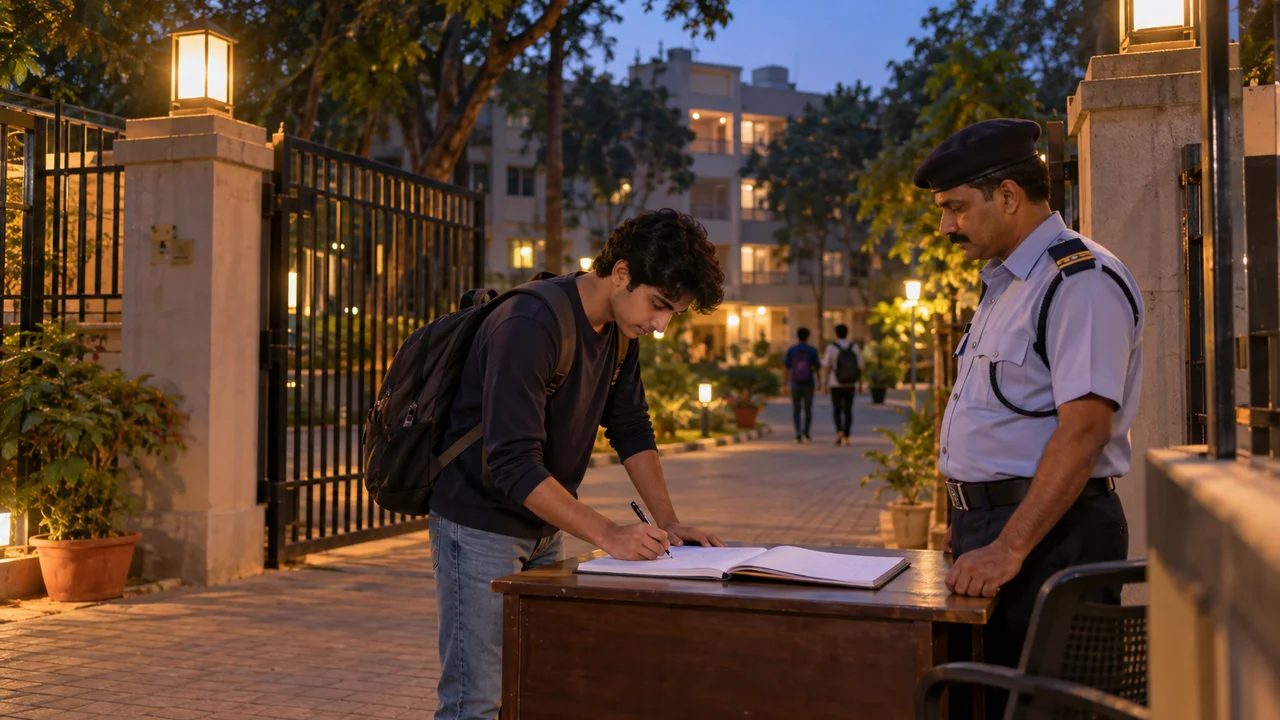
By the end of this step, you'll know exactly what the gate checks when you walk in. Entry might be a handwritten register, an ID card scan, a fingerprint or face device, or a guard ticking names on a list.
- Ask the security desk how late entries are logged and who sees that log.
- Save the numbers for the security desk, warden and caretaker on your phone on day one.
- Keep your hostel ID card with you every time you go out. Some gates won't let you in without it, even before curfew.
Knowing the system helps you avoid small slips, like forgetting to sign out, that later look like rule breaks.
Step 3: Get permission before you need it
By the end of this step, you'll have a simple routine for late returns and nights away. Most hostels allow exceptions when you ask in advance. Far fewer forgive a request made after you're already late.
- Ask the warden which format they accept: a written application, an online form, a message, or a parent's call or letter.
- Submit it as early as you can, with the date, reason, where you'll be and when you'll return.
- Keep a copy or screenshot of the approval and show it at the gate if asked.
- If a parent's consent is needed, tell them early so they aren't rushed.
Typical reasons that hostels accept include family visits, travel home, late lab sessions, internships and college events. Whether a reason is accepted is up to your hostel.
Step 4: Plan around classes, exams and travel
By the end of this step, your timetable and travel plans will fit inside the gate timings. Clashes are predictable, so you can sort most of them out early.
- Late labs or events: ask the department or organiser whether they send a list of names to the hostel.
- Early trains or exams: check whether the gate opens in time, and ask about early exit if it doesn't.
- Coaching or part-time work: if it runs past curfew regularly, ask for standing permission rather than asking each day.
- Weekends and festivals: confirm whether timings change and when the hostel expects you back after a break.
Step 5: Handle a delay or an emergency
If you're going to be late, call the hostel before curfew, not after. A call shows you're safe and gives staff time to note your return.
- Call or message the warden or security desk with your reason and expected arrival time.
- Tell a roommate or friend too, so someone inside knows.
- When you arrive, sign in honestly. Don't ask someone to sign for you.
- If you're ill or someone else is, health comes first. Our guide on what to do if you fall sick in hostel explains who to contact and what to keep ready.
Never climb a wall, prop open a gate or slip in through a back entrance. It's unsafe, and it can turn a minor late entry into a serious disciplinary issue.
How PG timings differ from college hostels
PG gate timings are usually set by the owner, so they vary more and can change with less notice. College hostels tend to follow rules set by the institution and its wardens.
| Point | College hostel | PG or private hostel |
|---|---|---|
| Who sets the rule | Institution or chief warden | Owner or manager |
| Where it's written | Rulebook or admission documents | Agreement, house rules sheet, or sometimes nowhere |
| Permission | Warden, often with parent consent | Owner or caretaker |
| Consequences | Institutional discipline process | Whatever the owner's rules say |
Before you pay a PG deposit, ask for the timings and fines in writing. Our explainer on PG rules and regulations lists the other house rules worth checking at the same time.
Common mistakes to avoid
Assuming the rule. Seniors and friends at other hostels often describe different timings. Check your own rulebook.
Asking after the fact. Requests made once you're already late are harder to approve. Ask in advance.
Proxy sign-ins. Having a friend sign for you can get both of you into trouble and defeats the safety purpose of the register.
Ignoring the morning gate. Students plan for curfew but forget the gate may still be locked for an early train.
Staying silent about unfair rules. If a timing doesn't work for your course or seems unfair, raise it politely with the warden or student council rather than quietly breaking it.
Next steps
Find your hostel's written curfew rule today, save the security and warden numbers, and learn the permission format before you need it. Those three habits cover most late evenings without stress. When you're comparing new places to stay, add gate timings to your checklist alongside rent, food and safety.
Curfew is only one part of your hostel's rulebook. The list of appliances wardens allow and ban in a hostel is another, and if you'll be spending warm evenings indoors before the gate shuts, try these ideas for beating the heat in a hostel room without AC.