PG rules and regulations are mostly house rules set by each owner, covering rent dates, deposits, electricity, guests, timings, food and move-out notice. A handful of these rules also connect to public law, such as state tenancy rules, GST on accommodation and anti-ragging regulations, and those parts you can check against official sources. This guide walks through the standard rules you'll see in most PG agreements, explains which ones are a matter of the owner's policy and which ones touch the law, and links each legal point to its official source. For a wider look at your legal position as a resident, read our guide to what rights PG and hostel residents actually have in India.
One caution before you start: this is general information, not legal or tax advice. Rules vary by state, by city and by property, so confirm anything that matters with your PG owner in writing and, where money or tax is involved, with a qualified professional.
Key Takeaways
- Most PG rules (entry timings, guests, food, cleaning) are set by the owner and differ from one property to the next, so read the rule sheet before you pay.
- The Model Tenancy Act 2021 caps the residential security deposit at 2 months' rent and requires a written agreement, but it binds only states and UTs that adopt it.
- Accommodation up to Rs 20,000 per person per month, supplied for at least 90 continuous days, is exempt from GST under a July 2024 notification.
- Electricity charging practices vary. Agree the per-unit rate in writing; don't assume a standard rate applies.
- Ragging by fellow students can be reported to the National Anti-Ragging Helpline at 1800-180-5522, 24x7.

1. A written agreement that lists the house rules
The single most useful PG rule is the one that puts every other rule on paper. A written agreement, or at least a signed rule sheet, settles arguments about rent, deposits and notice before they start.
There's a legal angle too. The PRS Legislative Research summary of the Model Tenancy Act 2021 notes that the model law, approved by the Union Cabinet on 2 June 2021, requires a written agreement that's intimated to the Rent Authority. It's a model law, though: it binds only the states and UTs that adopt it, so check your state's position.
What to check: rent amount and due date, deposit and refund terms, notice period, what's included (food, Wi-Fi, laundry, electricity), and the house rules themselves. A written agreement also helps later, because the UIDAI list of supporting documents accepts a rent, lease or leave-and-licence agreement, registered or unregistered, as proof of address for Aadhaar.
2. Rent due date, late fees and receipts
Every PG sets a rent due date, and many add a late-payment charge. Neither is fixed by any single national rule, so the agreement is what counts. Ask for the due date, the grace period and any late fee in writing.
Insist on a receipt for each payment, whether you pay in cash or online. Receipts protect you in a deposit dispute, and working professionals need them for tax. The Income Tax Department FAQ confirms the HRA exemption is available to salaried individuals under the old regime only. Since the Income-tax Act 2025 has replaced the 1961 Act from FY 2026-27, check current forms with a tax professional. Our guide on getting a rent receipt for PG stays and using it for an HRA claim covers the paperwork.
3. Security deposit and refund conditions
Almost every PG takes a security deposit, and the refund terms cause more disputes than any other rule. Get the amount, the deductions allowed and the refund timeline written into the agreement.
Where a state has adopted the Model Tenancy Act 2021, the residential security deposit is capped at 2 months' rent, according to PRS. In states that haven't adopted it, the cap doesn't apply, and your agreement usually decides the amount.
Don't confuse a PG deposit with college fees. The UGC Fee Refund Policy 2025-26 says caution money and security deposits paid to institutions must be refunded in full, but the policy says nothing specific about hostel fees, and it doesn't govern private PGs.
4. Electricity and utility charges
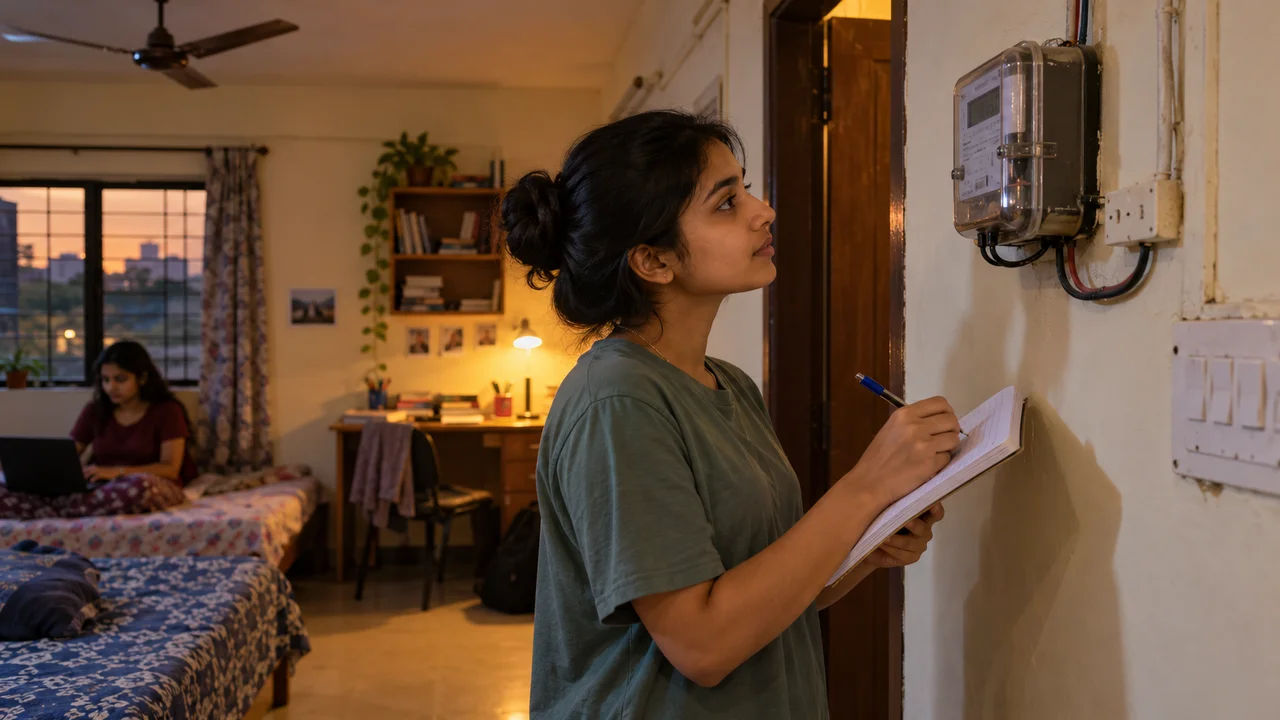
Electricity is often billed separately from rent, either per unit from a sub-meter or as a flat monthly share. There's no general rule capping what a landlord can charge per unit, so practices vary. Agree the rate and the billing method in writing before you move in.
One local exception is worth knowing. In the TPDDL area of Delhi only, the Tata Power-DDL prepaid tenant FAQ says a tenant can get their own prepaid meter with a rent agreement or a recent rent receipt plus ID, without a landlord NOC. The domestic tariff applies, and the security deposit is Rs 3,000. This doesn't apply outside TPDDL's area.
5. GST included in (or added to) the rent
Some PGs quote rent "plus GST", which surprises many first-time residents. Whether GST applies depends on the amount and the length of stay.
Notification 04/2024-Central Tax (Rate) excludes hostels and paying guest accommodation from the general residential dwelling exemption. It then adds a separate exemption for accommodation of up to Rs 20,000 per person per month, supplied for a minimum continuous 90 days, effective 15 July 2024. CBIC Circular 228/22/2024-GST adds that the past period from 1 July 2017 to 14 July 2024 was regularised on an "as is where is" basis where the same conditions were met. Check the latest GST notifications for any later changes, and see our explainer on GST on PG rent and hostel fees.
6. Entry timings and curfew
Many PGs set a gate-closing time, and some apply stricter timings in women's PGs. These are owner policies, not legal requirements, so timings and exceptions differ widely.
Ask how late entry works in practice. Can you inform the warden in advance for a late lab, exam or shift? Is there a fine, or just a register entry? If your college or job means regular late returns, settle this before paying the deposit rather than after.
7. Visitors and overnight guests
Guest rules are among the most common PG rules and among the most varied. Some PGs allow visitors only in a common area during set hours. Others ban opposite-gender visitors in rooms or don't allow overnight guests at all.
If parents may visit and stay over, ask whether the PG allows it and whether there's a per-night charge. Get the answer in the rule sheet so a change of warden doesn't change the policy.
8. Food, kitchen and mess rules
Where meals are included, the PG usually fixes meal timings, the menu cycle and whether you can skip meals for a reduced rate. Rules on cooking in rooms, using the kitchen and keeping appliances vary by property.
Ask whether a mess-off or leave rebate exists for weeks you're away, and whether outside food delivery is allowed. These small rules shape your monthly cost more than you'd expect.
9. Conduct, ragging and shared-space rules
Standard conduct rules cover noise after a set hour, smoking and alcohol, cleanliness of shared spaces and damage to furniture. The owner sets these, and breaking them can lead to fines or a request to leave, depending on the agreement.
Ragging is different, because it's covered by regulation when it involves students. The UGC guidelines on curbing ragging define it to include rude treatment of a fresher or junior, acts causing psychological harm, and asking students to do acts causing shame. Institutional punishments include suspension, expulsion from the hostel, rustication and a fine up to Rs 25,000. If seniors from your institution rag you in a PG, the National Anti-Ragging Helpline runs 24x7 on toll-free 1800-180-5522.
10. Notice period and move-out
Most PGs require notice before you leave, and many link the deposit refund to serving it. There isn't a verified national standard notice period for PGs, so the agreement decides.
Before signing, confirm the notice length, whether it's counted from the date you inform or from the next rent cycle, and how the room will be inspected. On your last day, ask for a written note of any deductions from the deposit.
PG rules at a glance: owner policy or legal rule?
Use this table to see which rules you negotiate with the owner and which ones you can check against an official source.
| Rule | Who sets it | What to get in writing | Official reference |
|---|---|---|---|
| Written agreement | Owner; state law where the Model Tenancy Act is adopted | Full terms and house rules | PRS, Model Tenancy Act 2021 |
| Rent and receipts | Owner | Due date, late fee, receipt for each payment | Income Tax Dept FAQ (HRA, old regime) |
| Security deposit | Owner; 2-month cap in adopting states | Amount, deductions, refund timeline | PRS, Model Tenancy Act 2021 |
| Electricity | Owner; practices vary | Per-unit rate and billing method | TPDDL FAQ (Delhi TPDDL area only) |
| GST | Central GST law | Whether rent is quoted with or without GST | Notification 04/2024-CT (Rate) |
| Timings, guests, food | Owner | Gate time, guest policy, meal rebates | None; property-specific |
| Ragging | UGC regulations (students) | Not applicable | National Anti-Ragging Helpline |
| Notice period | Owner | Notice length and refund link | None verified; agreement decides |
How this list was put together
This list covers the rules that show up most often in PG agreements and rule sheets, grouped by whether they're owner policy or linked to public law. It's a research-based review, not legal advice. Every legal point above links to an official or primary source (PRS, the GST Council, CBIC, UGC, UIDAI, the Income Tax Department and TPDDL). Where no verified source exists, such as a standard notice period or a cap on electricity rates, the post says so rather than guessing.
Bottom line
Most PG rules are the owner's to set, which is exactly why you should read them before you pay. Get the agreement, deposit terms, electricity rate and notice period in writing. Check the few legal points (deposit caps in adopting states, the GST exemption, anti-ragging protections) against the official sources linked here. If something in your agreement looks unfair, ask for it to be changed before signing, because it's much harder to fix after you've moved in.
Two of the rules above get their own deep dives: how per-unit PG electricity billing works walks you through checking your meter share, and filing a complaint with the anti-ragging helpline covers what to do if seniors cross the line.