You can usually bring a bike or scooter to hostel, but only after the warden or owner confirms that two-wheelers are allowed and tells you where to park. Rules vary a lot between hostels and PGs, so get the policy, the parking spot and any fee agreed before the vehicle arrives. A two-wheeler saves time on long commutes and late lab sessions. It also brings new responsibilities: papers, security, fuel or charging, and sharing a small parking space with everyone else.
This guide walks through the checks to make, in order, so your bike doesn't turn into a daily argument with the guard. If you're still settling in, the complete guide to hostel life in India covers the bigger picture.
Key Takeaways
- Hostel and PG vehicle rules vary. Ask before you bring a bike, and get the answer in writing.
- Confirm the exact parking spot, whether it's covered, and whether it costs extra.
- Register the vehicle with the hostel if they ask, and keep your licence, registration, insurance and pollution certificate current.
- Use a strong lock and keep insurance active, since many hostels don't accept liability for residents' vehicles.
- For electric scooters, agree where and how you'll charge before moving in.
Before you begin: what you'll need
Have your documents and questions ready before you talk to the warden or owner. It makes the conversation short and gives you something to compare if you're choosing between places.
- Your driving licence and the vehicle's registration certificate (RC)
- A valid insurance policy and pollution under control (PUC) certificate
- Your hostel or PG agreement, or the written house rules
- A sturdy lock, and a cover if the parking is open to the sky
- A list of questions about parking, timings and charging (covered below)
Step 1: Check whether two-wheelers are allowed at all
Start by asking the warden or owner directly whether residents can keep a bike in hostel premises. Don't assume. College hostels often have a written vehicle policy, and some limit two-wheelers to senior students or to residents who commute to a distant campus. Private PGs set their own rules, and a few have no space at all.
- Ask for the vehicle rule in the hostel handbook or the PG agreement.
- Check whether there are curfew or gate timings for vehicles going in and out.
- Ask whether guests' vehicles are allowed, if friends will visit.
You're done with this step when you have a clear yes, no or conditional yes, ideally in writing or on WhatsApp.
Step 2: Lock down the parking spot and any fee
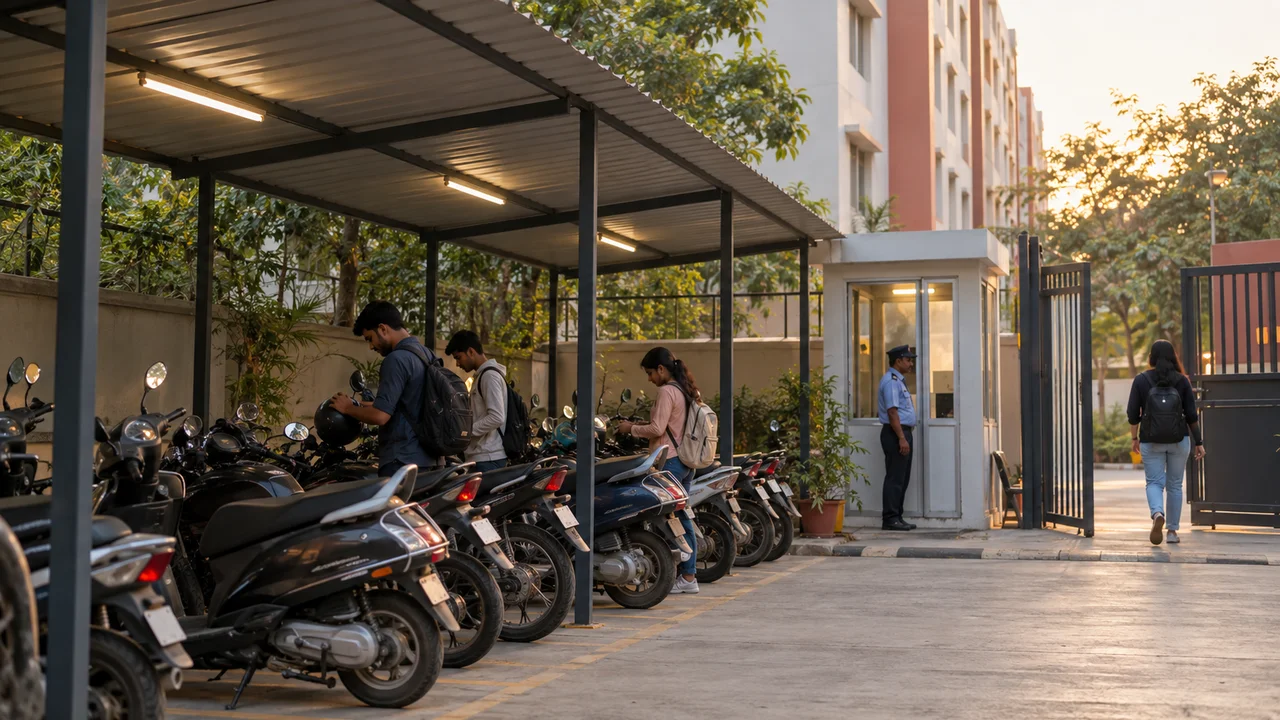
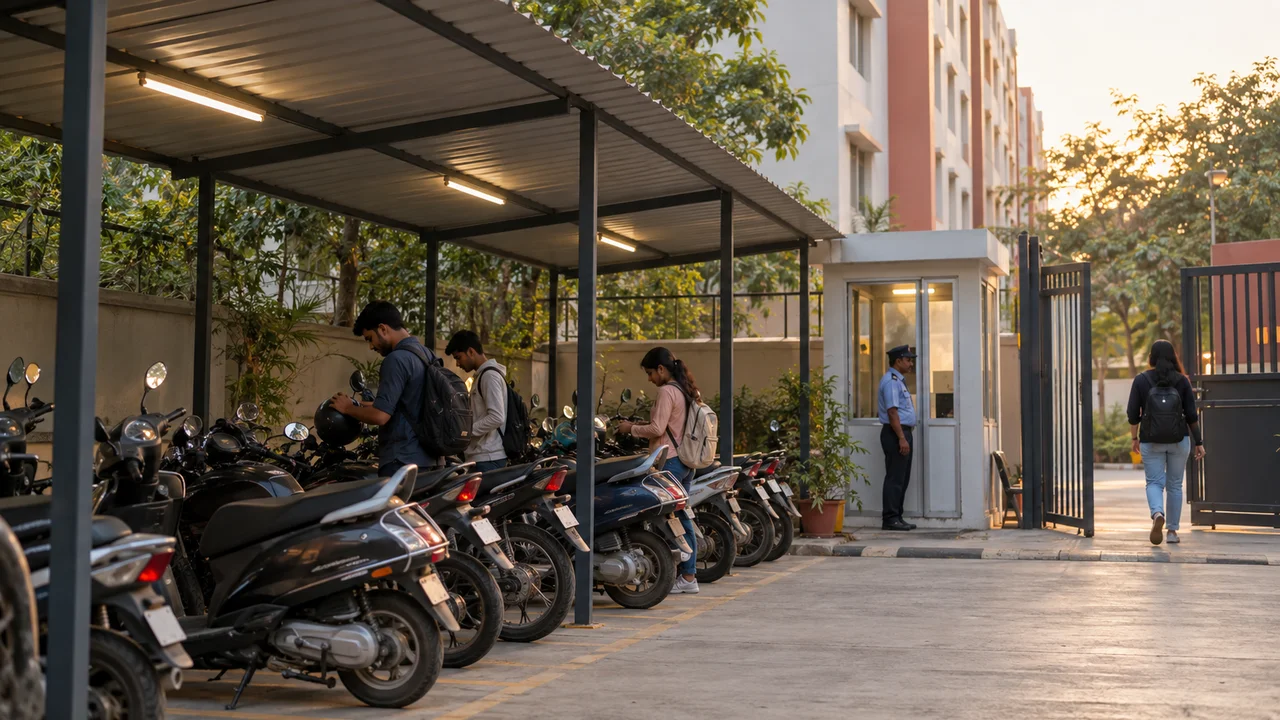
A "yes" isn't enough: confirm exactly where the vehicle goes and what it costs. Two-wheeler parking in a PG ranges from a dedicated covered bay to a strip of pavement outside the gate. Some owners include it in rent, while others charge a monthly fee.
| Question to ask | Why it matters |
|---|---|
| Is the spot inside the gate or on the street? | Street parking is harder to secure and may draw complaints from neighbours. |
| Is it covered? | Sun and monsoon rain wear out seats, paint and electricals. |
| Is there a fixed spot or first come, first served? | Shared space leads to blocked vehicles and morning delays. |
| Is parking extra, and is it refundable? | Hidden monthly charges add up across the year. |
| Is there CCTV or a guard at night? | It affects theft risk and what evidence exists if something happens. |
Write the answers into your agreement or a message thread. While you're doing the walkthrough, check other daily basics too, such as the drinking water in hostel kitchens and common areas.
Step 3: Register the vehicle with the hostel
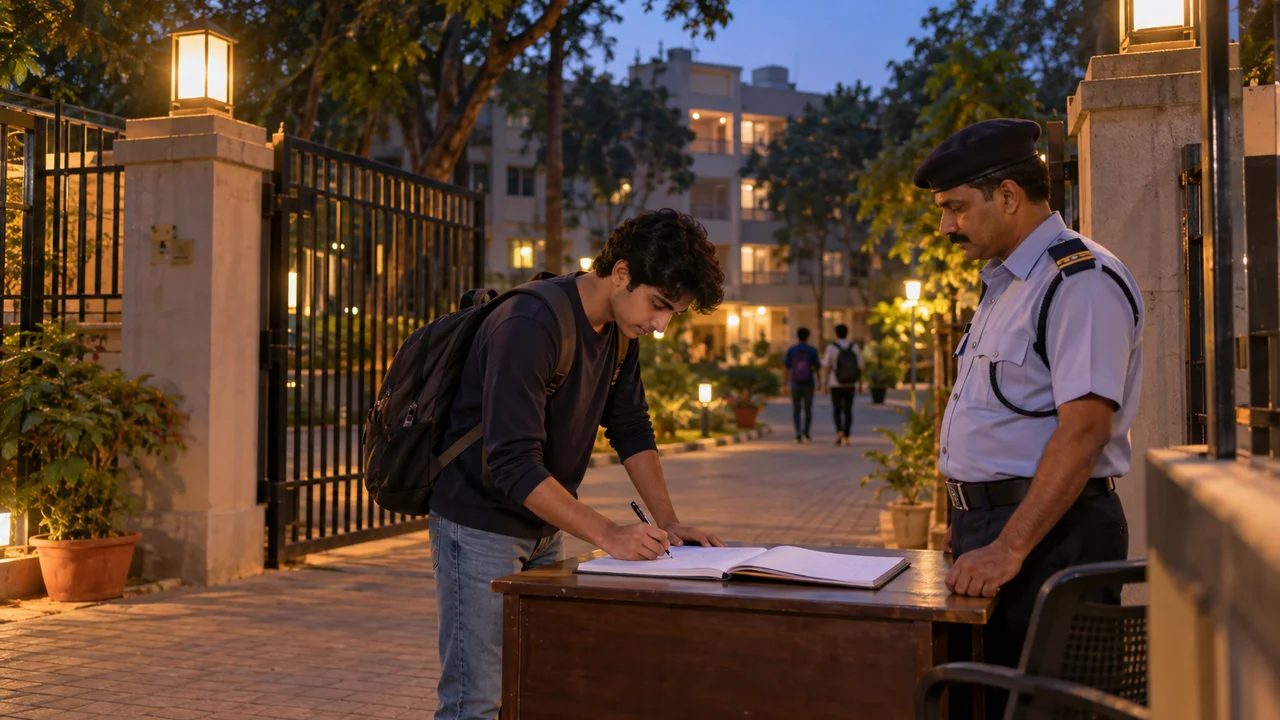
If the hostel keeps a vehicle register or issues stickers, complete it on day one. Guards use these to tell residents' bikes from outsiders', and an unregistered vehicle may be stopped at the gate or asked to move.
- Give the registration number, model and colour.
- Attach copies of the RC and your resident ID if requested.
- Stick the pass where the guard can see it.
Step 4: Keep your papers current and your address sorted
Your licence, RC, insurance and PUC need to stay valid while the vehicle is with you. Set calendar reminders for renewal dates, since you'll be far from home when they fall due. Keep digital copies on your phone and the originals somewhere safe in your room.
Moving cities can also mean updating the address linked to your documents. If you're updating Aadhaar before you update vehicle papers, your hostel or PG agreement can help: the UIDAI list of supporting documents counts a rent, lease or leave-and-licence agreement as address proof, whether or not it's registered. Our guide to address proof for PG tenants explains the options in more detail.
Step 5: Protect the bike from theft and damage
Assume you're responsible for your own vehicle unless your agreement says otherwise. Many hostel rules state that the management isn't liable for residents' belongings, and vehicles are often included.
- Use a disc lock or chain lock, and lock to a fixed point if one is available.
- Keep insurance active, and check whether it covers theft.
- Don't leave helmets or keys on the vehicle.
- Photograph the bike and note the chassis and engine numbers.
If something goes missing, tell the warden straight away, ask for CCTV footage, and file a police complaint with your registration details.
Step 6: Agree on charging if it's electric
For an electric scooter, settle where you'll charge before you move in. Rules vary: some hostels provide a charging point in the parking area, some allow removable batteries indoors, and some don't allow charging in rooms. Ask who pays for the electricity and how it's billed, and get the arrangement in writing so there's no dispute at the end of the month.
Common mistakes to avoid
Bringing the bike first and asking later. It happens because students assume parking is standard. Ask before the vehicle arrives, or you may end up paying for outside parking.
Relying on a verbal promise. Owners and wardens change, and memories fade. A written message is enough proof if the spot is later taken away.
Letting papers lapse. Renewal dates are easy to miss in a new city. Set reminders the day you arrive.
Lending the bike freely. Friends borrowing your vehicle puts you on the hook for anything that goes wrong. Keep the keys with you.
Bottom line
A bike or scooter can make hostel life much easier, as long as you sort out permission, parking, papers and security before it arrives. Treat every rule as specific to your hostel, write down what's agreed, and you'll avoid most of the friction other residents run into. Your next step: send the questions from Step 2 to your warden or owner today.
If you're charging an electric scooter, our piece on fire and electrical safety in hostels and PGs is worth a read, and for the riders burning energy on long commutes, there's a guide to high-protein eating on a hostel mess diet.