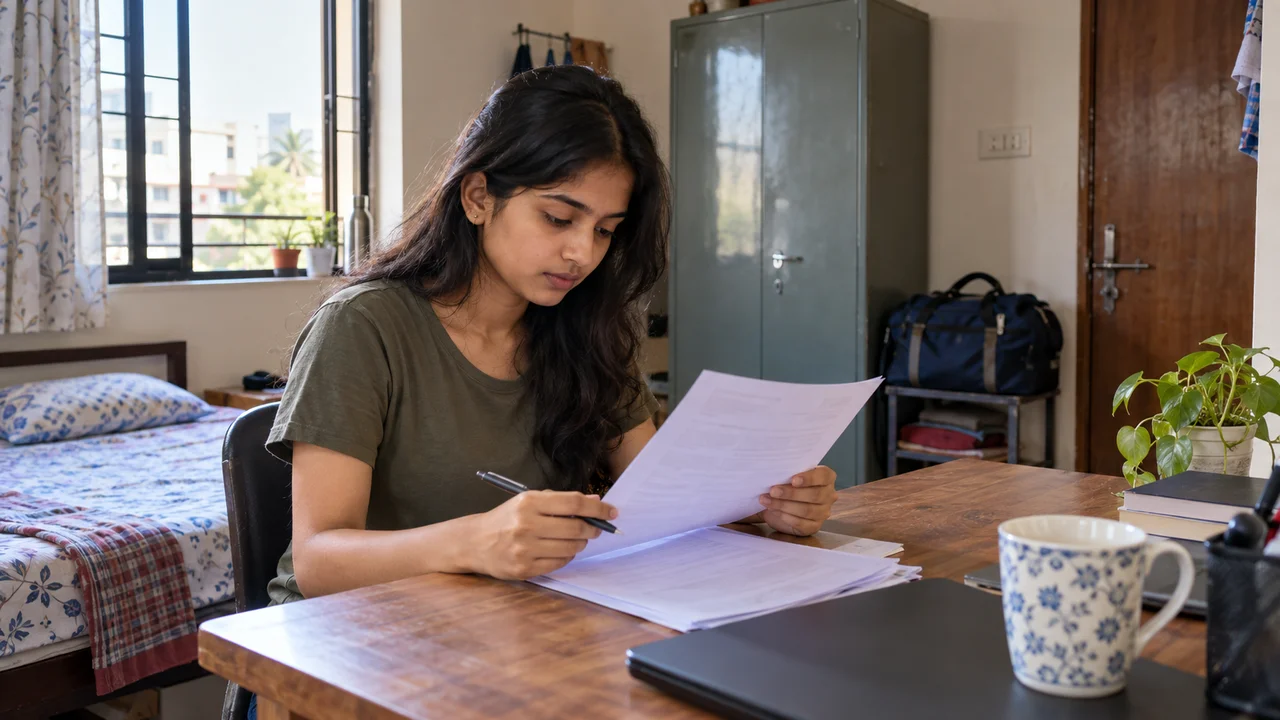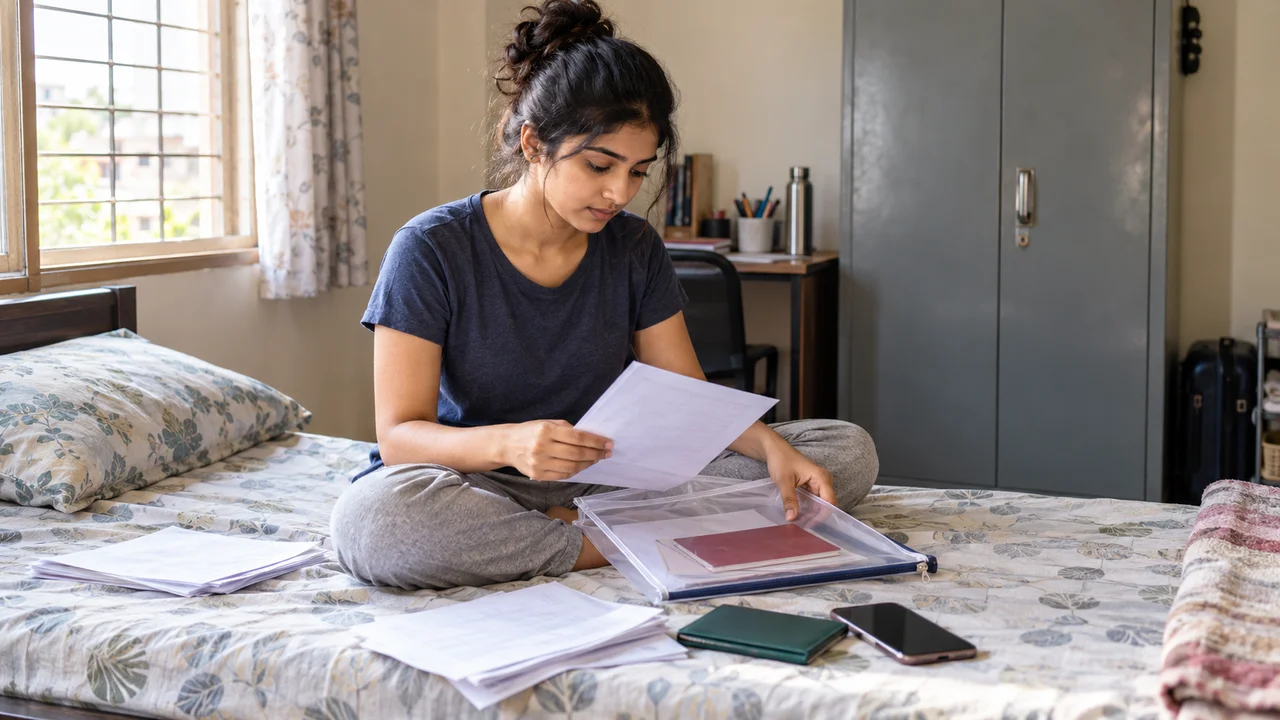
You can build address proof for a PG with a written rent or leave-and-licence agreement, which UIDAI accepts for Aadhaar even when it isn't registered. Once Aadhaar shows your PG address, banks and mobile operators usually treat it as your main proof, though each sets its own list. Students have a second route: a certificate in UIDAI's format, signed by the head of a recognised institution. This guide walks through collecting the papers, updating Aadhaar and then using it for your bank and SIM.
Paperwork is one of the less fun parts of moving out. For everything else that comes with it, from roommates to mess food, start with this complete guide to hostel life in India.
Key Takeaways
- A rent, lease or leave-and-licence agreement, registered or unregistered, is accepted by UIDAI as proof of address.
- Students can use a certificate in UIDAI format signed by the head of their institution, valid for 3 months.
- Utility bills used for Aadhaar must be no older than 3 months.
- Update Aadhaar first, then use it for bank and SIM changes, because most other KYC checks lean on it.
- Rules vary between PGs, banks and operators, so ask before you submit anything.
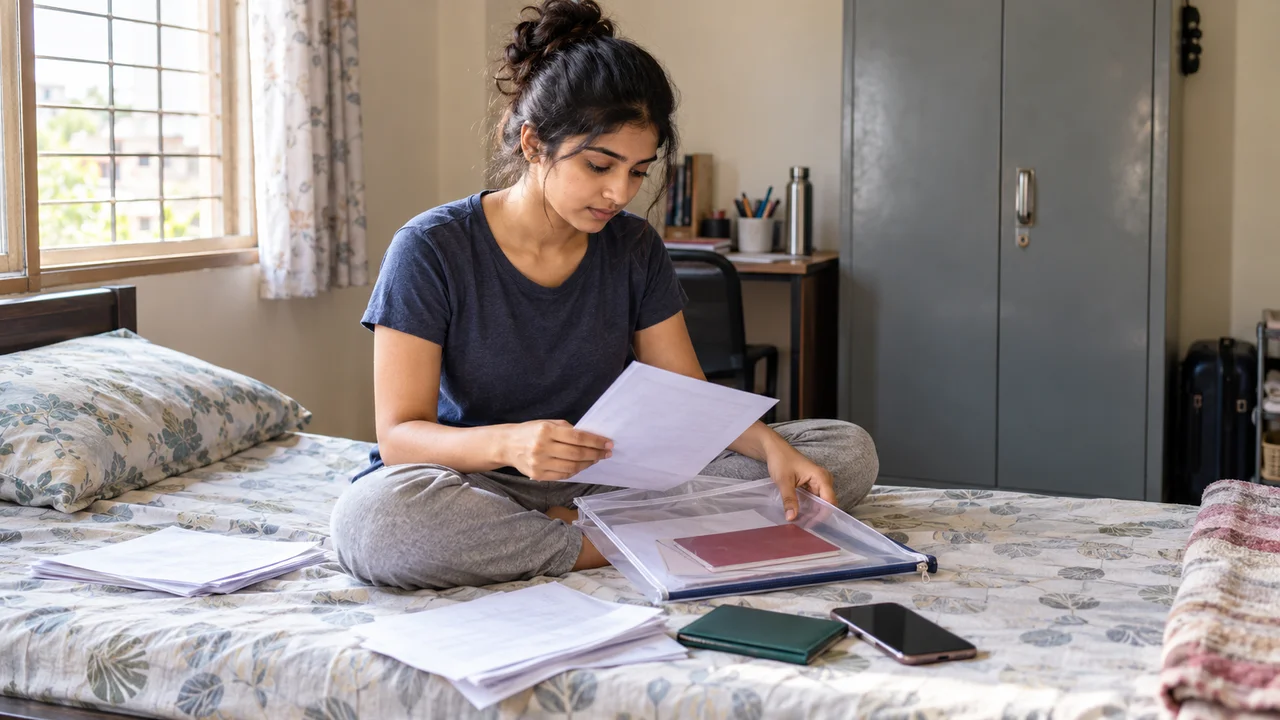
Before you begin: decide whether you need a new address at all
Not every tenant needs to change their address on record. If your stay is short and your bank, SIM and Aadhaar all show your permanent home address, that's often fine. You need PG address proof when a local office, an employer, a scheme or a new account asks for your current address specifically.
Keep these ready before you start:
- Your Aadhaar number and the mobile number linked to it
- Your PG's full postal address, including PIN code, written exactly as the owner uses it
- Your PG owner's or manager's name and phone number
- Your college or institute ID, if you're a student
- A few photocopies and a clear phone scanner app
Step 1: Get a written rent or leave-and-licence agreement
By the end of this step, you'll hold the one document that works almost everywhere. UIDAI's list of supporting documents accepts a rent, lease or leave-and-licence agreement as proof of address, and it doesn't need to be registered.
- Ask the PG owner for a written agreement when you pay the deposit, not months later.
- Check that your name matches your Aadhaar spelling and that the address includes the room or flat number and PIN code.
- Make sure both sides sign and date every page.
- Keep the original safe and save a scanned copy.
Written agreements also help in other ways. Under the Model Tenancy Act 2021, a written agreement is required, though the law applies only in states that adopt it. Many PGs use simple licence forms instead, and that's normal.
Step 2: Collect backup proof if there's no agreement
If your PG won't sign an agreement, you still have options. Some owners avoid paperwork, and some hostels issue only a fee receipt. Here's what to try:
- Institution certificate: for students, UIDAI accepts a certificate in its own format, signed by the head of a recognised educational institution. It's valid for 3 months, so use it soon after it's issued.
- Head of family route: UIDAI allows an address update through the head of family, which can help if a relative lives at the same address.
- Utility bills: if a bill is in your name, UIDAI accepts it when it's no older than 3 months.
- Rent receipts: keep signed monthly receipts. They may not count for Aadhaar, but some offices accept them alongside ID.
A useful local example: in the TPDDL supply area of Delhi, a tenant FAQ says a tenant can get their own prepaid meter with a rent agreement or a recent rent receipt plus ID, without a landlord NOC. That applies only in that area, so don't assume your city works the same way.
Step 3: Update the address on Aadhaar
By the end of this step, your Aadhaar should show your PG address. Aadhaar comes first because banks and operators often rely on it for KYC, so one update feeds the rest.
- Pick your proof: the rent agreement, the institution certificate or a recent utility bill.
- Check that the name on the proof matches your Aadhaar exactly.
- Submit the update through UIDAI's official online service or at an Aadhaar centre. Check UIDAI's site for the current process and charges.
- Save the update request number you receive.
- Download the updated Aadhaar once the request is approved.
To verify, look at the downloaded copy and confirm the room number, street and PIN code. If the request is rejected, the reason usually points to a name mismatch or an unclear scan, so fix that and resubmit.
Step 4: Update your bank's address record
Your bank will usually accept the updated Aadhaar as address proof, but ask first. Each bank runs its own KYC process and document list.
- Call your branch or check the bank's app for an address update option.
- Ask whether you can keep your permanent address and add the PG as a current or communication address. Some banks offer this, which saves you a second update when you move again.
- Submit the updated Aadhaar, or the rent agreement if the bank accepts it.
- Check that the new address appears on your next statement or in the app's profile section.
If you're opening a new account near your PG, carry the original agreement and your updated Aadhaar together. Branches can ask for both.
Step 5: Decide on your SIM and other records
Most people don't need to change their SIM address just because they moved. Update it only when your operator or another service asks for matching current address proof. Operators set their own rules, so ask at an official store.
Other records worth a check, depending on your situation:
- Your college or employer's records, which they may need for letters or HR forms
- Scholarship portals, since some schemes ask where you live. One post-matric scheme, for example, asks the head of the institution to certify private accommodation when no hostel place was available. Each scheme sets its own documents.
- Delivery and shopping apps, so parcels don't go back to your old address
Common mistakes to avoid
The most common problem is a name mismatch between the proof and Aadhaar. A missing middle name or a different spelling can get an update rejected, so match the spelling before anyone signs.
Using an expired document. The institution certificate lasts 3 months and utility bills must be no older than 3 months for Aadhaar. Submit soon after you get them.
Waiting until you need it urgently. Updates take time to process. Ask for the agreement at move-in, when the owner is already doing paperwork.
Assuming every PG works the same way. Rules vary by hostel and owner. Some give printed agreements, others give only receipts. Ask before you book if address proof matters to you.
Next steps
Get the written agreement first, update Aadhaar with it, and then use Aadhaar for the bank and any other record that needs your current address. Keep scans of every document in one folder so moving again is quicker.
Once the paperwork's sorted, turn to day-to-day comfort: check what to look for in drinking water in hostel setups, and read up on how to keep a hostel room cool before the summer months arrive.
Your updated address helps with more than banking. If you're bringing a vehicle to your PG, Bringing a Bike or Scooter to Hostel: Parking and Rules covers the parking side, and High-Protein Eating on a Hostel Mess Diet helps once you're settled and thinking about meals.