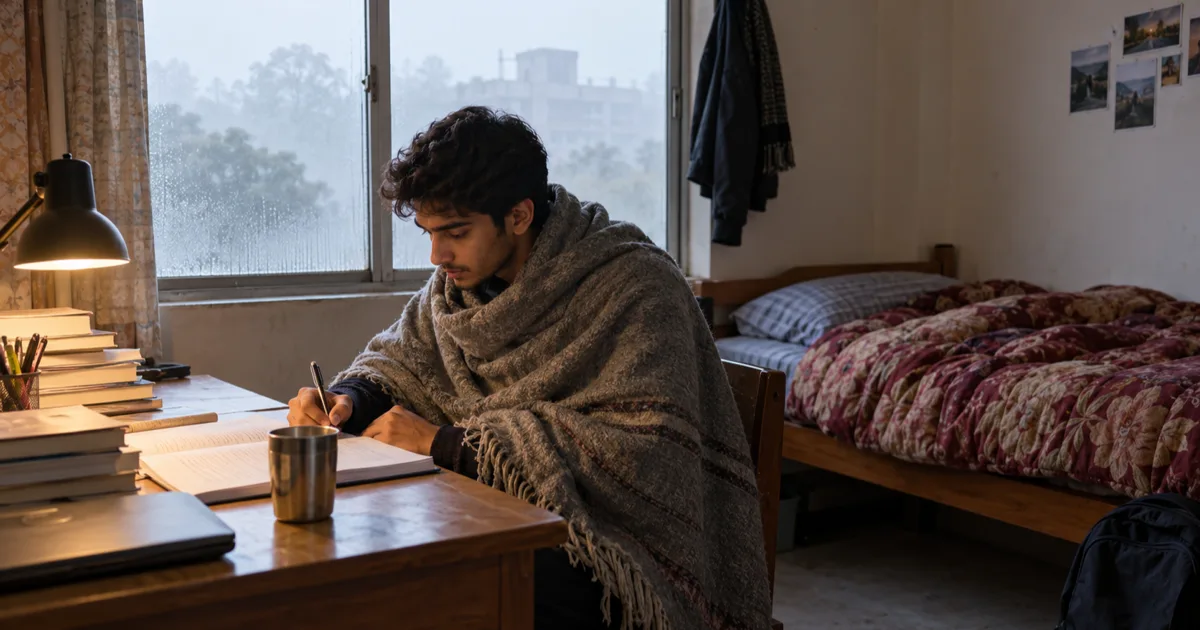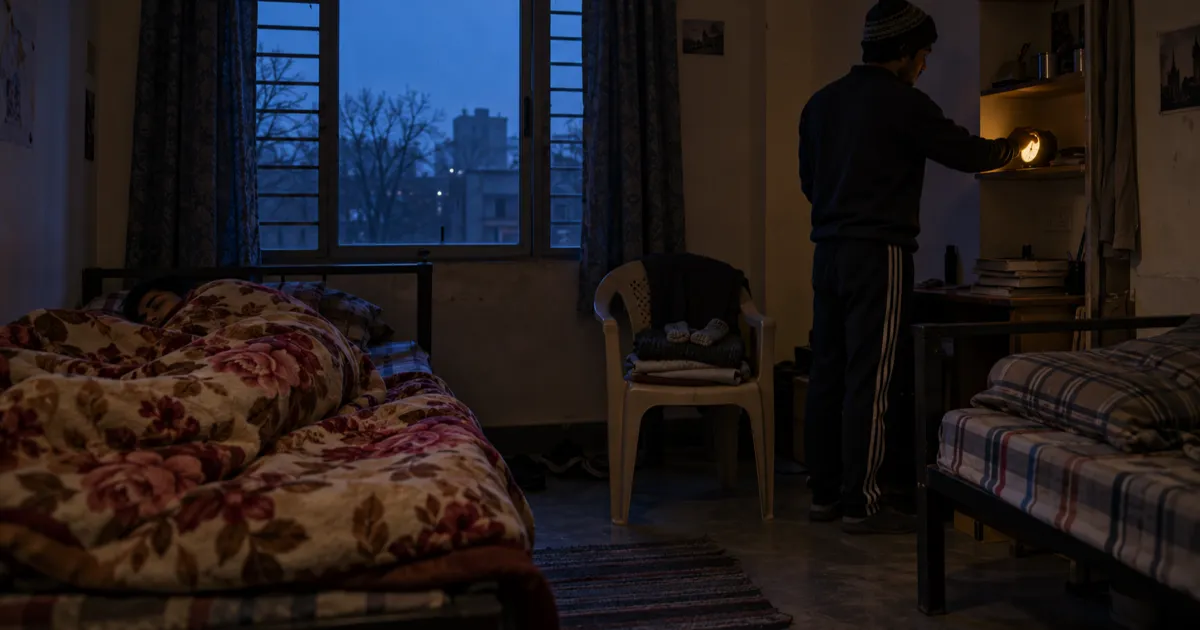
To wake up early in winter, fix your bedtime first: count back from your first class, give yourself at least 7 hours of sleep, and get light into your eyes as soon as the alarm rings. It's harder from December because sunrise in North India comes almost an hour later than in October, so your alarm goes off in the dark. This guide on how to wake up early in winter shows the sunrise times, the sleep numbers and the exact bedtime math for an 8 AM class.
It's written for students in hostels and PGs across the cold belt, where the alarm competes with a warm quilt and a roommate who's still asleep. For the rest of the season, from heaters to hot water, see our winter hostel survival guide.
| Key number | Value | Scope / data checked |
|---|---|---|
| Delhi sunrise, 9 October 2026 vs 10 January 2027 | 6:18 AM vs 7:15 AM | Positional Astronomy Centre, IMD |
| Latest sunrise in Chandigarh this winter | 7:20 AM, around 10 January 2027 | Positional Astronomy Centre, IMD |
| Recommended sleep, ages 18-60 | 7 or more hours | CDC, page updated May 2024 |
| Screens off before bed | At least 30 minutes | CDC sleep tips |
| Bedtime for an 8 AM class (worked example) | Asleep by 11:45 PM for 7 hours | Hostel360 calculation below |
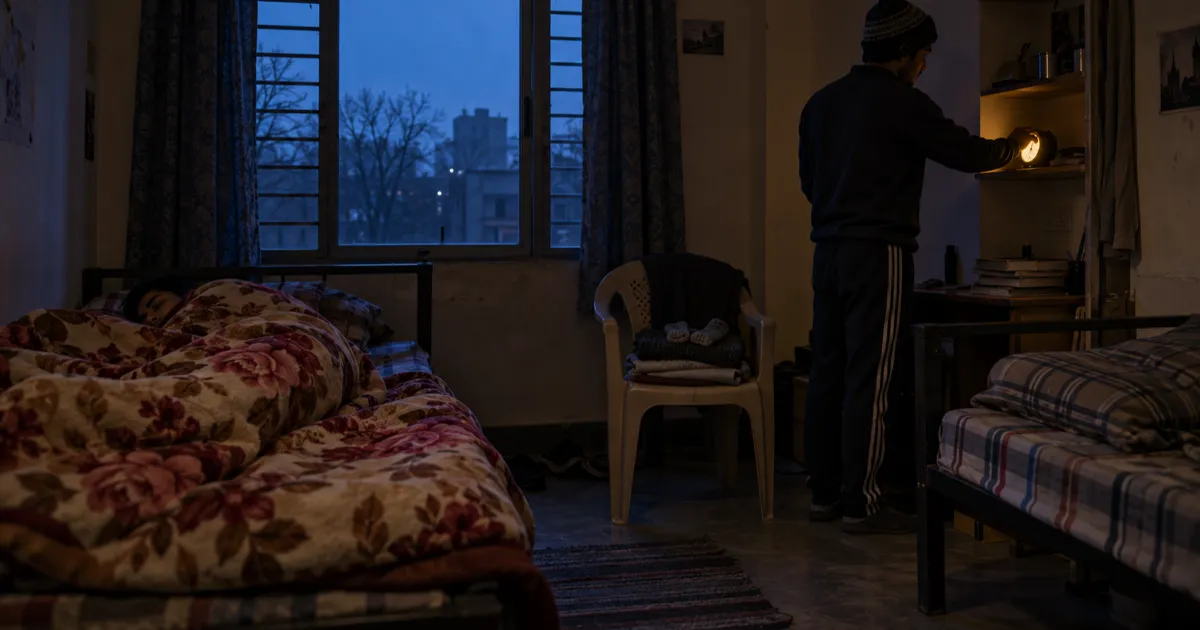
Why is it so hard to wake up in winter?
Your body clock takes its cue from light, and winter mornings give it very little. When the alarm rings before sunrise, your brain is still in night mode. Add nights that average 7.5°C outside in Delhi and a warm quilt, and getting up feels like a fight. The fix is to move your sleep earlier and fake the morning with light.
The National Institute of General Medical Sciences (part of the US National Institutes of Health) says light and dark have the biggest influence on circadian rhythms. A cluster of nerve cells in the brain, the suprachiasmatic nucleus, sets melatonin production by how much light reaches the eyes. Evening brings more melatonin and sleepiness. The same fact sheet warns that light from electronic devices at night can confuse the clock, which is exactly what a phone under the quilt at 1 AM does.
A 2013 study in Current Biology by Kenneth Wright and colleagues found that electric lighting goes with less daytime sunlight, more light after sunset, and a later body clock. When participants lived on natural light alone, their biological night ended just after sunrise, and the night owls shifted the most. Hostel life is the opposite of that camping trip: tube lights till 2 AM, lectures indoors all day.
Then there's the cold. The normal January minimum at Safdarjung in New Delhi is 7.5°C, according to IMD's climatological normal. If you can't wake up in winter, you're not lazy. You're asking a sleepy brain to leave a warm bed for a cold, dark room.
What time does the sun rise in North India in winter?
From late December to mid-January, between about 6:50 AM and 7:20 AM, depending on the city. The Positional Astronomy Centre's tables show Delhi's sunrise holding at 7:15 AM from 4 to 18 January 2027 and Chandigarh's reaching 7:20 AM. That's close to two hours later than in June.
The Positional Astronomy Centre in Kolkata, part of the India Meteorological Department, publishes daily sunrise and sunset tables for Indian cities. We took the times for three student cities on four dates and worked out what a 6:45 AM alarm looks like in each:
| City | Sunrise 10 Jun 2026 | Sunrise 9 Oct 2026 | Sunrise 10 Jan 2027 | Daylight on 10 Jan | A 6:45 AM alarm on 10 Jan |
|---|---|---|---|---|---|
| Chandigarh | 5:21 AM | 6:20 AM | 7:20 AM | 10 h 20 min | 35 min before sunrise |
| Delhi | 5:23 AM | 6:18 AM | 7:15 AM | 10 h 27 min | 30 min before sunrise |
| Lucknow | 5:12 AM | 6:02 AM | 6:57 AM | 10 h 34 min | 12 min before sunrise |
Three things follow from the table. First, sunrise moves about an hour later between early October and mid-January: 57 minutes in Delhi, 60 in Chandigarh and 55 in Lucknow. Second, the same 6:45 AM alarm that rang 82 to 93 minutes after sunrise in June now rings in the dark. Third, the further west and north you study, the later your mornings get, which is why Chandigarh is darker at 6:45 than Lucknow.
Daylight shrinks too. Chandigarh had 14 hours 3 minutes of daylight on 10 June 2026 and gets 10 hours 20 minutes on 10 January 2027. Fog can delay real brightness further, so treat these as best-case times.
How much sleep do college students need?
At least 7 hours a night if you're 18 or older, and 8 to 10 hours if you're still 17. Those are the CDC's recommendations, based on a joint consensus of the American Academy of Sleep Medicine and the Sleep Research Society. Winter doesn't change the number; it changes how hard short sleep hits.
If you joined college at 17, you're in the 8-to-10-hour band until your birthday. The CDC's sleep tips are short and useful in a hostel: go to bed and get up at the same time every day, turn off electronic devices at least 30 minutes before bedtime, avoid caffeine in the afternoon or evening, and keep the bedroom quiet and cool. That last one won't be a problem in January.
The same-time rule matters most. Sleeping till 11 AM on Sunday undoes the week's progress, and Monday's alarm feels brutal again. If exams push your schedule around, our exam season study tips for a shared room show how to plan late study nights without wrecking the week.
What time should you sleep for an 8 AM class?
For an 8 AM class with a typical hostel routine, set the alarm for 6:45 AM and be asleep by 11:45 PM for 7 hours, or 10:45 PM for 8. Get there by working backwards: class time, minus travel, breakfast and getting ready, minus your sleep, minus time to fall asleep.
Worked example: one student, one 8 AM class
These routine times are our example inputs. Swap in your own.
- Class starts: 8:00 AM
- Walk from hostel to department, 15 min: leave by 7:45 AM
- Mess breakfast, 20 min: reach the mess by 7:25 AM
- Bath and dressing, 30 min: start by 6:55 AM
- Getting out of the quilt, 10 min: alarm at 6:45 AM
Now subtract sleep, using the CDC's 7-hour minimum and an 8-hour option:
6:45 AM minus 7 hours = asleep by 11:45 PM. Minus 20 minutes to fall asleep = in bed by 11:25 PM. Minus the CDC's 30-minute screen break = phone down by 10:55 PM.
| Step | 7 hours of sleep | 8 hours of sleep |
|---|---|---|
| Phone and laptop off | 10:55 PM | 9:55 PM |
| Lights off, in bed | 11:25 PM | 10:25 PM |
| Asleep | 11:45 PM | 10:45 PM |
| Alarm | 6:45 AM | 6:45 AM |
If you currently fall asleep at 1:30 AM, don't jump straight to 11:45 PM. Move bedtime 15 to 30 minutes earlier every few nights instead. Your study hours have to move too; our guide on how to study in a hostel effectively helps you get more done before 10 PM so the late-night session isn't needed.
How to wake up early in winter in a shared room
Make getting up the easiest option. Put the alarm where you must stand to switch it off, lay out warm clothes the night before, switch on a light straight away, and agree an alarm plan with your roommate. A winter morning routine for students works best when every step is decided the night before.
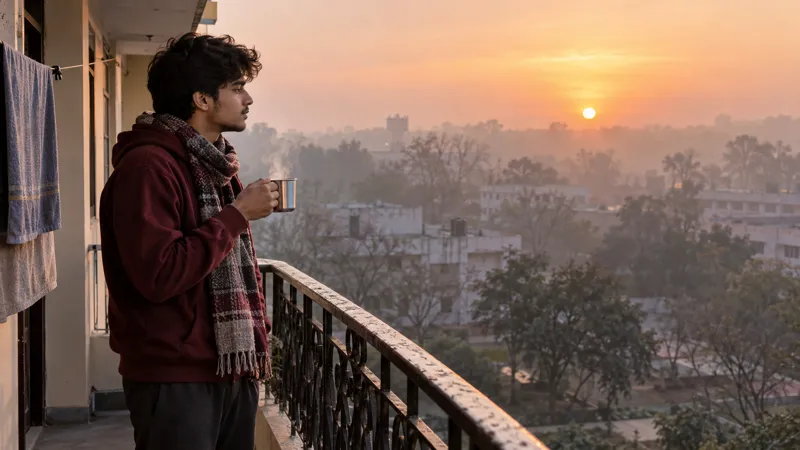
- Alarm across the room. Place it on a shelf or table you have to stand up to reach, on your side of the room. A separate clock also keeps the phone off your pillow. Our guide to the best alarm clocks for students compares loud, light-based and vibrating options.
- One alarm, not five. Repeated snoozes wake your roommate several times and you only once. Agree a shared plan: whoever has the earlier class sets the alarm, or both use vibration under the pillow.
- Light first. Since NIGMS says light drives the body clock, switch on the room or desk light, or the bathroom light if your roommate is asleep, the moment you're up. Step out onto a balcony or corridor after sunrise for a few minutes before class.
- Clothes on the chair. Lay out thermals, socks and a sweater the night before so you can dress in under a minute. Our winter clothes list for hostel covers what to keep within reach.
- A warm room, within the rules. If your hostel permits it, a low-watt heater can take the edge off the morning; see our pick of room heaters for a hostel room and check your warden's rules before you buy.
- No caffeine after lunch. The CDC advises avoiding caffeine in the afternoon or evening. That 9 PM coffee is tomorrow's missed 8 AM.
Start the switch this week
Don't wait for the first cold wave. Tonight, write down your earliest class of the week, work out your own backwards schedule with the steps above, and set your phone-down time as a second alarm. Move bedtime 15 minutes earlier every few nights through October and November, and by the time sunrise reaches 7:15 AM in January, the 6:45 alarm will feel normal.