The best alarm clock for a student who oversleeps is the one that matches the reason you sleep through alarms: a loud bell or bed shaker if you don't hear them, and a puzzle or run-away alarm if you switch them off without waking up. In a shared room, a vibrating option often wins because it wakes you and nobody else. This guide skips brand names and prices, which change too often to be useful. Instead, it compares the main types of alarm clock, the hostel limits that should shape your choice, and a short checklist to use before you buy.
If you're still putting together your room kit, start with our hostel room essentials checklist for India and come back here once the basics are sorted.
Key Takeaways
- Work out why you oversleep first. Not hearing the alarm and switching it off half asleep need different fixes.
- Vibrating pads and wristbands are the most roommate-friendly choice in a shared room.
- Puzzle and run-away alarms suit students who snooze from bed without remembering it.
- Battery backup matters wherever power cuts happen, and hostel appliance rules differ, so check before you plug in anything new.
- Placing any clock across the room is the cheapest upgrade you can make.
Why do students sleep through alarms?
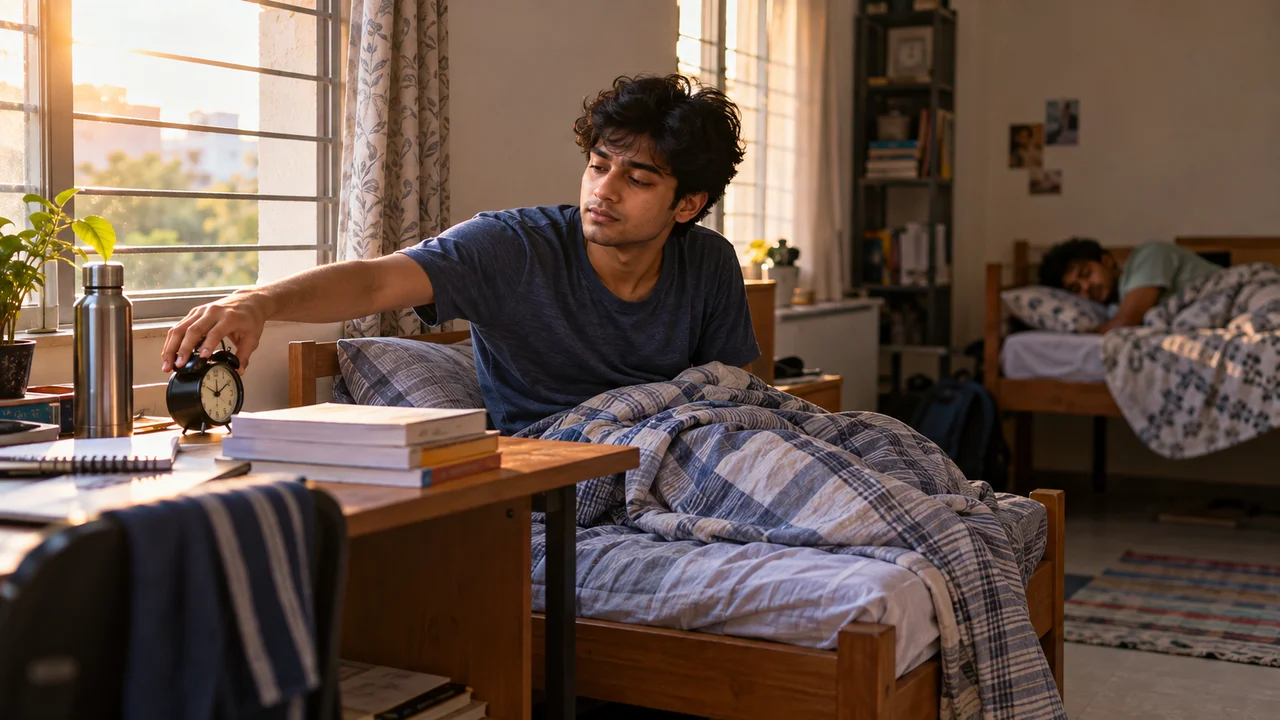
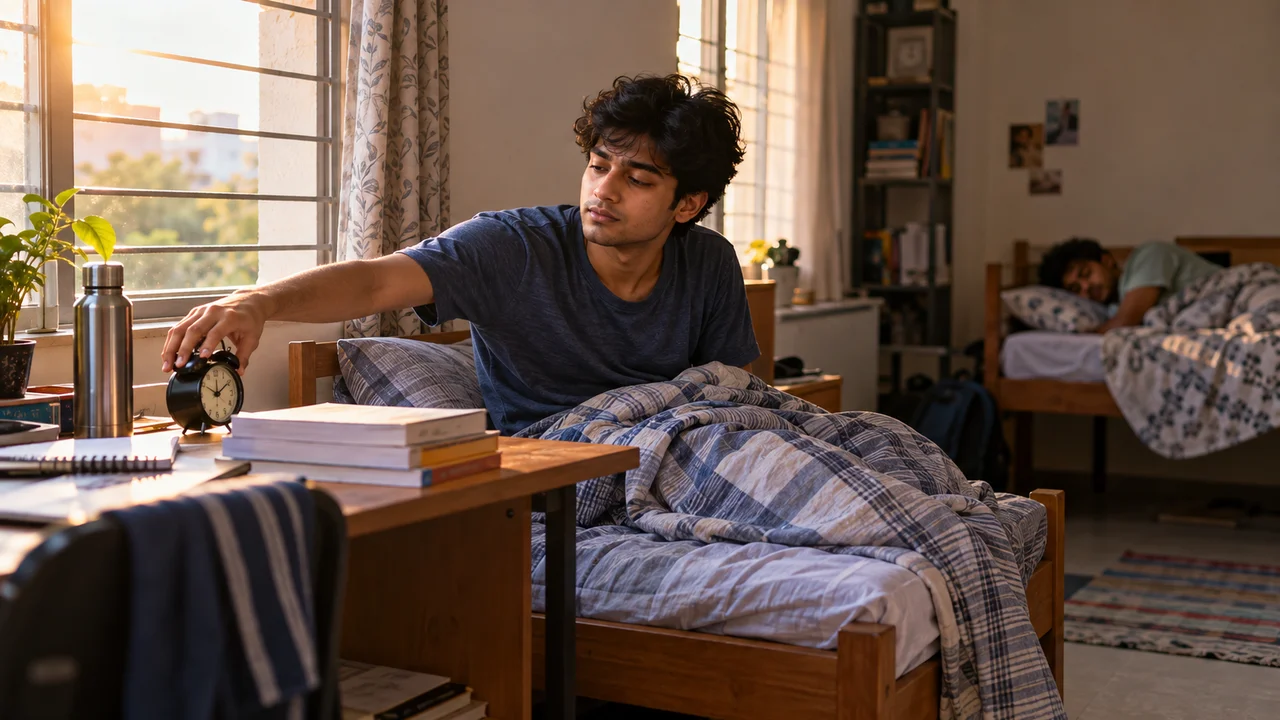
Most students who oversleep fall into one of two groups: people who don't hear the alarm at all, and people who hear it, silence it and fall back asleep. The first group needs more signal, meaning louder sound or physical vibration. The second group needs more friction, meaning an alarm that makes you stand up, walk or think before it stops.
Late study nights, irregular class timings and a phone that doubles as the alarm all make things worse. A phone sits within arm's reach, so snoozing takes no effort at all. That's why a separate clock often helps even when it isn't any louder than your phone.
1. Twin-bell analogue clock: best for deep sleepers on a budget
The classic twin-bell clock is still one of the loudest simple options you can buy. A hammer strikes two metal bells, and the sound is harsh in a way that's hard to sleep through.
- Best for: heavy sleepers in a single room, or roommates who share the same wake-up time.
- Watch out for: ticking at night and no volume control. Many models tick audibly, so look for one sold as non-ticking if you're a light sleeper at bedtime.
- Power: usually runs on a battery, so power cuts don't affect it.
2. Loud digital clock with adjustable volume: best all-rounder
A loud alarm clock with a digital display gives you volume control, several alarms and often separate weekday and weekend settings. That flexibility suits a timetable where Monday starts early and Thursday doesn't.
- Best for: students with changing class times who want one clock to handle the whole week.
- Watch out for: very bright displays that light up a dark room. A dimmer or auto-off display keeps your roommate happy.
- Power: many plug in, so pick one with battery backup that keeps the alarm working during an outage.
3. Vibrating bed shaker: best for shared rooms
A bed shaker is a small vibrating pad that goes under your pillow or mattress and connects to a clock. It wakes you through touch rather than sound, so a roommate a few feet away may not notice it at all.
- Best for: shared rooms, dorms with thin walls, and students with hearing difficulties.
- Watch out for: a pad that's too weak for a thick mattress. Placing it under the pillow usually works better than under the mattress.
- Bonus: many shaker clocks also have a sound alarm, so you can use both on exam days.
4. Vibrating wristband or smartwatch alarm: best for silent wake-ups
If you already wear a fitness band or smartwatch, its vibration alarm may be all you need. It buzzes on your wrist, which is about as private as an alarm can get.
- Best for: students in large shared rooms or those who wake earlier than everyone else.
- Watch out for: a flat battery. If you forget to charge it, there's no alarm. Pair it with a backup clock on important mornings.
5. Puzzle alarm clock: best for snoozers
A puzzle alarm won't stop until you solve a small task, such as a maths problem or a sequence of buttons. By the time you've finished, your brain has usually switched on.
- Best for: students who silence alarms without remembering doing it.
- Watch out for: puzzles that are too easy. If you can solve it with your eyes shut, it won't help. Look for adjustable difficulty.
6. Run-away or rolling alarm: best for chronic snoozers with floor space
These clocks roll or move off your table when the alarm goes off, so you have to get out of bed and chase them. It sounds like a gimmick, but the forced movement is exactly what a snoozer needs.
- Best for: students who've tried everything else.
- Watch out for: cramped rooms. In a tight double room with luggage on the floor, the clock may get stuck under a bed. It can also be noisy for a roommate.
7. Sunrise or wake-up light: best for gentle, routine wake-ups
A sunrise clock brightens gradually before your alarm time, then usually adds sound. It's gentler than a bell and can help if you find harsh alarms stressful.
- Best for: students with a regular schedule and a bed close to a socket.
- Watch out for: it's a plug-in lamp, so check your hostel's appliance rules, and the light will reach your roommate too. On its own, it may not be enough for a very deep sleeper.
Comparison table: alarm clock types side by side
The table below compares types, not specific products. Use it to shortlist one or two types, then compare individual models against the checklist further down.
| Type | Wakes you by | Roommate impact | Works in power cut | Stops snoozing | Best for |
|---|---|---|---|---|---|
| Twin-bell analogue | Loud bells | High | Yes (battery) | Low | Deep sleepers |
| Loud digital | Adjustable sound | Medium to high | Only with battery backup | Low | Changing timetables |
| Bed shaker | Vibration | Low | Depends on model | Low | Shared rooms |
| Wristband or smartwatch | Vibration on wrist | Very low | Yes, if charged | Low | Silent early starts |
| Puzzle alarm | Sound plus task | Medium | Depends on model | High | Half-asleep snoozers |
| Run-away alarm | Sound plus movement | Medium to high | Usually battery | High | Chronic snoozers |
| Sunrise light | Light, then sound | Medium | Usually no | Low | Regular routines |
Hostel limits that should shape your choice
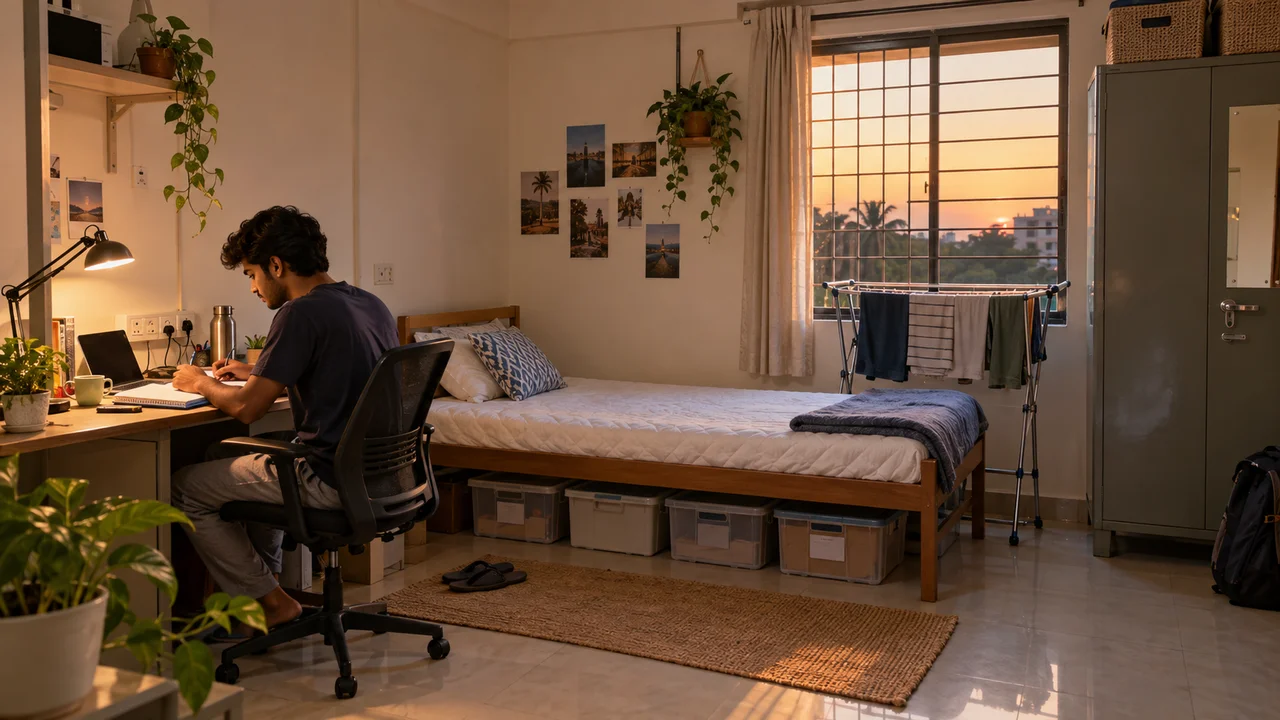
Your room decides as much as your sleep habits do. Three constraints come up again and again in hostels and PGs.
Noise and roommates
A loud clock that wakes the whole room every morning will cause arguments fast. Talk to your roommate about wake-up times in the first week. If your schedules differ, go for vibration, or keep the volume as low as still works for you.
Power, sockets and appliance rules
Rules differ between institutions and private PGs. Some limit which appliances you can use or how many sockets each bed gets, and power cuts are common in many areas. A battery-powered clock, or one with battery backup, avoids both issues. If you're also planning a mixer for hostel use or other plug-in gear, check the rules once for everything rather than item by item.
Space
Bedside space is often a shared shelf or the corner of a study desk. A compact clock fits better, and a clock placed across the room on a shelf works better still, because you have to get up to turn it off.
Checklist before you buy
Run through these questions before you pick a model. If a clock fails the first two, keep looking.
- Does it match why you oversleep: more signal, or more friction?
- Will it work during a power cut?
- Can you adjust the volume, or switch to vibration only?
- Can you dim or turn off the display at night?
- Does it support more than one alarm or a weekday schedule?
- Is it quiet at night, with no loud ticking?
- Does it fit where you plan to put it, ideally away from your bed?
- Is the snooze button limited, or can you turn snooze off completely?
- Is it allowed under your hostel or PG appliance rules?
Once your alarm is sorted, our guide to hostel room accessories worth buying after week one covers the other small upgrades that make early mornings easier.
Bottom line
For most students in shared rooms, a vibrating bed shaker or wristband is the safest first choice because it wakes you without waking anyone else. If you're a snoozer, add friction with a puzzle or run-away alarm. If you just don't hear alarms and have the room to yourself, a twin-bell or loud digital clock with battery backup does the job. Whatever you pick, put it across the room, check your appliance rules, and test it on a weekend before relying on it for an exam morning.
An alarm only fixes half of a rough morning: sleeping well the night before starts with Best Mattress for a Hostel Bed (Single Size), and if you tend to skip breakfast after a late wake-up, Best Electric Tiffin Boxes for Hostel and Office looks at ways to carry a warm meal to class.