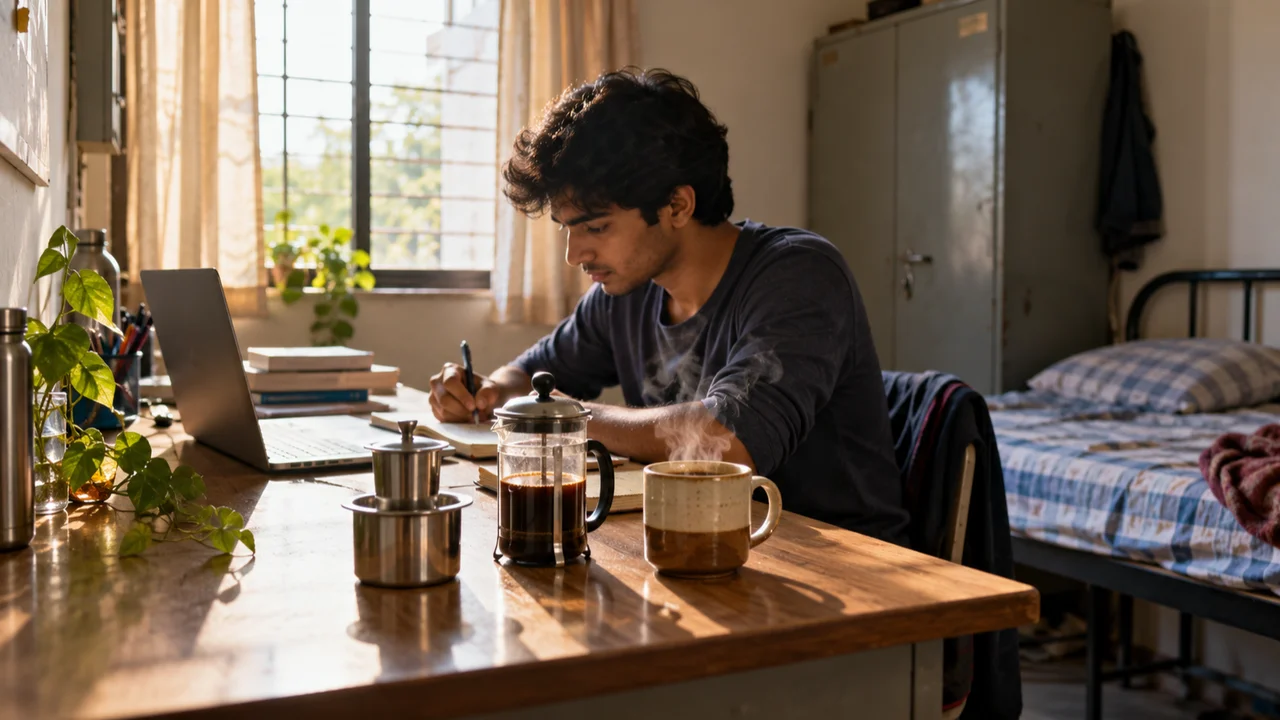
The best coffee maker for a hostel room is usually a manual one: a French press or a steel South Indian filter that needs only hot water, no extra power point, and almost no space. If your hostel allows plug-in appliances, a compact single-cup drip machine is the next step up. Choosing a coffee machine for students isn't about features. It's about what your warden allows, how much shelf space you have, and whether your roommate is asleep when you brew.
You won't find coffee brands or price tags here, and that's deliberate. Models change fast, and the right pick depends more on your room's limits than on any single product. Below you'll find seven types of coffee makers ranked for hostel life, a comparison table, and a checklist to use before you buy. If you're still setting up your room, start with our hostel room essentials checklist for India.
Key Takeaways
- Check your hostel's appliance rules first. Many hostels restrict heating appliances, and policies differ between institutions.
- Manual brewers (French press, South Indian filter, pour-over) are the safest choice because they need no power and make little noise.
- If plug-in appliances are allowed, look for low wattage, a small footprint, auto shut-off and a quiet brew.
- Capsule machines are convenient but cost more per cup and create more waste than ground coffee.
- Choose a brewer with few parts so it's easy to rinse in a shared washroom.
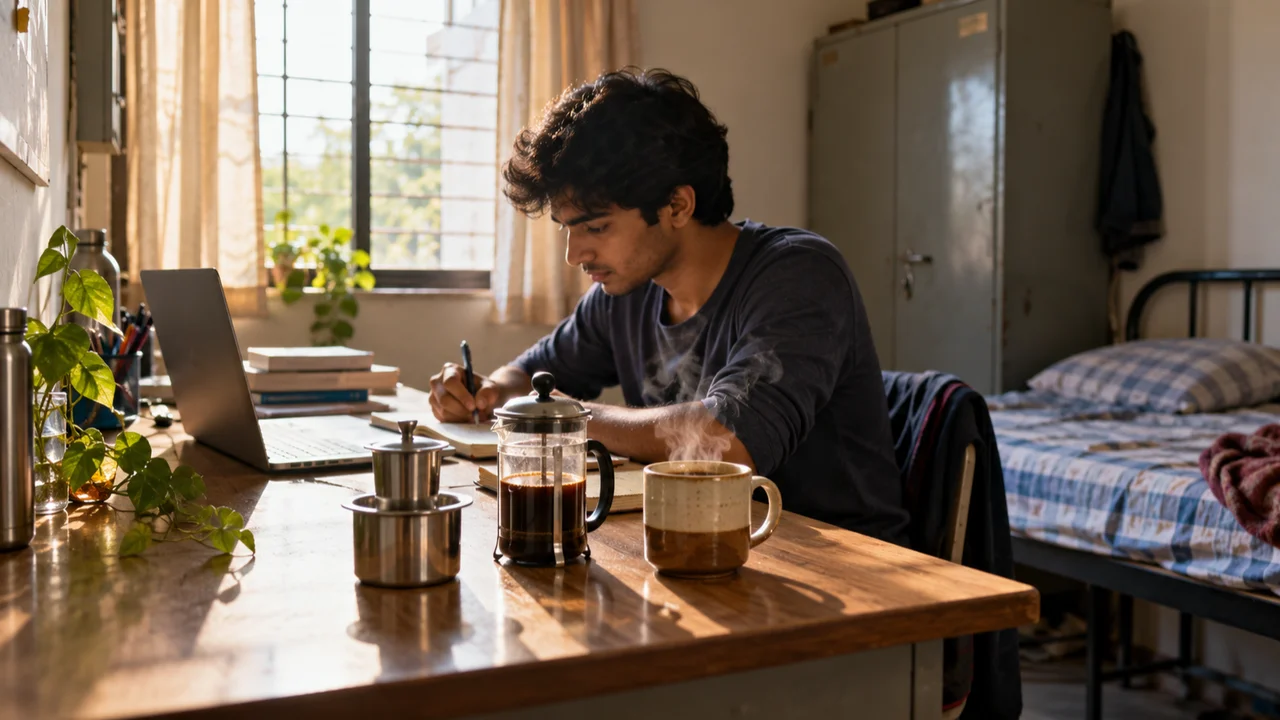
What matters most in a hostel room coffee maker
Three constraints decide almost everything: power rules, space and noise. Taste comes after those, because the best-tasting machine is useless if the warden confiscates it in the first room check.
Wattage and appliance rules
Heating appliances are the most common thing hostels restrict. Some ban anything with a heating element, some allow kettles but not induction plates, and some private hostels are relaxed about it. There's no single national rule, so read your own hostel's policy. If plug-in appliances are allowed, a lower-wattage machine is less likely to trip a shared circuit or break a stated limit. Check the wattage printed on the box or the rating label before you pay.
Space on a shared desk
Hostel desks are small and often shared with books, a laptop and a lamp. A coffee maker that stores inside a cupboard or a drawer is better than one that needs a permanent spot. Measure the space you have before ordering.
Noise and early mornings
If you share a room, noise matters. Grinders and some drip machines hiss, gurgle or beep. Manual brewers are close to silent, which makes them the polite choice for early classes or late study sessions.
The 7 best types of coffee makers for hostel life
These are ranked by how well they fit a typical shared hostel room, starting with the safest choice. Each type suits a different rulebook and budget.
1. South Indian steel filter: best for no-power rooms
A steel filter needs nothing but hot water and ground coffee, so it works even where every plug-in appliance is banned. You add the coffee powder to the upper chamber, pour hot water over it and let the decoction drip down slowly. It's unbreakable, packs flat inside a cupboard and makes a strong decoction you can mix with milk from the mess. Best for students who want filter coffee and live under strict appliance rules. The main trade-off is time: the drip is slow, so prepare it the night before or while you get ready.
2. French press: best all-rounder
A French press steeps coarse grounds in hot water, then a mesh plunger pushes them down. It's quiet, easy to learn and makes a full-bodied cup. Steel or plastic bodies survive hostel life better than glass. Best for students who drink black coffee or cold coffee and want one brewer that does both. The catch is cleaning: wet grounds stick to the mesh, so rinse it straight after brewing.
3. Pour-over dripper: best for the smallest budget and space
A pour-over cone sits on top of your mug and holds a paper or metal filter. It's the most compact option on this list and slides into any drawer. You control the brew by how slowly you pour, which gives a clean, light cup. Best for one person who wants a single cup and has a kettle or hot water access. Paper filters are a running cost, while a reusable metal filter avoids that.
4. Cold brew jar: best for hot cities and no heating at all
Cold brew needs only coarse coffee, water at room temperature and time. You steep it overnight in a jar with a built-in filter, then keep the concentrate for later use. It needs no hot water at all, which is useful where even kettles are off limits. Best for students in hot cities who like iced coffee. You'll need fridge access, which shared hostels don't always offer, so plan for that.
5. Compact single-cup drip machine: best if plug-ins are allowed
A single-serve electric drip machine heats water and brews straight into your mug. It's convenient for groggy mornings: add grounds, add water, press a button. Look for auto shut-off, a small footprint and a low wattage rating. Best for students in private hostels or PGs that permit small appliances. It's noisier than manual options and takes a power point, so confirm the rules first.
6. Moka pot: best for strong, espresso-style coffee
A moka pot forces boiling water up through ground coffee to make a strong, concentrated brew. Classic aluminium pots need a gas flame or hot plate. Steel versions can work on induction, and electric moka pots come with their own base. Best for students with access to a pantry stove or a kitchen. In most rooms, the heat source is the problem, since stoves and induction plates are among the items hostels commonly ban.
7. Capsule machine: best for speed, worst for budget
Capsule machines are the fastest and cleanest to use. Drop in a pod, press a button, and there are no loose grounds to clean. The downsides are big for students, though. Pods cost more per cup than ground coffee, they add plastic or aluminium waste, and the machine needs a power point. Best for students with a generous budget and permission to use plug-in appliances.
Comparison table: coffee maker types for a hostel room
Use this table to shortlist by your hostel's rules first, then by taste and budget. The ratings are relative comparisons between types, not test results.
| Type | Needs power? | Space needed | Noise | Running cost | Cleaning effort | Best for |
|---|---|---|---|---|---|---|
| South Indian steel filter | No (hot water only) | Small | Silent | Low | Low | Strict no-appliance rooms |
| French press | No (hot water only) | Small | Silent | Low | Medium | All-round use, hot or cold |
| Pour-over dripper | No (hot water only) | Smallest | Silent | Low to medium (filters) | Low | Single cups, tiny desks |
| Cold brew jar | No | Small, plus fridge space | Silent | Low | Low | Hot cities, no kettle allowed |
| Single-cup drip machine | Yes | Medium | Low to medium | Low to medium | Low | Hostels that allow plug-ins |
| Moka pot | Needs stove or base | Small | Low (gurgles) | Low | Medium | Students with kitchen access |
| Capsule machine | Yes | Medium | Medium | High | Lowest | Speed over budget |
Buying checklist before you order
Run through these checks in order. If an option fails the first one, skip it, however good the reviews look.
- Read the appliance rules. Confirm whether heating appliances, kettles or induction plates are allowed in your room.
- Check the wattage label. For plug-in models, compare the rated wattage with any limit your hostel states.
- Look for auto shut-off. It matters in a shared room where you might leave for class in a hurry.
- Measure your storage. Make sure the brewer fits in a cupboard or drawer when you aren't using it.
- Pick unbreakable materials. Steel and sturdy plastic outlast glass in a crowded room.
- Count the parts. Fewer parts means faster rinsing at a shared washbasin.
- Factor in running costs. Paper filters and capsules add up over a semester. Ground coffee is the cheapest ongoing option.
- Think about your roommate. Choose a quiet method if you brew early or late.
How this guide was put together
This is a research-based guide, not a hands-on product test. Coffee maker types were compared against the limits that come up most in shared student rooms: appliance rules, power needs, space, noise, cleaning and running cost. Specific brands, models and prices are left out because they weren't verified for this article. No product or brand paid for placement.
Coffee is only one part of eating well in a hostel. If you want warm meals from home or the mess at your desk, our guide to the best electric tiffin box for hostel and office use covers the same rules-first approach.
Bottom line
Start with a French press or a South Indian steel filter. They need only hot water, cost little to run, make no noise and fit in a drawer, which covers almost every hostel rulebook. Move up to a compact drip machine only if your hostel's written rules allow plug-in appliances. Whatever you choose, good coffee works best alongside good sleep, so if your bed is the weak point, read our guide to picking a mattress for hostel beds in single size.
If your morning routine runs to cold coffee or shakes, our pick of portable blenders and mini mixers for hostel fits right beside your brewer, and the list of hostel room accessories worth buying after week one covers the rest of the desk.