The best mixer for hostel use is usually a rechargeable bottle blender if you mainly make shakes, and a compact mixer grinder only if your hostel allows it and you need chutneys or masala. Everything else, from hand blenders to manual choppers, fills the gap between those two. We haven't named any blender brands or quoted prices, because the type you pick matters more for a hostel room than the label on it. Instead this guide compares the five appliance types you'll actually find, against the limits that matter in a shared room: power rules, desk space, noise and cleaning without a kitchen.
If you're still building your room kit, start with the hostel room essentials checklist for India and come back here once you know how much shelf space you have left.
Key Takeaways
- Check your hostel's appliance rules before buying. Rules differ between hostels, and a confiscated mixer is money lost.
- A rechargeable bottle blender suits most students: quiet, small, and no wall socket needed while blending.
- Choose a compact mixer grinder only if you'll grind chutney or masala and have pantry access or permission.
- A hand blender is the flexible middle option for shakes, soups and batters in your own mug or bowl.
- Prioritise easy cleaning and a safety lock over extra speed settings.
Check the hostel rules before you shop
Your hostel's appliance policy decides your shortlist more than any feature does. Many hostels restrict high-power appliances because shared wiring can trip or overheat, and the exact rules differ from one hostel to the next. Some allow anything small, some ban all plug-in kitchen gear in rooms, and some keep a common pantry where a mixer is fine.
Ask three questions before you pay: Are plug-in kitchen appliances allowed in rooms? Is there a pantry with sockets you can use? Does the warden inspect rooms? If the answer to the first is no, a rechargeable blender charged over USB is often the only practical choice, but confirm even that.
1. Rechargeable bottle blender: best for shakes and smoothies
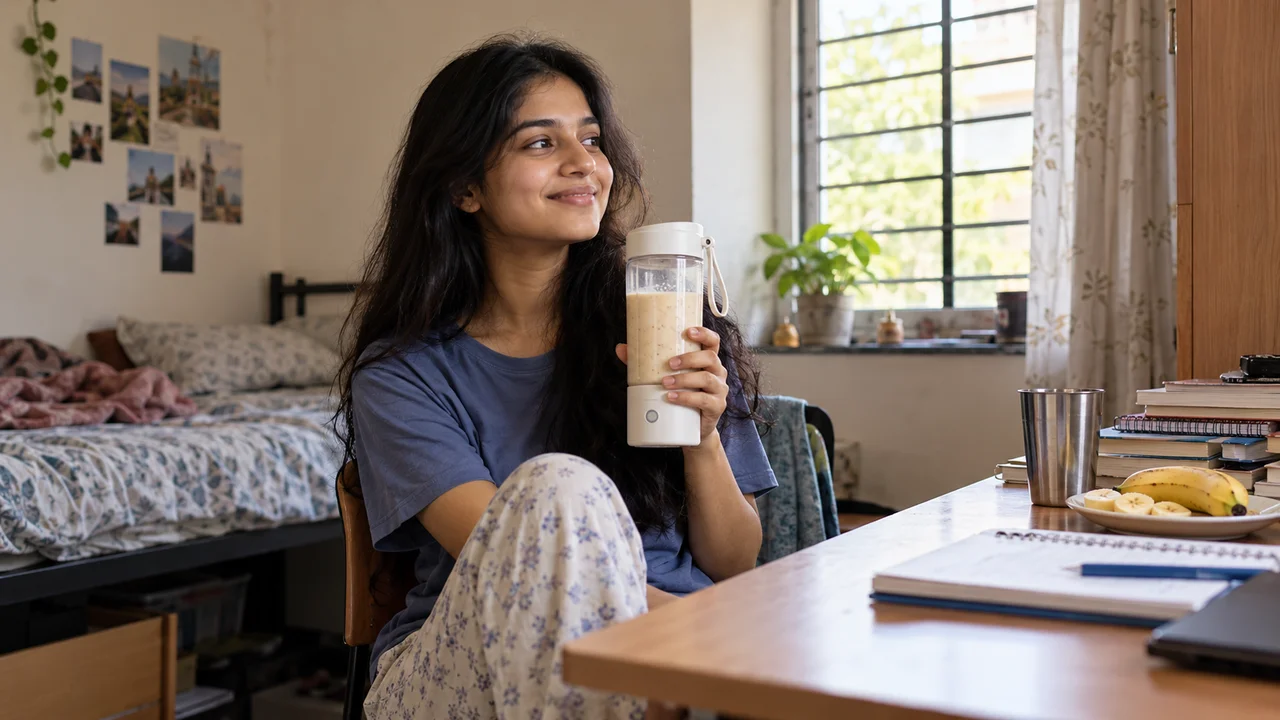
A rechargeable bottle blender is the easiest pick for most students because it blends and serves in the same container. You charge it like a phone, blend in your room, and drink straight from the jar.
Why it works: it's small enough for a desk drawer, quiet enough not to wake a roommate, and it doesn't need a wall socket while running. That makes it the safest bet where plug-in appliances are discouraged.
Best for: banana shakes, protein shakes, lassi, cold coffee and soft fruit smoothies.
Watch out for: weak motors that stall on ice, frozen fruit or nuts. Charge it on a desk, not on your bed, and unplug it once it's full.
2. Personal single-serve blender: best for thicker blends
A corded personal blender gives you more power than a bottle blender while staying compact. It usually comes with a travel cup that doubles as the blending jar.
Why it works: the stronger motor handles soaked oats, peanut butter shakes and thicker smoothies that a battery model can't manage.
Best for: students who want a filling breakfast drink every day and have permission to use a wall socket.
Watch out for: noise and a bigger base. It also still isn't a grinder, so don't expect masala powder from it.
3. Hand blender: best all-rounder for small spaces
A hand (immersion) blender is the most flexible option because it works in whatever mug, bowl or steel tumbler you already own. There's no jar to store, which saves real shelf space.
Why it works: it handles shakes, soups, dosa or pancake batter and buttermilk. Many come with a whisk attachment for coffee or eggs.
Best for: students who cook a little in a pantry and want one tool for several jobs.
Watch out for: splashes if you blend in a shallow container. Use a tall mug and keep the blade fully submerged before switching on.
4. Compact mixer grinder: best for chutney and masala
A compact mixer grinder is the only type here that grinds dry spices and thick chutneys properly. If home-style food matters to you, nothing else replaces it.
Why it works: it comes with separate jars for wet and dry grinding and a heavier motor built for Indian kitchen tasks.
Best for: students sharing a pantry with friends, or those in PGs where tenants are allowed to cook.
Watch out for: it's the loudest and most power-hungry option on this list, and the most likely to be restricted in rooms. Check the power rating printed on the base against what your hostel allows.
5. Manual chopper or hand whisk: best when appliances are banned
A pull-cord chopper or a hand whisk is the fallback when your hostel bans every plug-in and rechargeable appliance. It needs no power at all, so it rarely breaks a rule.
Why it works: it chops onions, tomatoes and coriander for a quick chutney or salad, and a whisk handles cold coffee or instant drinks.
Best for: strict hostels and students on the tightest budget.
Watch out for: it won't make a smooth shake, and it takes effort.
How the five types compare
The table below sums up the trade-offs. Ratings are relative to each other, not lab measurements.
| Type | Best for | Power source | Noise | Space needed | Grinds masala? | Likely hostel-friendly? |
|---|---|---|---|---|---|---|
| Rechargeable bottle blender | Shakes, smoothies | Battery (USB charging) | Low | Very small | No | Often |
| Personal single-serve blender | Thicker drinks | Wall socket | Medium | Small | No | Depends on rules |
| Hand blender | Shakes, soups, batter | Wall socket or battery | Medium | Small | No | Depends on rules |
| Compact mixer grinder | Chutney, masala, batter | Wall socket | High | Medium | Yes | Often pantry only |
| Manual chopper or whisk | Chopping, light mixing | None | Very low | Very small | No | Almost always |
Buying checklist for a portable blender
Once you've picked a type, these checks separate a useful appliance from one that ends up in a drawer. They matter more than speed settings or colour.
- Safety lock: the motor should only run when the jar is locked in place.
- Certification mark: for corded models, look for a BIS mark on the product or box, and avoid unbranded chargers.
- Removable blade or wide mouth: you'll clean it in a washroom sink, so easy access matters.
- Leak-proof lid: essential if you'll carry a bottle blender to class or the gym.
- Charging port: a standard USB-C port means one less special cable to lose.
- Overheat cut-off: useful on any corded motor that might run longer than it should.
- Warranty and service: check that service is available in your city, not only online.
Living with a blender in a shared room
A little etiquette keeps your roommate on side. Blend at agreed times, not before an early exam or late at night. Rinse the jar straight away, because dried banana and milk smell fast in a closed room.
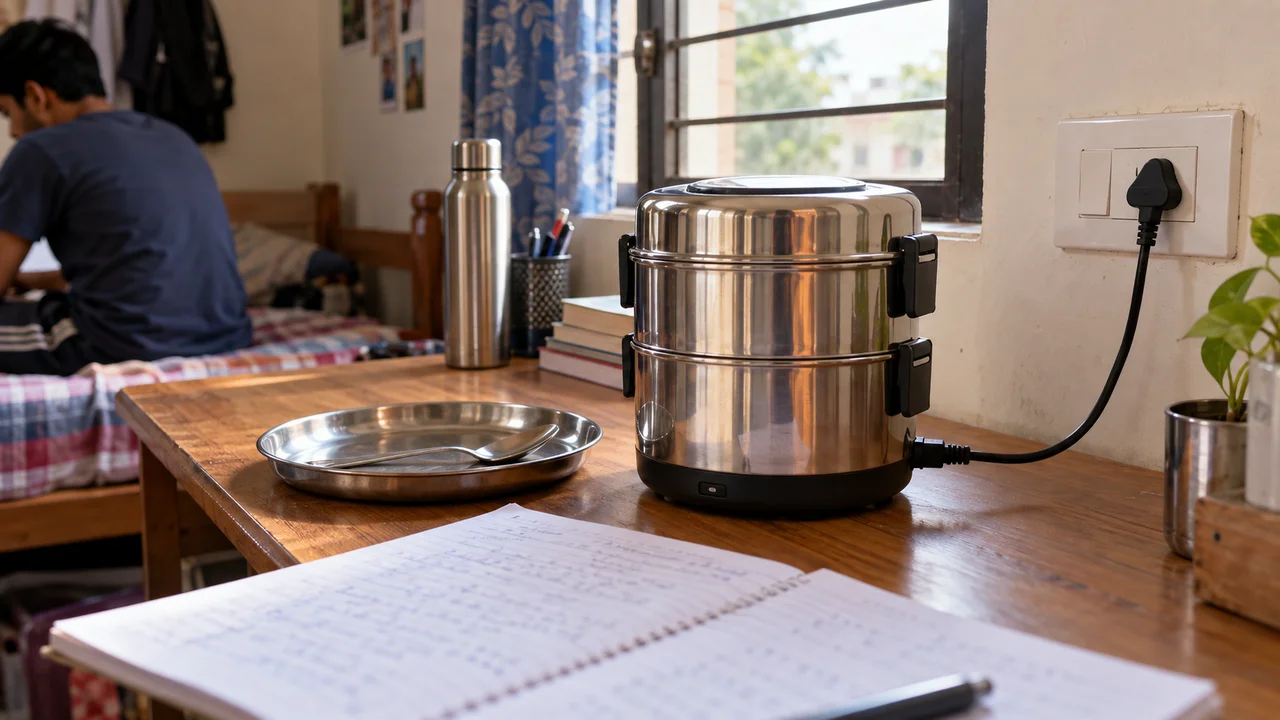
Store it with the lid off so moisture escapes. If you make morning coffee as well, a coffee maker for hostel rooms can share the same desk corner, and if you want hot lunches without a kitchen, an electric tiffin box pairs well with a blender for a basic room setup.
Bottom line
Start with your hostel's rules, then match the type to what you'll actually make. For most students, a rechargeable bottle blender covers daily shakes with the fewest problems. Add a hand blender if you cook a little, and choose a compact mixer grinder only when you need chutney or masala and have a place you're allowed to use it.
A morning shake only helps if you're up in time, so an alarm clock for students who oversleep is a sensible companion buy, and our list of room accessories worth buying after week one rounds out the rest of your setup.