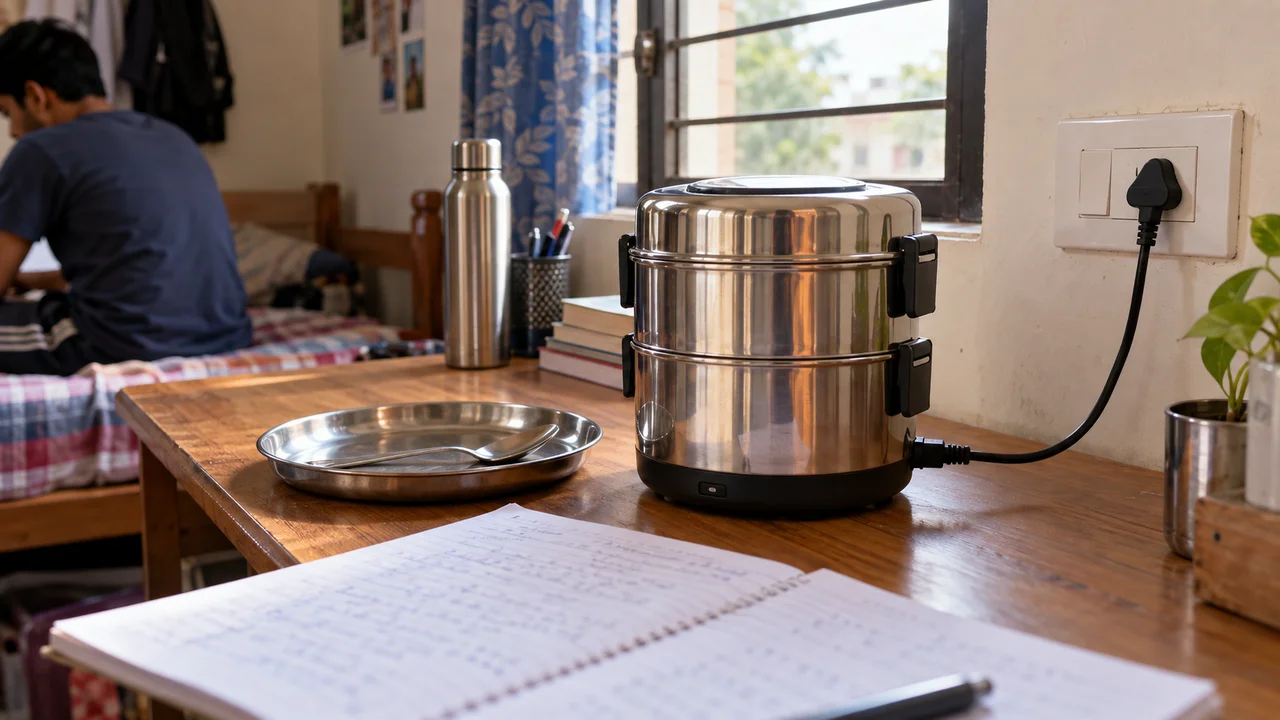
The best electric tiffin box for hostel and office use is one that reheats evenly with steam, draws little power, and has removable steel containers you can wash in a hostel sink. Before you compare features, check whether your hostel allows heating devices in rooms at all, because that rule decides everything else. An electric lunch box solves a common problem: food packed in the morning, from the mess or a home-style tiffin service, turns cold and unappetising by lunch or late evening. Plug it in a short while before you eat, and you get a warm meal without a microwave or a shared kitchen.
This guide doesn't rank brand names, since product listings change often and we haven't verified specific models. Instead it compares the main types, explains the hostel-specific checks, and ends with a checklist you can use on any product page. It's part of our wider hostel room essentials checklist, which covers the rest of what a first-year student needs.
Key Takeaways
- Confirm your hostel's rule on heating appliances before you buy; many hostels restrict or ban them, and rules differ from place to place.
- Steam-heating models warm Indian meals more evenly than dry-heating ones and keep rotis softer.
- Pick a reheat-only model with low wattage if your hostel is strict; cooking-type lunch boxes are more likely to be treated as banned appliances.
- Removable food-grade stainless steel containers and a sealed lid matter more than extra compartments.
- If heating devices aren't allowed, a good insulated tiffin is the safer choice.
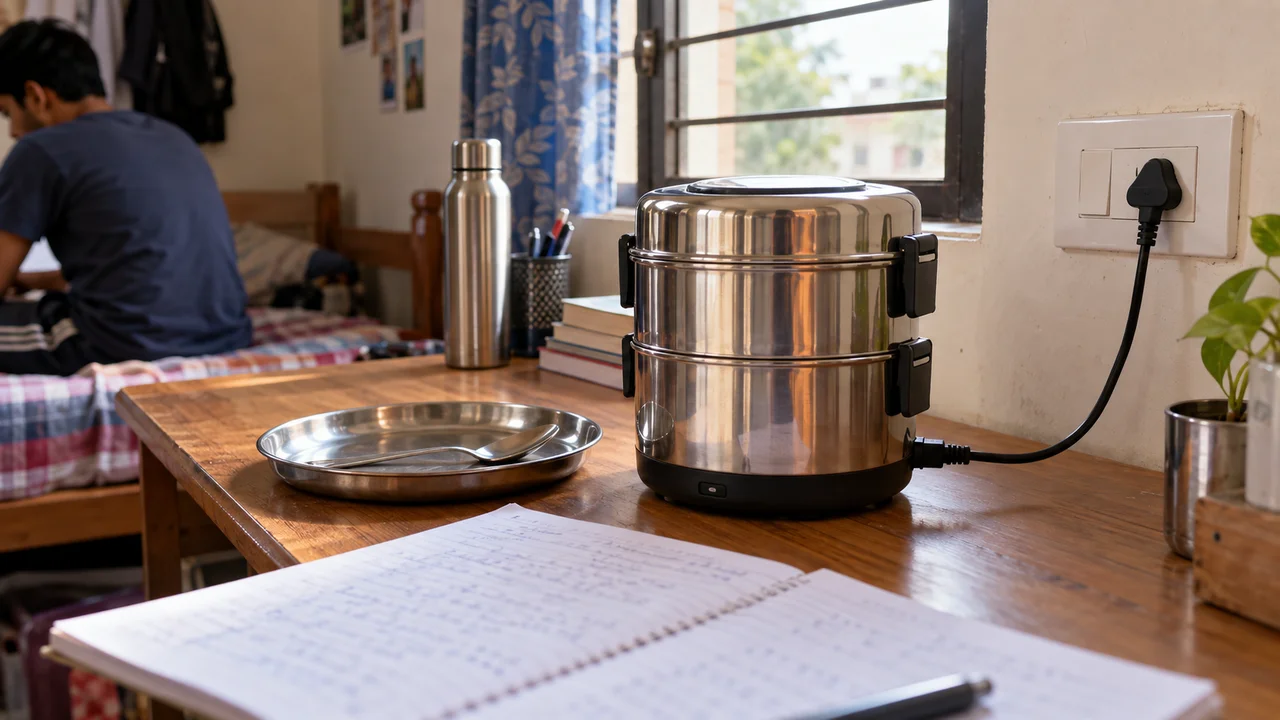
Check Your Hostel's Appliance Rule First
Your hostel's rule on electrical appliances matters more than any feature on the box. Some hostels and PGs allow small reheating devices, some allow only a kettle, and some ban every heating appliance in rooms because of wiring load and fire risk. There's no single standard, so don't rely on what a friend's hostel permits.
Ask the warden or read the written rulebook, and be specific: "Is a plug-in lunch box that only reheats food allowed?" gets a clearer answer than "Can I use appliances?" If the answer is yes, ask whether there's a wattage limit. Keep the product page or the box handy so you can show the rated wattage if anyone checks your room.
If the answer is no, skip to the section on insulated alternatives below. A confiscated appliance or a fine costs more than any convenience it brings.
Five Types of Electric Tiffin Box, and Who Each Suits
Electric tiffin boxes fall into a handful of types, and the right one depends on where you'll plug it in and what you eat. Here's how each type fits hostel and office life.
1. Steam-heating single container: best for most hostel students
This type has a heating base where you pour a little water, and a steel container sits above it. The steam warms the food gently, so dal, sabzi and rice heat through without burning at the bottom. It's compact, which helps on a crowded study desk, and reheat-only models of this kind tend to draw less power than cooking types. Best for: one person eating one meal at a time in a hostel room.
2. Multi-compartment or multi-tier: best for full meals
These carry two or more containers, so you can keep rice, dal and sabzi separate, the way a regular steel dabba does. They're bulkier and take longer to heat through because there's more food. Best for: students who skip the mess at lunch and need a complete meal, or office-goers who pack a proper thali.
3. Dry-heating plate: best for quick, simple reheats
Dry models heat the container directly from a plate, with no water needed. That's convenient, but food at the bottom can dry out or stick if you leave it on too long. Best for: people who reheat dry items like parathas or poha and will stay nearby while it warms.
4. Dual-plug (wall and car): best for commuters
Some electric lunch boxes ship with both a wall plug and a car adapter. That's handy for interns or working professionals who drive, though the extra cable adds clutter. Best for: people who eat in a car or move between sites during the day. Most hostel residents won't need the second plug.
5. Cooking-type lunch box: best for offices with relaxed rules
These can cook simple items like rice, Maggi or eggs, not only reheat. That makes them useful, but they usually draw more power, and many hostels treat anything that cooks as a banned cooking appliance. Best for: office desks or private rentals where you control the rules.
Comparison Table: Types and Features at a Glance
The table below compares the five types on the factors that matter most in a hostel or office. It's a qualitative comparison by type, not a test of specific products.
| Type | Heating method | Relative power draw | Desk space | Hostel-rule risk | Best for |
|---|---|---|---|---|---|
| Steam single container | Steam from water in base | Low | Small | Lower | Hostel rooms, one meal |
| Multi-compartment | Steam or plate | Low to moderate | Medium | Lower to moderate | Full meals, office |
| Dry-heating plate | Direct heat plate | Low | Small | Lower | Dry snacks, quick reheats |
| Dual-plug (wall + car) | Usually steam | Low | Small to medium | Lower | Commuters, drivers |
| Cooking-type | Higher-power element | Higher | Medium | Higher | Offices, private rentals |
"Hostel-rule risk" reflects how likely a type is to be treated as a cooking appliance. Your own hostel's written rule always overrides this table.
What to Look For When Buying
Once you've picked a type, compare individual models on a few practical features. These decide whether you'll still be using it at the end of the semester.
Wattage and power label
Look for the rated wattage on the product page and on the label of the base. Lower wattage means slower heating, but it's also less likely to trip an old hostel circuit or break a rule. If a listing doesn't state wattage clearly, treat that as a warning sign.
Container material
Choose removable inner containers made of food-grade stainless steel. Steel doesn't hold smells from last night's curry the way some plastics do, and you can scrub it in a common washroom sink. Check the listing for the steel grade rather than trusting a vague "steel" label.
Lid seal and leak resistance
A silicone gasket and clip-lock lid keep dal from leaking into your bag. Since most hostel students carry the box between room, class and library, a weak seal is the most common reason people give up on a lunch box.
Capacity
Match capacity to one meal, not a whole day's food. A bigger box takes longer to heat and more space on a small desk. If you share a room, space matters as much as it does when you're choosing a mattress for a hostel bed that fits a narrow single frame.
Safety features
Look for auto shut-off or overheat protection, a heat-resistant outer body, and an ISI mark or other safety marking on the plug and cord. A detachable cord is easier to store and replace.
Noise and smell
Steam models make a soft hissing sound and release some food smell while they heat. That's rarely a problem, but in a shared room or a quiet office, heat your food at lunch break rather than during a roommate's nap or a meeting.
Practical Tips for Using One in a Hostel
A little routine makes an electric tiffin box safer and more useful. These habits come up again and again in shared living.
- Never leave it plugged in and unattended, and never run it overnight.
- Use a wall socket, not a loose multi-plug already carrying a heater or iron.
- Add only the water the manual asks for in steam models; too much can spill onto the base.
- Set a reminder to start heating before you eat. The same alarm clock for students that gets you to morning class can nudge you to plug in lunch.
- Wash the containers the same day so smells don't build up in your room.
If Heating Devices Aren't Allowed
When your hostel bans heating appliances, an insulated tiffin is the practical alternative. A good vacuum-insulated steel lunch box keeps food warm for a few hours without any socket. It won't match an electric model if you eat late in the day, but it causes no rule problems and needs no desk space near a plug.
You can also ask whether the mess or common room has a shared microwave for residents. Some hostels provide one, and it may be allowed where personal appliances are not.
Buyer's Checklist
Run through this list on any product page before you add an electric tiffin box to your cart.
- Hostel or office rules confirmed, including any wattage limit.
- Reheat-only model, unless you're sure cooking appliances are allowed.
- Rated wattage clearly stated on the listing.
- Steam heating if you eat rice, dal or rotis often.
- Removable food-grade stainless steel containers.
- Sealed, clip-lock lid with a gasket.
- Capacity sized for one meal.
- Auto shut-off or overheat protection.
- Safety marking on the plug and cord.
- Clear cleaning instructions for the base.
Bottom Line
For most hostel students, a reheat-only, steam-heating electric tiffin box with a single steel container is the safest and most useful pick. Office-goers who carry full meals can step up to a multi-compartment model, and commuters may want a dual-plug version. Whatever you choose, check your hostel's appliance rule first, then use the checklist above to compare models on any shopping site.
If you want to make more of your own food and drinks than reheated meals, our picks for Best Portable Blenders and Mini Mixers for Hostel and Best Coffee Makers for a Hostel Room cover two more small appliances that suit a hostel desk.