The best mattress for a hostel bed is a medium-firm single that matches your cot's exact size, stays cool in your room's weather, and is light enough to move each term. For most students, that means a foam or coir-and-foam mattress with a removable, washable cover. Mattress brands and prices are left out deliberately, since what fits your cot matters more than any label. Instead, this guide compares mattress types against the constraints that matter in a shared room: a narrow frame, little storage, no air conditioning, roommates who hear every creak, and a move-out date that comes faster than you think.
If you're still building your list for move-in day, start with the hostel room essentials checklist for India, then come back here once you know whether your hostel provides a mattress at all.
Key Takeaways
- Measure the inside of your cot frame first. "Single" means different dimensions to different sellers.
- Foam and coir-and-foam mattresses suit most hostel rooms: light, quiet and firm enough for long study hours.
- Plain memory foam can feel hot in a room without air conditioning, so pick a breathable cover or a coir core.
- If the hostel gives you a decent mattress, a topper and a waterproof protector usually beat buying a new one.
- Ask the warden about rules before buying, since policies on personal mattresses differ between hostels.

Check these hostel constraints before you pick a type
Your room decides more than your preferences do. A mattress that's great at home can be a poor fit in a hostel, so run through these limits before comparing types.
- Frame size: Hostel cots are often narrower or shorter than home beds. Measure length, width and the depth of any side rail.
- Bed base: Wooden planks, metal strips and metal mesh all behave differently. Mesh and widely spaced strips can make a thin foam mattress sag in the middle.
- Bunk beds: On a top bunk, a thick mattress can raise you above the guard rail. Keep the top-bunk mattress slim.
- Heat and humidity: Most hostel rooms rely on fans. Materials that trap heat will bother you through summer and monsoon.
- Moving: You may change rooms every year and carry everything home during breaks. Weight and foldability matter.
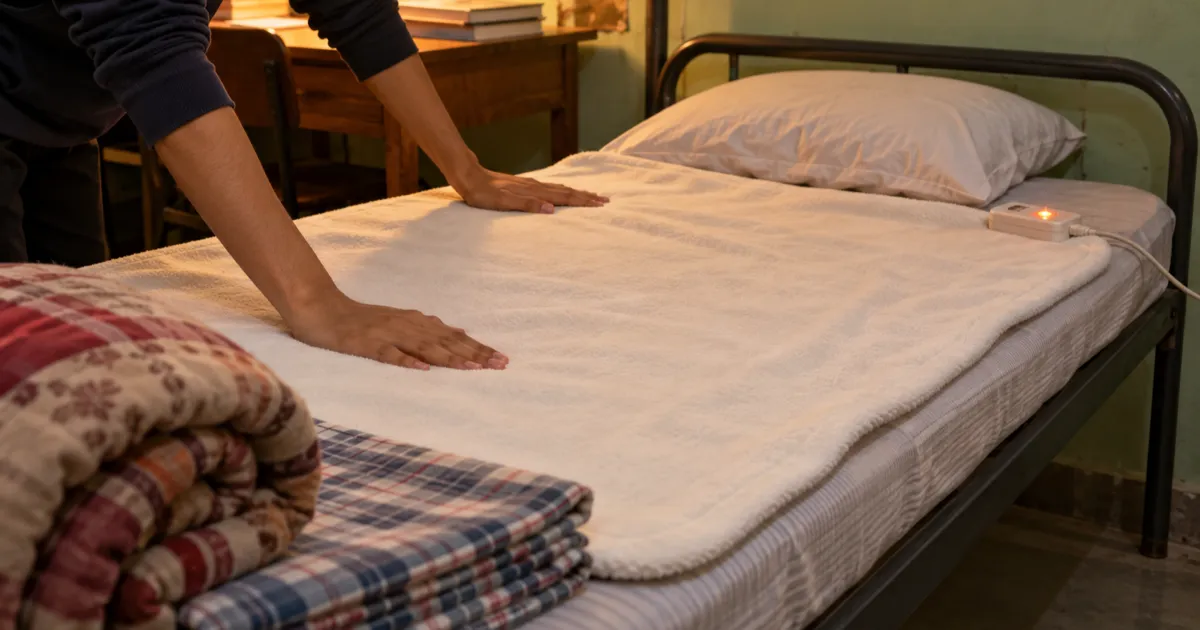
- Electrical rules: Many hostels restrict heaters and high-wattage appliances, and the limits differ between institutions. Don't plan on an electric mattress warmer in winter without checking first. A thicker blanket or a wool underlay is the safer bet.
- House rules: Some hostels issue a mattress and expect you to keep it. Others let you bring your own. Ask before you spend.
The 6 mattress types, ranked for hostel life
Medium-firm foam comes out on top for most students, with coir hybrids close behind for hot rooms. Each type below is ranked by how well it handles the hostel constraints above, not by how luxurious it feels in a showroom.
1. Medium-firm foam: best overall for most students
A medium-firm foam mattress gives the best balance of comfort, weight and price range for a shared room. It's light enough to carry up stairs alone and makes no noise when you turn over, which your roommate will notice.
Best for: students on plank or strip cots who want one mattress that works for sleep and for sitting up to study.
What to check: foam density as listed by the seller (higher density usually holds its shape longer), a removable cover with a zip so you can wash it, and a firmness that doesn't let your hips sink.
2. Coir and foam hybrid: best for hot, humid rooms
Coir lets air move through the mattress, so a coir core with a foam comfort layer sleeps cooler than solid foam. It's firm, which suits students who sleep on their back or who get stiff after long hours at a desk.
Best for: rooms without air conditioning in hot or humid cities, and anyone who likes a firm surface.
What to check: that the coir is fully covered and doesn't poke through, and that the mattress isn't too heavy for you to move. Pure coir without a foam layer can feel hard for side sleepers.
3. Rolled or folding foam: best for frequent movers
A foam mattress that ships rolled, or one that folds into three sections, is the easiest to bring into a hostel and take home again. Folding versions also double as floor seating when friends drop by.
Best for: first-year students who aren't sure about the room yet, and anyone who shifts rooms every year.
What to check: the seller's instructions on how long a rolled mattress needs to expand, and whether a folding mattress has visible gaps at the joins that you'll feel at night.
4. Memory foam: best for side sleepers with cool rooms
Memory foam shapes itself around shoulders and hips, so side sleepers often find it the most comfortable. The trade-off is heat: it can feel warm in a fan-only room.
Best for: side sleepers, students with air-conditioned rooms, and colder cities.
What to check: a breathable or gel-type cover, a firmer support layer under the memory foam, and the overall height if it's going on a top bunk.
5. Latex: best for long-term durability
Latex is springy, breathable and tends to keep its shape for years, which makes sense if you'll be in the same city for a long degree. It's also heavier and usually sits at the higher end of the price range.
Best for: students staying several years in one place, or anyone who plans to keep the mattress after college.
What to check: whether it's natural or blended latex as stated by the seller, total weight, and whether you can manage it alone on move-out day.
6. Spring mattress: usually the weakest fit
Spring mattresses can be comfortable, but they're heavy, bulky and can creak on a metal cot. Most of them aren't designed to fold or roll, which makes moving hard.
Best for: students in a private room who won't move for a long time and have a solid bed base.
What to check: pocketed springs over open coil if you share a room, since they tend to transfer less movement and noise.
Compare mattress types side by side
Use this table to shortlist two types, then compare products within those types. The ratings are relative guidance based on how each material usually behaves, not lab measurements.
| Type | Feel | Heat in a fan-only room | Ease of moving | Noise on a metal cot | Best for |
|---|---|---|---|---|---|
| Medium-firm foam | Balanced | Moderate | Easy | Silent | Most students |
| Coir and foam hybrid | Firm | Cool | Moderate | Silent | Hot, humid rooms |
| Rolled or folding foam | Soft to medium | Moderate | Easiest | Silent | Frequent movers |
| Memory foam | Soft, contouring | Warm | Moderate | Silent | Side sleepers, cool rooms |
| Latex | Springy | Cool to moderate | Hard (heavy) | Silent | Long stays |
| Spring | Bouncy | Cool to moderate | Hardest | Can creak | Private rooms, long stays |
Should you buy a mattress or a topper?
If the hostel already gives you a flat, clean mattress, a topper is often the better buy. It's cheaper to replace, easier to carry and fixes most comfort problems with a thin or hard base. The guide to choosing a mattress topper for a hostel bed covers that route in detail.
Buy a full mattress when the provided one is torn, stained, smells damp, sags so badly that a topper would sink into it, or isn't there at all. Either way, add a waterproof protector. It keeps spills and sweat off the mattress and makes the hand-back at the end of the year less stressful.
Your hostel mattress buying checklist
Run through this list before you pay. It takes a few minutes and avoids the most common returns.
- Confirm with the warden that you're allowed to bring your own mattress.
- Measure the inside length and width of the cot, plus the rail height on bunks.
- Match those measurements to the listed dimensions, not to the word "single".
- Pick a type from the table based on your room's heat and how often you'll move.
- Choose medium-firm unless you have a clear reason to go softer or harder.
- Look for a removable, washable cover with a zip.
- Read the return policy, especially for rolled mattresses you can't repack.
- Buy a waterproof protector and a fitted bedsheet in the same size.
- Check how you'll get it to your room: stairs, lift access and delivery timing.
Make your bed area work for sleep
A good mattress solves half the problem. The rest is how you sleep in a room you share. A small reading lamp means you won't keep the main light on when your roommate wants to rest, and an alarm clock for students who sleep through phone alarms keeps early lectures from becoming a daily panic.
Once you've lived in the room for a week, you'll know what's missing. That's the right time to look at hostel room accessories like under-bed storage boxes, a bed-side organiser or a clip-on fan, rather than buying everything on day one.
Bottom line
For most students, a medium-firm foam mattress in the exact size of your cot is the safe pick. If your room runs hot, choose a coir and foam hybrid instead. If the hostel mattress is in good shape, skip the purchase and add a topper and a protector. Measure first, check the house rules, and buy for the room you'll live in, not the bed you left at home.
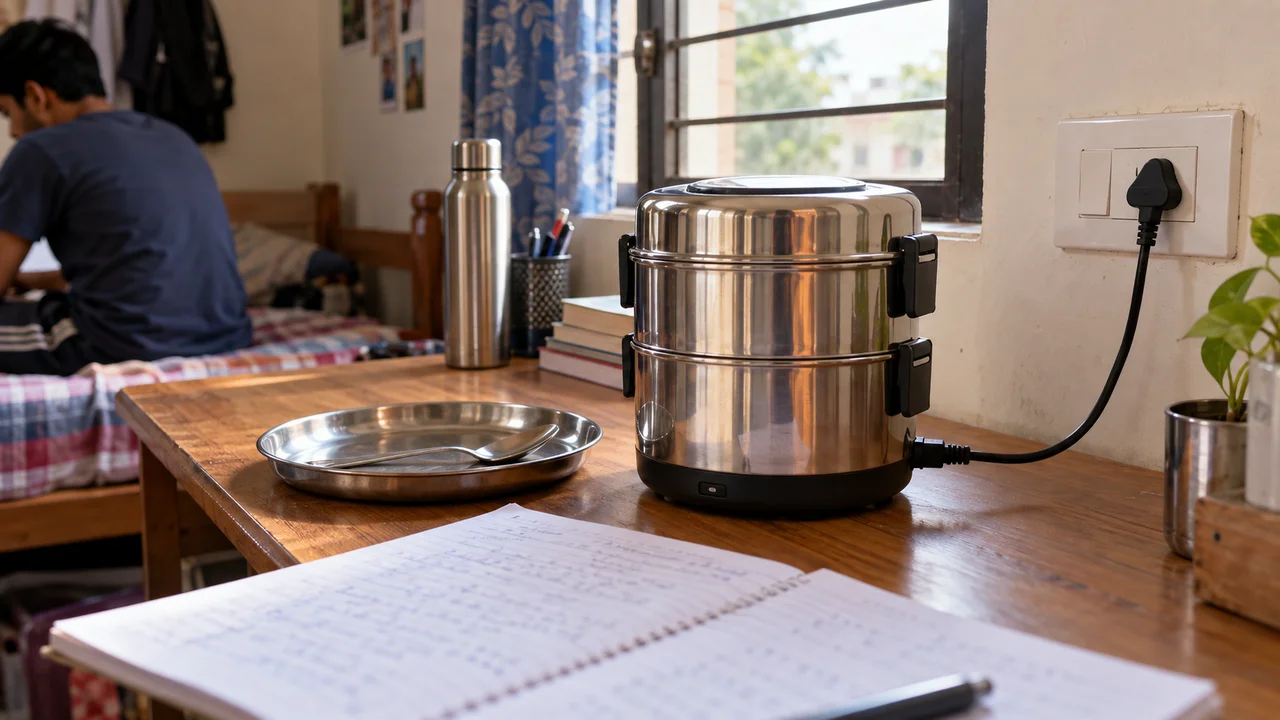
With the bed sorted, the desk is next: see how to pick a coffee maker for a hostel room for early lectures, or an electric tiffin box for hostel and office if you'd like a warm lunch between classes.