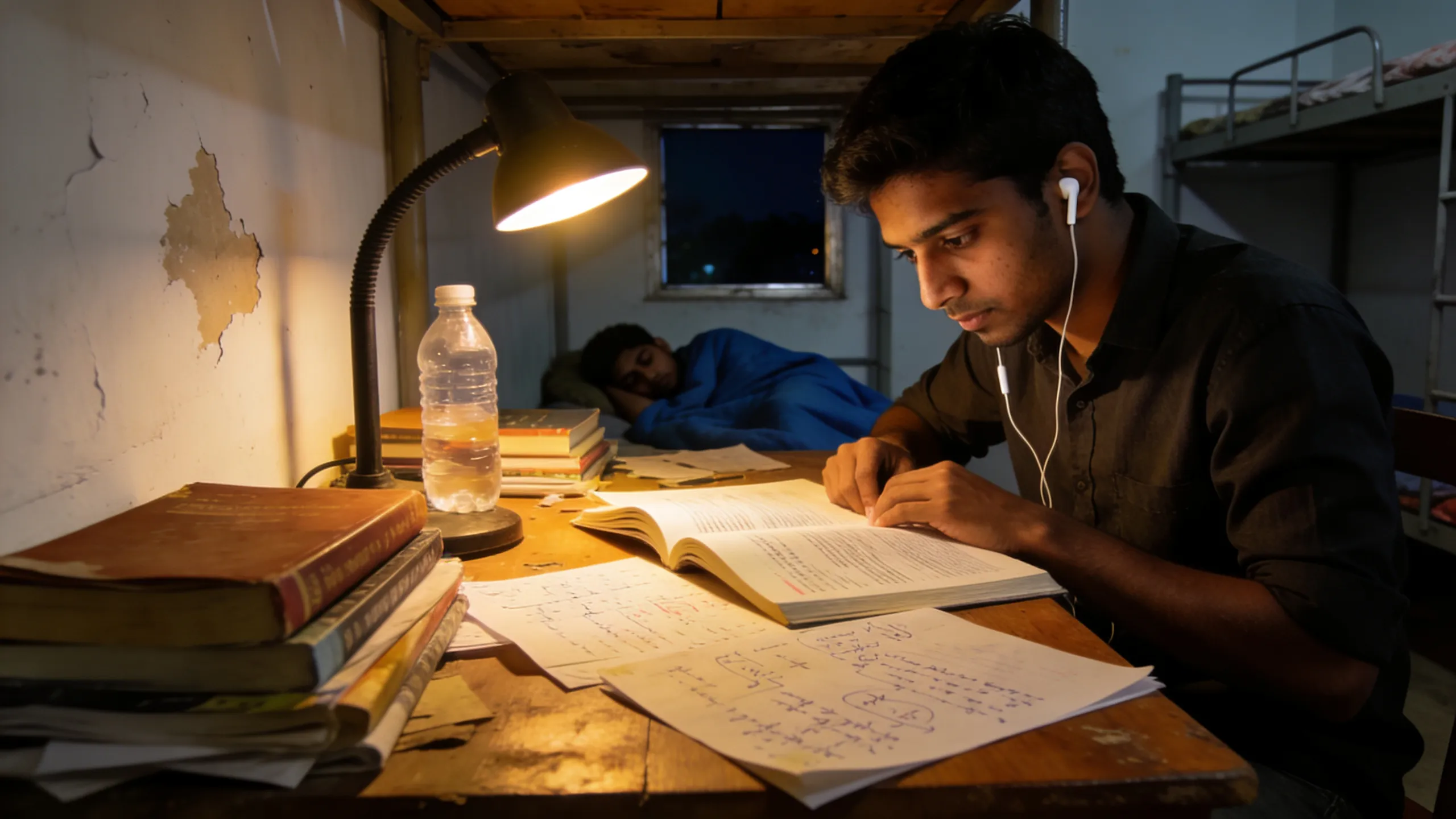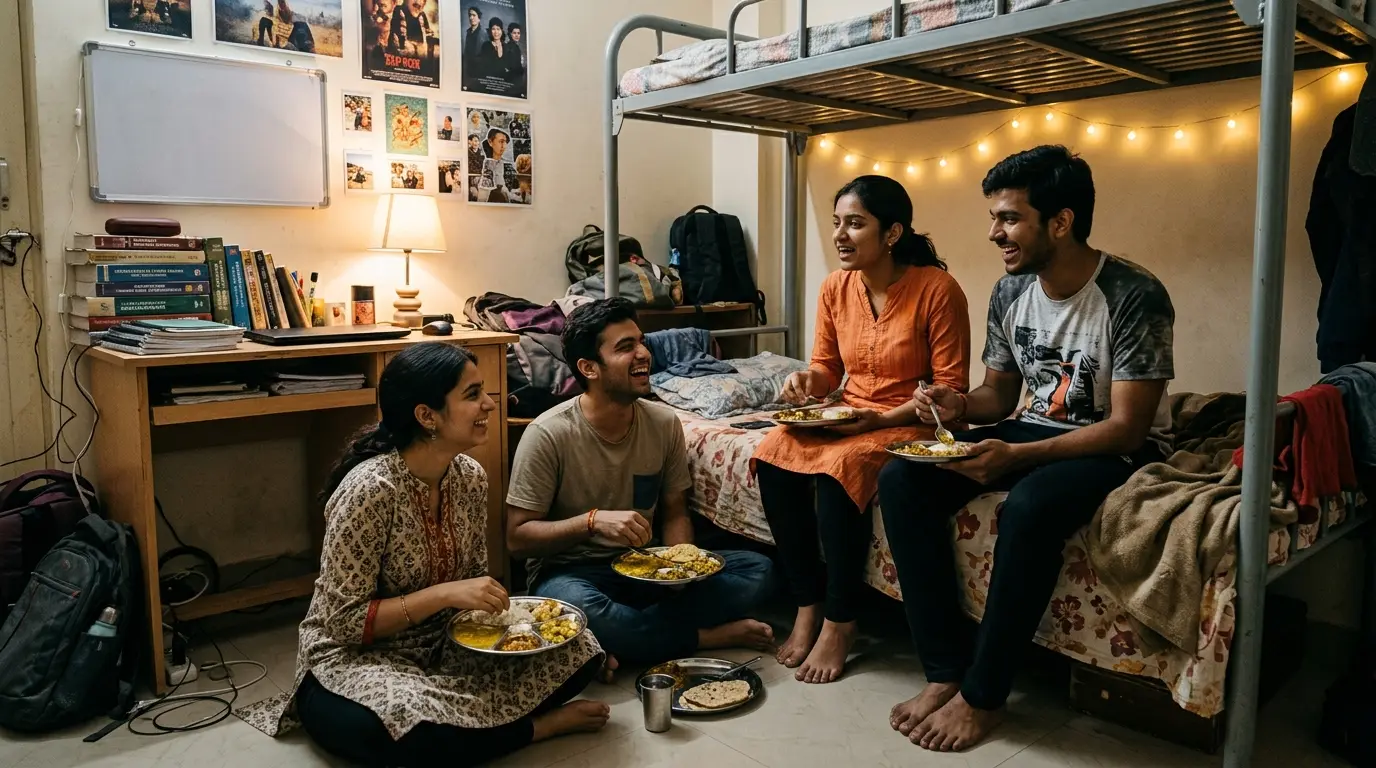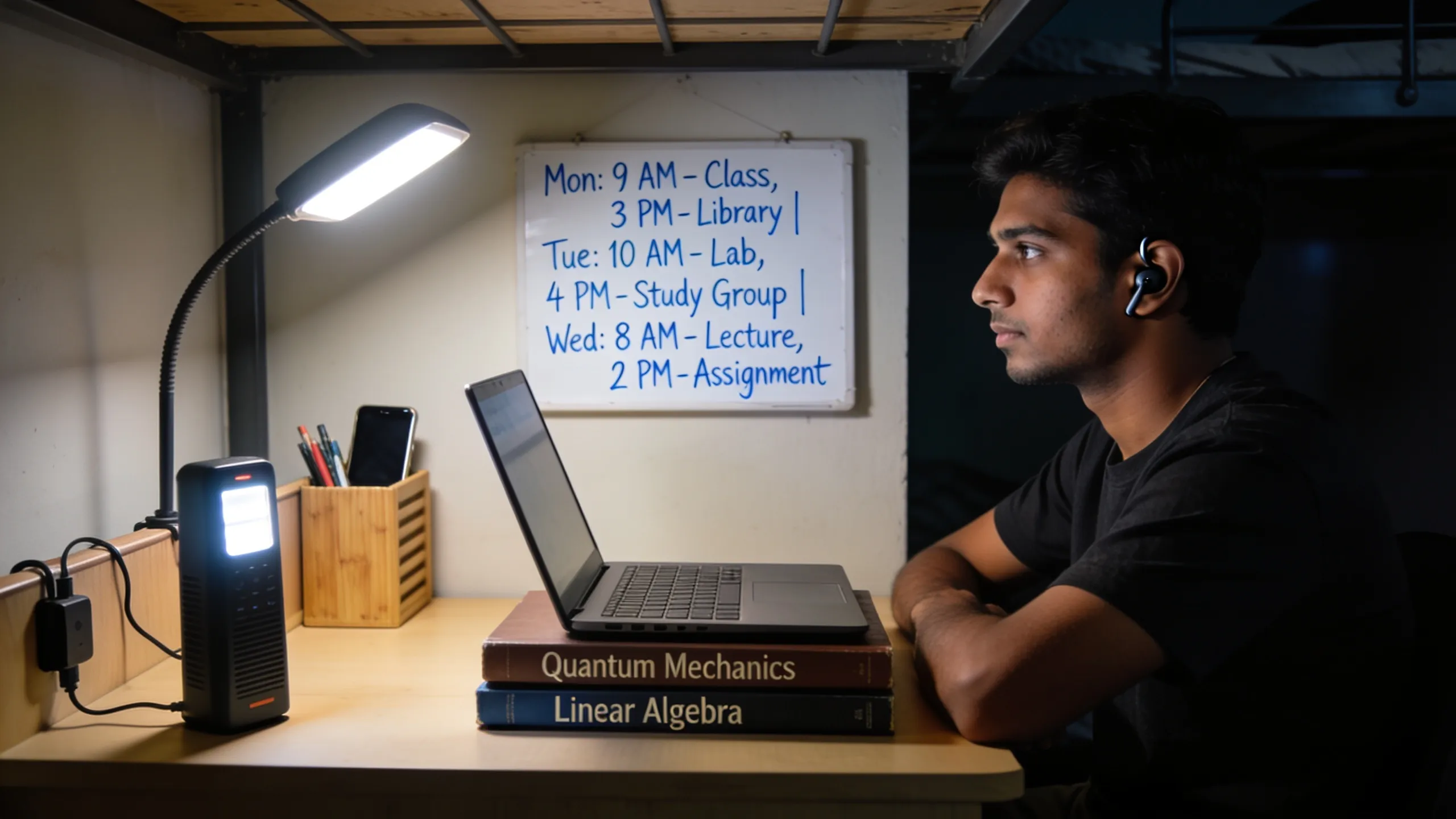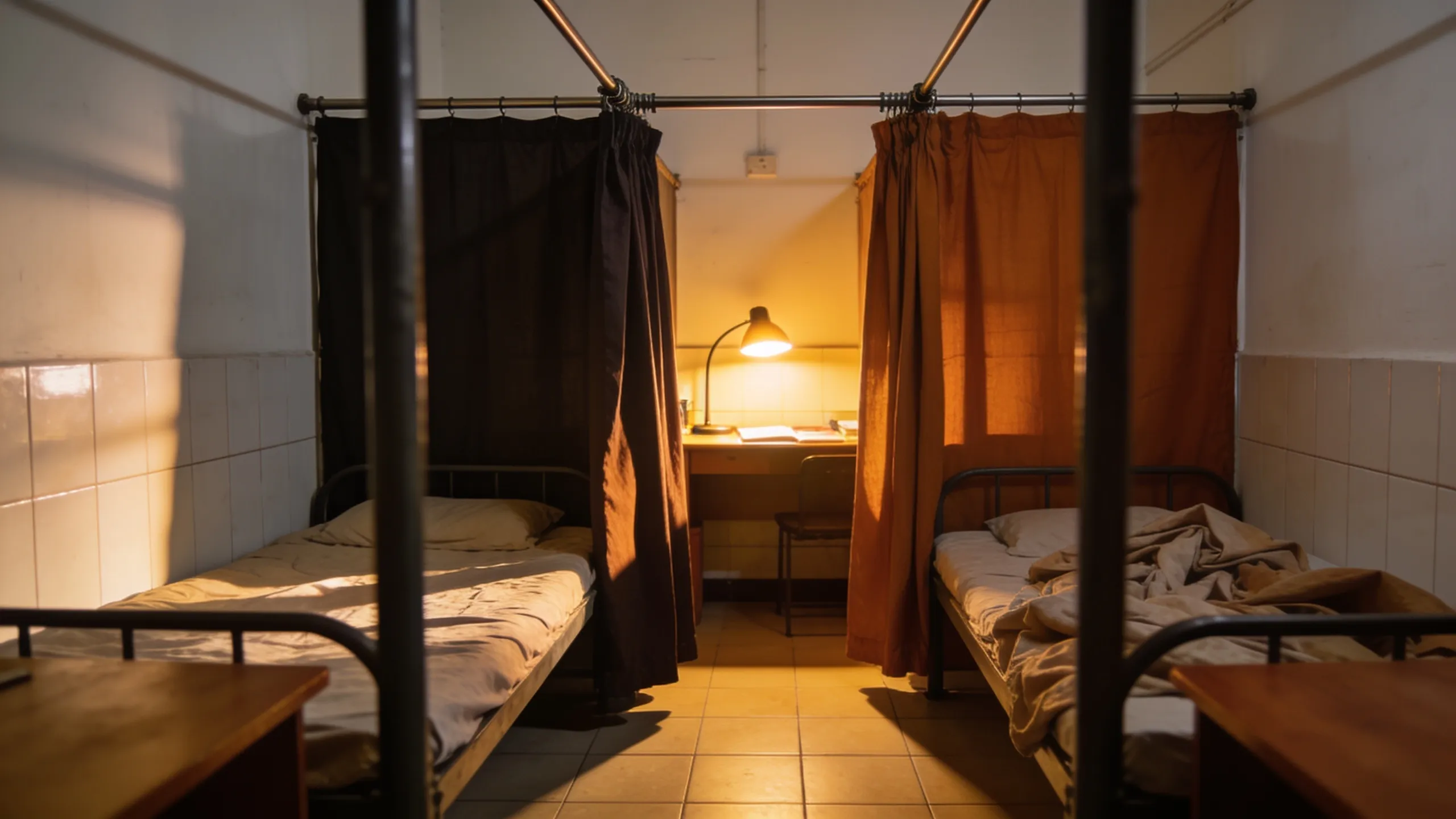
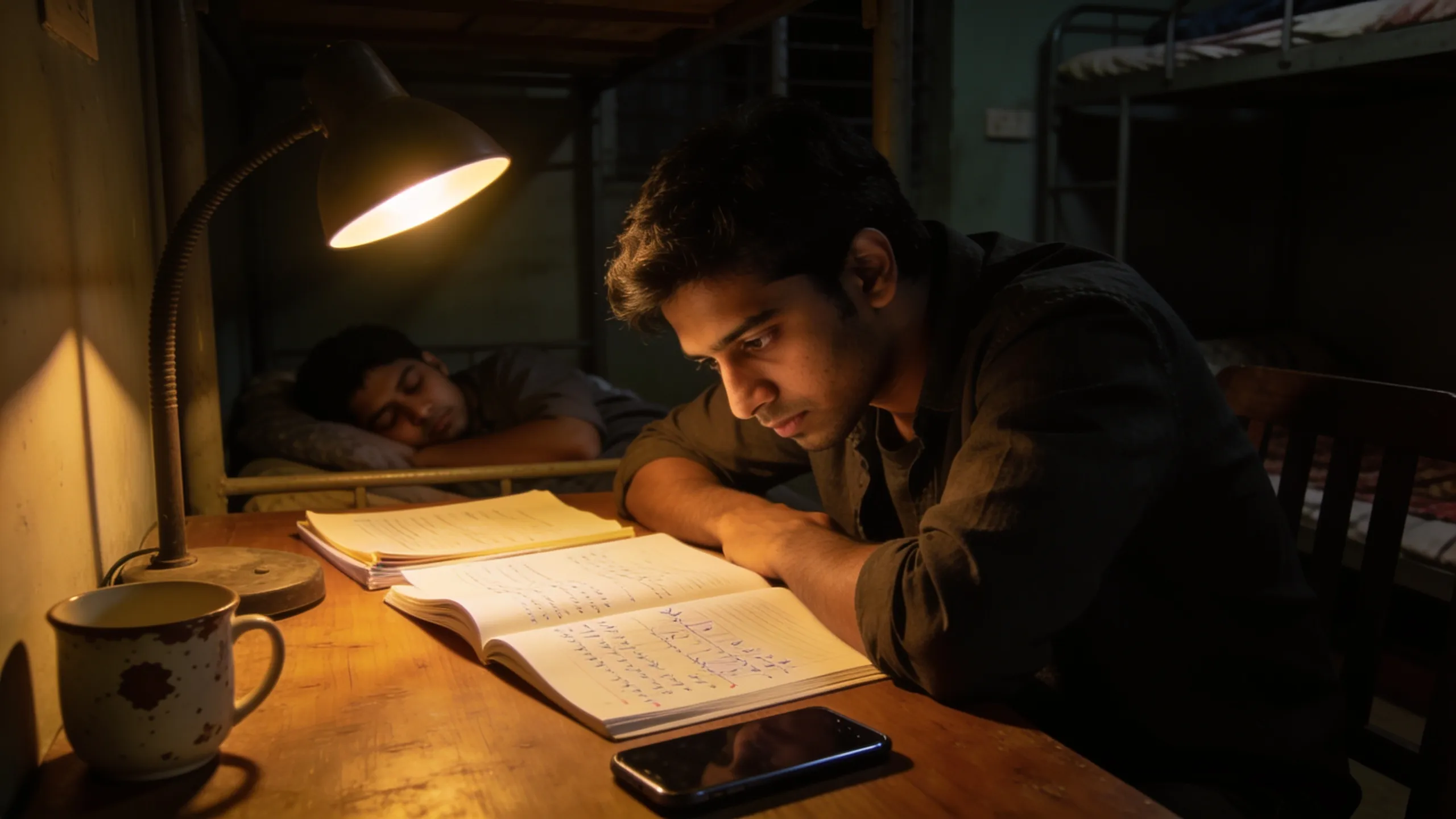
Exam week in a hostel is a different universe. Your roommate is watching reels at midnight. The corridor smells of Maggi at 2 AM. Someone is having a breakdown in the common room. And your syllabus is staring at you, 70% unread. Studying for exam study tips hostel room shared environments requires a strategy, not just willpower.
The students who do well in exams from hostel rooms are not the ones with the best study material. They're the ones who figured out how to protect their focus hours in a space they share with 1-3 other people. This guide covers the practical stuff: when to study, how to manage noise, where to study when the room doesn't work, and how to keep your head together during exam season.
If you don't have a proper study corner yet, set one up first, our hostel room study corner guide covers the desk, lighting, and ergonomics.
Night Study vs Early Morning, Pick Your Shift
This is the first decision that shapes everything else. Both work. Neither is universally better. The right choice depends on your roommate, your body clock, and your hostel's noise pattern.
Night study (11 PM – 3 AM):
- The hostel is quiet after midnight. No footsteps in the corridor. No phone calls.
- Your roommate is asleep; you need a desk lamp that doesn't light up the whole room. A study lamp with adjustable brightness and a narrow beam works. Check the best study lamp picks if you need one.
- Downside: your sleep cycle flips. If your exam is at 9 AM, you wake up groggy. Night study works for afternoon exams.
Early morning (4 AM – 7 AM):
- You sleep at 10 PM, wake at 4 AM. You get the same 6 hours of focused study but your sleep is aligned with the exam schedule.
- Mornings have zero distractions. No messages, no calls, no noise.
- Downside: sleeping at 10 PM in a hostel is hard. Your roommate comes back from dinner at 10:30. Corridor noise dies around 11:30. You need earplugs or noise-cancelling earbuds.
The hybrid approach most toppers use: Study from 7 PM to 11 PM (first shift), sleep 11 PM to 4:30 AM (5.5 hours), study 4:30 AM to 7:30 AM (second shift). Total: 6.5 focused hours with a full sleep cycle between. This avoids the all-nighter trap entirely.
Noise Management in Shared Rooms
You can't control your roommate's behaviour. You can control how much of it reaches your ears.
Level 1, Foam earplugs (₹50 for 5 pairs). Block 60-70% of ambient noise. Enough for sleeping through corridor sounds. Not great for studying because you can't hear alarms or calls.
Level 2, In-ear earbuds with white noise. Play brown noise or rain sounds on YouTube or Spotify. This masks irregular sounds (laughing, doors slamming) without being distracting. Use earbuds you already have.
Level 3, Noise-cancelling earbuds. Sony, Boat, or JBL ANC earbuds (₹1,500–₹4,000) actively cancel low-frequency noise. This is the serious exam prep solution. You put them in, the hostel disappears.
The roommate conversation. Before exam week, talk to your roommate. Not a lecture, a negotiation. "I need 11 PM to 3 AM quiet for the next 10 days. I'll keep my light low. Can we make this work?" Most roommates will cooperate if you ask early and offer the same courtesy during their exams. If you need more help handling this, read the roommate problems guide. If the noise is structural rather than personal, six to a room and a corridor that never sleeps, the real fix is a quieter room next term: hostels and PGs in Mansarovar give you the largest set of rooms to compare in Jaipur.
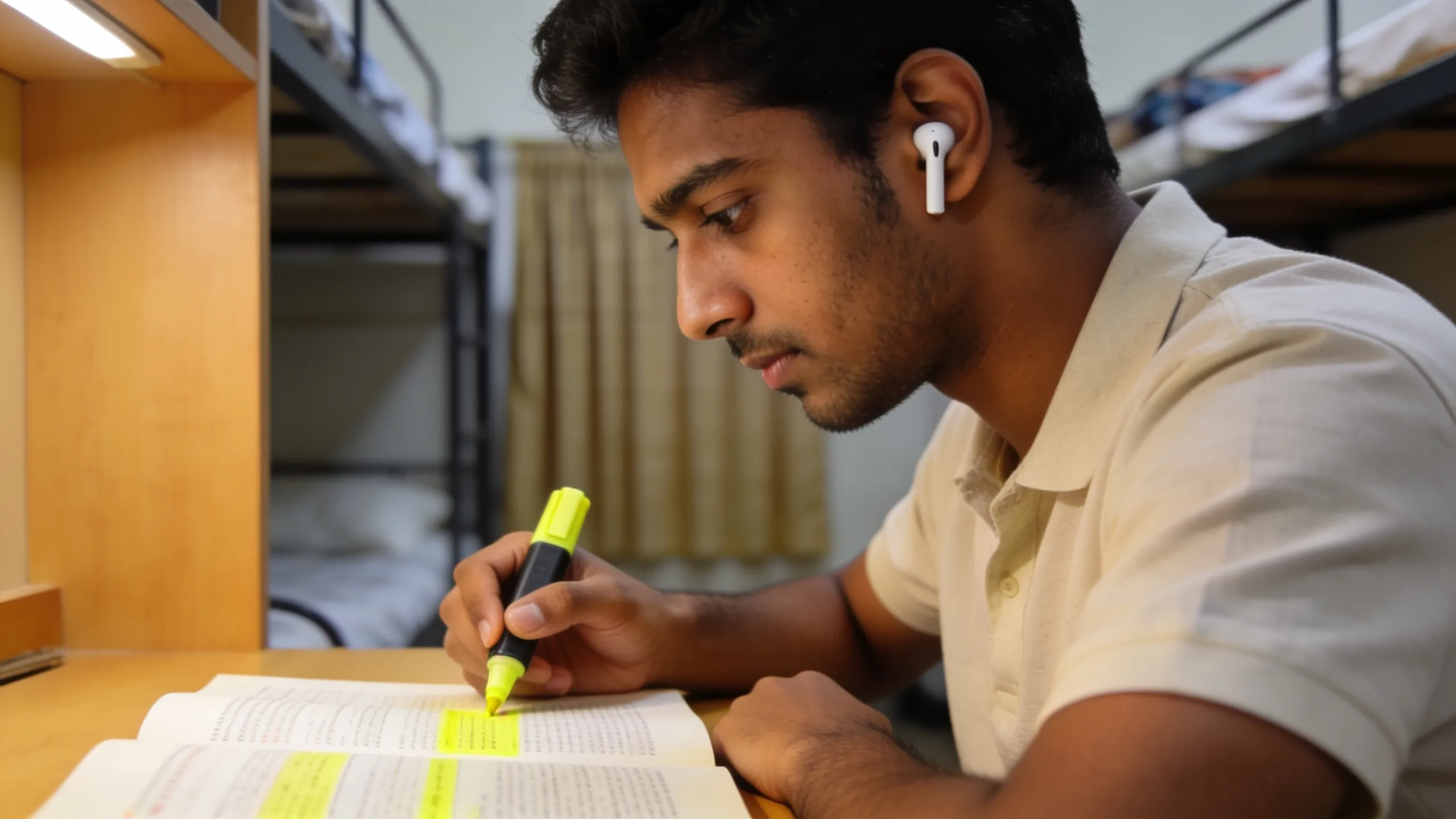 Noise-cancelling earbuds are the single best exam season investment for hostel students. The room disappears.
When the Room Does Not Work, Alternative Study Spots
Some days, the room is just not going to work. Your roommate has friends over. The corridor is loud. You've been sitting at that desk for 8 hours and the walls are closing in.
Hostel common room or library. If your hostel has one, this is the first option. Fewer distractions than your room because everyone there's also studying. Whether a hostel actually has a usable one is worth checking on your visit, so ask about it while you compare hostels and PGs in Jaipur or listings in your own city.
College library. Most college libraries extend hours during exam season (8 AM – 10 PM or even midnight). AC, quiet, big tables, no roommates. The walk to campus also clears your head.
Empty classrooms. After 5 PM, most classrooms are empty. Some colleges leave them unlocked. A classroom to yourself, with a whiteboard for working through problems, is sometimes the best study setup available.
Hostel terrace or garden. For revision (not deep study), a change of scenery helps. Morning hours on the terrace with notes and a cup of chai is surprisingly productive. Not for solving numerical problems or writing essays, good for re-reading and memorizing.
Cafe near campus. A ₹100 coffee buys you 3 hours of AC, WiFi, and a seat. Not sustainable for every day, but useful when you need a reset.
The Exam Week Study Schedule
Here's a realistic schedule that balances study time, breaks, meals, and sleep. Adjust the hours but keep the structure.
| Time | Activity |
|---|---|
| 4:30 AM | Wake up, wash face, chai |
| 5:00-7:30 AM | Deep study, hardest topics (2.5 hrs) |
| 7:30-8:30 AM | Breakfast, get ready |
| 8:30-12:30 PM | Study block 2, problem-solving, practice (4 hrs) |
| 12:30-1:30 PM | Lunch break, no phone scrolling, go for a short walk |
| 1:30-4:00 PM | Study block 3, revision, weaker topics (2.5 hrs) |
| 4:00-4:30 PM | Snack break, tea, stretch |
| 4:30-7:00 PM | Study block 4, past papers, mock tests (2.5 hrs) |
| 7:00-8:00 PM | Dinner, talk to friends or family |
| 8:00-10:00 PM | Light revision, flashcards, summaries (2 hrs) |
| 10:00-10:30 PM | Wind down, no screens |
| 10:30 PM | Sleep |
Total study time: 13.5 hours. This is a high-intensity exam week schedule. During regular study weeks, 6-8 hours is more sustainable. The key: don't try to study 13 hours starting on day one. Build up from 8 hours over the first 2-3 days.
Exam Season Snacks and Food
Your mess serves dinner at 8 PM. Your study break is at 11 PM. Your stomach doesn't care about hostel schedules.
Stock up before exam week:
- Dry fruits and mixed nuts (₹200 for a week), sustained energy without sugar crashes
- Biscuits and rusks (₹100), quick carbs between study blocks
- Instant coffee or tea bags (₹150), faster than going to the canteen
- Bananas and apples (₹100), buy 2 days' worth at a time so they stay fresh
- Chana or peanut packs (₹50), protein-dense, no preparation needed
What to avoid: Energy drinks (crash after 2 hours), heavy meals before study sessions (you'll fall asleep), too much caffeine after 6 PM (messes with your sleep schedule).
Keep an electric kettle in your room for hot water. A cup of black coffee at 4:30 AM costs nothing and gets your brain started faster than cold water on your face.
Mental Health During Exams
Exam season in a hostel can feel isolating even when you're surrounded by people. Everyone is stressed. Nobody wants to admit they're behind on the syllabus.
Five things that help:
- Call home once a day. Not for study tips, just to hear a familiar voice. Ten minutes. It grounds you.
- Walk for 15 minutes between study blocks. Sitting for 8 hours straight is not productive. It's a stress accumulator. Walk the hostel corridors, go to the canteen, step outside.
- Stop comparing progress with others. Your roommate covering 4 chapters today while you covered 2 doesn't mean you're behind. Different subjects, different learning speeds, different starting points.
- Sleep at least 5.5 hours. Non-negotiable. Below 5 hours, your memory consolidation drops and you retain less of what you studied. The all-nighter myth hurts more students than it helps.
- Know when to ask for help. If exam anxiety is interfering with eating or sleeping for more than 3 days, talk to your hostel warden or college counsellor. Most colleges have free mental health support. Use it.
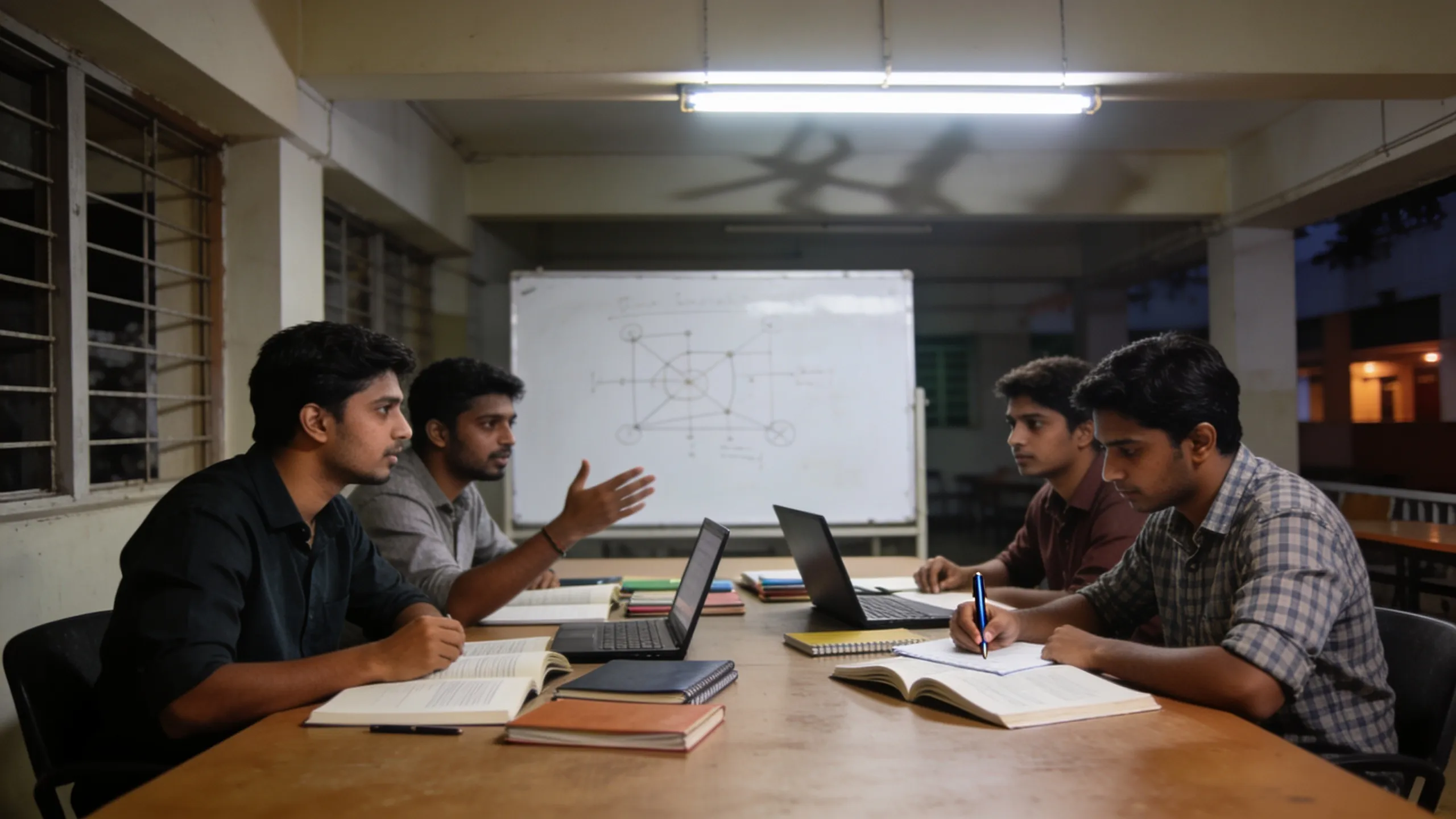 Group study in the common room works for revision and doubt-clearing. Not for first-time learning, do that solo first.
Group Study, When It Works and When It Wastes Time
Group study in a hostel is easy to start. The common room, someone's room, the corridor. But most group study sessions turn into group chat sessions within 30 minutes.
Group study works when:
- You've already studied the topic solo. Group study is for doubt-clearing and testing each other.
- The group is 3-4 people max. Larger groups lose focus.
- Someone takes the lead. "Okay, let us do chapter 5 first. Everyone explain one concept in turn."
- There's a time limit. "We study together from 3 to 5 PM. After that, we split."
Group study fails when:
- Nobody has prepared. You end up reading together in silence, which you could do alone.
- One person dominates and lectures while others zone out.
- Phones come out. One person checks a message, everyone follows.
If you're in Pune and looking for hostels near your college with good common rooms for group study, check listings for PGs in Kothrud, where study spaces are often part of the hostel design.