An electric hot water bag is the quickest of the three to get ready and uses about 2 units of electricity a month, but it is a plug-in appliance many hostels restrict. A rubber hot water bag is the easiest to get past the rules but needs a kettle, and a heating pad uses the least power yet must stay switched off while you sleep. Below are the wattages, heat-up times, safety rules and the monthly cost, worked out step by step.
This post is part of our winter hostel survival guide, which covers room heaters, cold waves and the rules that decide what you can plug in. Here we stick to the small warmers students take to bed.
| Key number | Value | Scope / data checked |
|---|---|---|
| Electric bag rated power | 400W, 8 to 12 min charge | HealthSense HB 850 manual, 2026 |
| Heating pad rated power | 50 to 55W, 30 min sessions | HealthSense HB 300 manual, 2026 |
| Energy for a 2 L rubber bag's water | 0.128 kWh per fill | Calculation, 1.3 kg from 15°C to 100°C |
| Himachal Pradesh domestic rate | Rs 5.44 per unit (0 to 125 units) | HPSEBL, from 1 April 2026 |
| BIS order on heating pads | ISI mark needed from 1 Oct 2026 | Quality Control Order, 2026 |
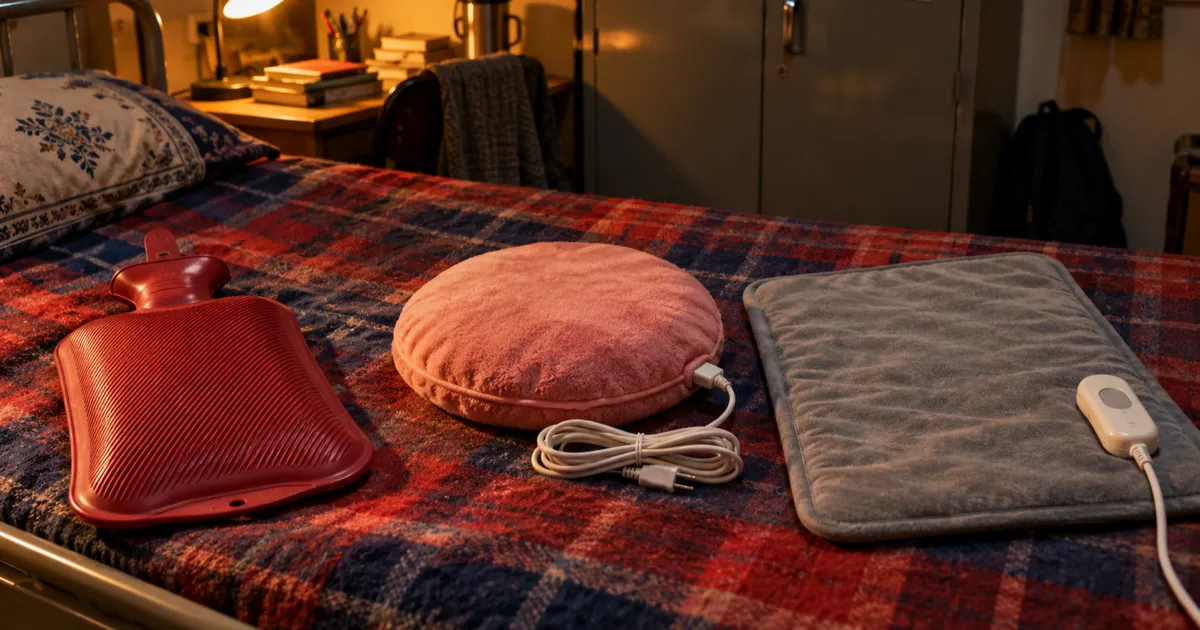
Rubber vs electric hot water bag vs heating pad: which is better?
For most hostel students, a rubber bag is the safest bet on rules and a heating pad the cheapest on power. The electric bag sits in between: it charges in about 10 minutes at 400W and stays warm for hours, but it is a personal electrical appliance, so it needs your warden's approval first.
We compared one real product of each type, using specs from the makers' own manuals and pages. The rubber bag is the Lifelong 2000 ml hot water bottle, the electric bag is the HealthSense Heat-Mate HB 850, and the pad is the HealthSense Heat-Mate HB 300.
| Feature | Rubber bag (Lifelong 2000 ml) | Electric bag (HealthSense HB 850) | Heating pad (HealthSense HB 300) |
|---|---|---|---|
| Wattage | None itself; needs a kettle (600W to 1500W) | 400W while charging | 50 to 55W while on |
| Ready in | At least 5 to 13 min of kettle time | 8 to 12 min charge | Warms while plugged in |
| How long the heat lasts | No maker figure | 2 to 8 hours of use | Only while on; 30 min sessions |
| Top temperature | Depends on the water you add | 70°C, cuts out at 65°C or above | Up to 85°C |
| Use while sleeping? | Yes, in its cover | Yes, unplugged, in its cover | No |
| Hostel-rule fit | Best: no plug in the room | Check: counts as an appliance | Check: counts as an appliance |
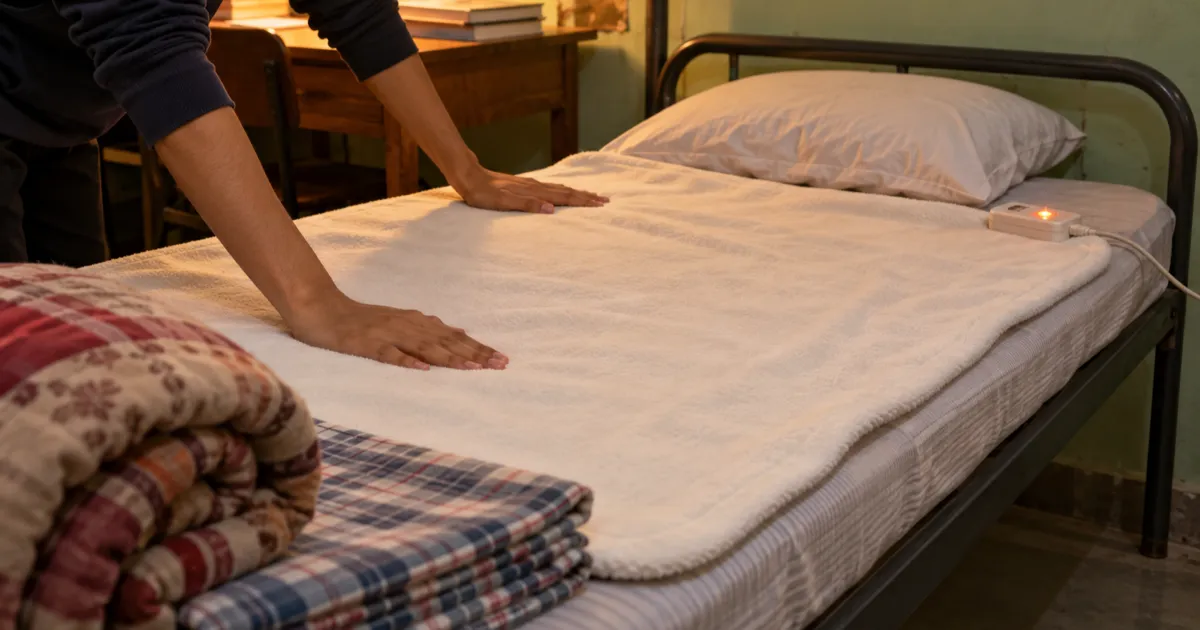
A heating pad does a different job from a blanket. If you want warmth across the whole bed all night, read our guide to the best electric blanket for a hostel bed instead.
How much electricity does each one use in a month?
Very little. Over 30 nights, kettle water for a 2 litre rubber bag takes about 3.85 units, an electric bag charged once a night about 2 units, and a heating pad used for an hour a night about 1.65 units. At Himachal Pradesh's domestic rate that is Rs 9 to Rs 21 a month.
Rubber bag: heating the water
Makers say to fill a rubber bag only two-thirds full, so a 2000 ml bag holds about 1.3 litres, or 1.3 kg of water. NIST defines a calorie as the heat that raises 1 g of water by 1°C, which is 4.184 joules. Assume winter tap water at 15°C and a kettle that brings it to the boil:
1.3 kg x 4.184 kJ/kg°C x 85°C = 462.3 kJ = 0.128 kWh
The Lifelong 1.5 litre kettle is rated 1500W, so it needs at least 462.3 / 1.5 = 308 seconds, about 5.1 minutes. The smaller Lifelong 0.8 litre kettle at 600W needs two fills and at least 12.8 minutes. These are floors: real kettles lose some heat, so expect longer.
Electric bag and heating pad
The HB 850 user manual gives 400W and an 8 to 12 minute charge. Take the middle: 0.4 kW x 10 minutes = 0.067 kWh a charge. The HB 300 user manual rates the pad at 50 to 55W and says to switch off after 30 minutes. Two sessions on the top setting: 0.055 kW x 1 hour = 0.055 kWh a night.
Monthly cost in Himachal Pradesh
HPSEBL's tariff from 1 April 2026 charges domestic users Rs 5.44 a unit up to 125 units, and Rs 6.37 on the non-domestic non-commercial rate that some hostel buildings are billed on.
| Warmer | Units in 30 nights | At Rs 5.44 | At Rs 6.37 |
|---|---|---|---|
| Rubber bag (kettle water) | 3.85 | Rs 20.96 | Rs 24.54 |
| Electric bag (one charge a night) | 2.0 | Rs 10.88 | Rs 12.74 |
| Heating pad (1 hour a night) | 1.65 | Rs 8.98 | Rs 10.51 |
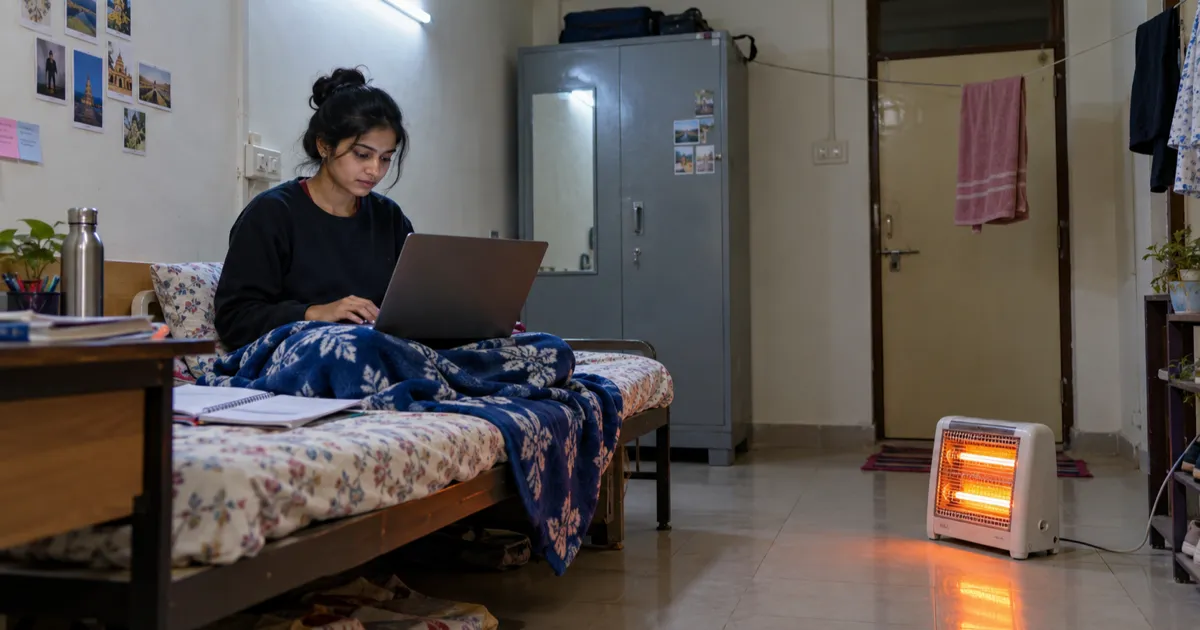
Compare that with the 96 units an 800W room heater uses at 4 hours a night, which is Rs 522.24 at the same Rs 5.44 rate. Any of these three warmers costs a tiny fraction of a heater. All figures are energy charges only, before fixed charges.
Which is safest, and how do you avoid burns?
All three can burn you if misused, in different ways. Rubber bags scald when they split or are overfilled with boiling water, electric bags can leak or swell, and pads cause burns when left on for long periods. Follow the manual, use the cover, and replace anything damaged.
- Rubber bag: Devon and Somerset Trading Standards says never use freshly boiled water, fill two-thirds, squeeze out the air, always use a cover and never sit or lie on the bag. Replace it 2 to 3 years after first use; the middle number in the flower symbol on the neck shows the year it was made. Sahyog Wellness adds a leak test: hold the closed bag upside down before use.
- Electric bag: unplug it before use and let it cool fully before recharging, per the HB 850 manual. Sahyog's gel bag page says never use it while charging and cut the power if the bag swells. Avoid cheap bags that heat the liquid by passing current through it: Hong Kong's Consumer Council tested 30 brands and urged buyers to stop using this electrode type because leaks risk shock and scalds.
- Heating pad: do not fold it, do not use it wet, and never fall asleep on it. HealthSense warns that long use on high heat can cause burns.
If you do get scalded, the NHS says hold the burn under cool running water for 20 minutes, as soon as possible and within 3 hours, then lay cling film over it without wrapping. Get hospital care for large or deep burns, burns on the face, genitals or bottom, and any electrical burn.
On certification, the BIS Quality Control Order of 6 April 2026 brings flexible heating appliances such as pads, and appliances for heating liquids such as kettles, under the ISI mark from 1 October 2026, with later dates for small and micro makers. Check the box for the ISI mark and confirm the licence on the BIS compulsory certification list. Wider fire risks are covered in our hostel fire and electrical safety guide.
Which one will your hostel allow?
A rubber bag is almost never an issue because nothing plugs in at your bed. The catch is hot water: you need a kettle, and many hostels limit where kettles go. Electric bags and pads count as personal appliances, which some hostels ban outright, so ask your warden before buying either.
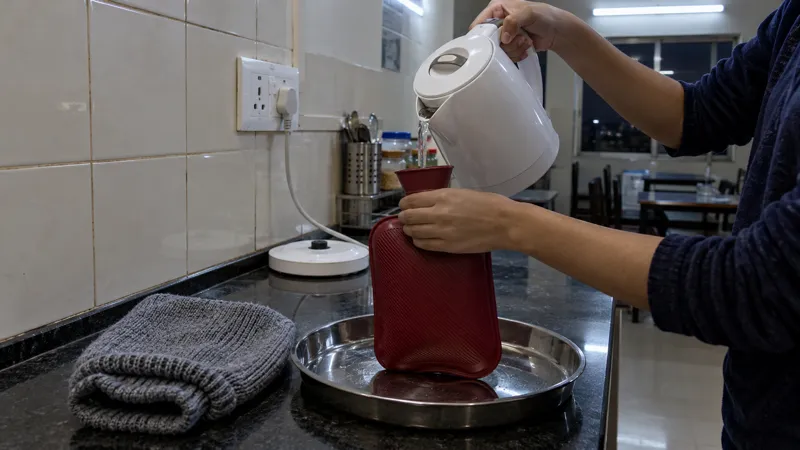
Real rules show the spread. IIT Palakkad's hostel rules allow hot-water kettles only at plug points marked for them in the common area, so a rubber bag works if you fill it there. IIT Mandi's rules prohibit personal electrical equipment such as stoves and irons, with confiscation and fines, yet permit a single room heater (800W cap, Rs 200 weekly fee) between October and February. A 400W electric bag sits in a grey zone under rules like these, so get a clear yes first.
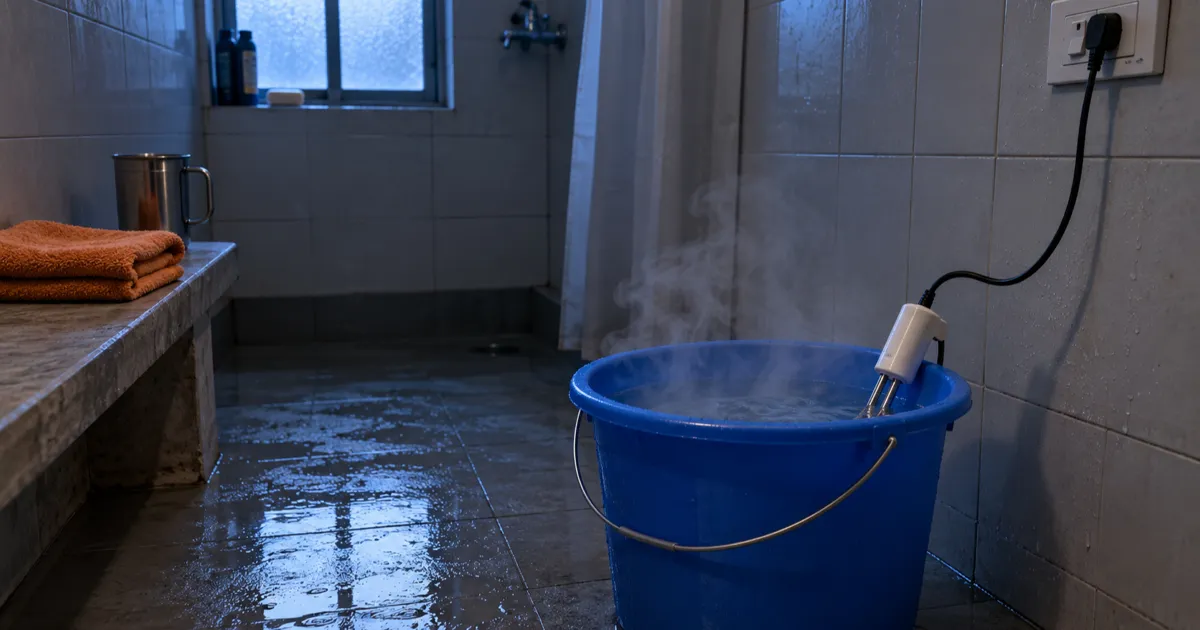
If you need a kettle anyway, our guide to the best electric kettle for hostel use covers safe models, and our list of appliances allowed in hostels shows what typically passes inspection. Never warm a rubber bag's water with a rod in a bucket; see our immersion rod safety guide for why many hostels ban rods.
Before you buy one
Send your warden a short message tonight: may you use an electric hot water bag or a heating pad in your room, and where may you boil a kettle? If the answer is no to both appliances, buy a 2 litre rubber bag with a cover and fill it at the common kettle. If yes, choose a bag with water sealed off from the electrics and an auto cut-out, check for the ISI mark, and set a phone alarm so a pad never runs past 30 minutes.