
To make a complaint against hostel warden misconduct in a college, write to the chief warden first, then file on your institution's grievance portal so its Students' Grievance Redressal Committee (SGRC) decides it, and appeal to the university Ombudsperson if needed. Sexual harassment goes to the Internal Complaints Committee, and ragging has its own route. This guide sets out each step, the official time limits, and the dates they produce in practice.
It covers misconduct by a warden, caretaker or hostel office in an institution-run hostel: unfair fines, abusive language, discrimination, targeting a student, ignoring broken facilities. For the full map of who handles which accommodation problem, start with our guide on where to file a PG or hostel complaint in India. If seniors are bullying you, that is ragging; follow our anti-ragging helpline and complaint guide instead.
| Key number | Value | Scope / data checked |
|---|---|---|
| Institution refers your online complaint to the SGRC | Within 15 days | UGC grievance regulations 2023, reg. 8(ii), checked October 2026 |
| SGRC report to you | Preferably within 15 working days | UGC grievance regulations 2023, reg. 5(viii) |
| Appeal to the Ombudsperson | Within 15 days of the SGRC decision | UGC grievance regulations 2023, reg. 5(ix) |
| Ombudsperson resolution target | 30 days from the appeal | UGC grievance regulations 2023, reg. 7(iv) |
| Sexual harassment complaint to the ICC | 3 months from the incident, plus up to 3 more | UGC sexual harassment regulations 2015, reg. 7 |
| ICC inquiry | 90 days from receipt | UGC 2015 regulations, reg. 8(3); POSH Act 2013, s.11(4) |
What counts as a valid complaint against hostel warden misconduct?
Most everyday warden problems fit the UGC definition of a student grievance: harassment or victimisation, discrimination, fines or charges outside the published rules, amenities promised but not provided, and any action that breaks the institution's own ordinances. Threats, assault and sexual harassment also have separate criminal or ICC routes that run alongside.
The UGC (Redressal of Grievances of Students) Regulations, 2023, notified on 11 April 2023, apply to every university, deemed university and affiliated college. Regulation 3(1)(f) lists 18 kinds of grievance. Five of them match what students most often report about a warden:
- Harassment or victimisation (clause xvi): singling a student out, public humiliation, repeated shouting or abusive language. Harassment that is a criminal offence goes to the police instead.
- Discrimination (clause xiv) against students from SC, ST or OBC communities, women, minorities or students with disabilities, for example in room allotment or curfew enforcement.
- Breaking the institution's own rules (clause xvii): a penalty, room shift or expulsion from the hostel without the procedure your hostel ordinance sets out.
- Amenities not provided (clause xi): facilities the prospectus promised, such as water, electricity backup or a working mess.
- Charges beyond the declared policy (clause vii).
Unfair fines: check the prospectus first
Regulation 4(1)(f) requires every institution to publish its rules for fines "in specified heads or categories" along with the minimum and maximum amounts. Regulation 4(1)(i) adds hostel accommodation and its fee. That gives you a written benchmark. Take an illustrative case: the prospectus caps a hostel discipline fine at Rs 500, and the warden demands Rs 2,000 for a late entry. The excess is Rs 2,000 minus Rs 500, or Rs 1,500, and the demand is four times the published maximum (2,000 ÷ 500). Quote both figures and the page of the prospectus in your complaint.
Before you file a complaint against hostel warden decisions like these, collect your evidence:
- Receipts, fine slips or UPI screenshots for every payment, with dates
- The prospectus page and hostel rule book clause you rely on
- Screenshots of messages, notices or WhatsApp group posts from the warden
- A dated diary of incidents: time, place, words used, who was present
- Names and room numbers of witnesses willing to write a short statement
- Copies of any earlier written complaint and its acknowledgement
How to file a college hostel grievance, step by step
Put the problem in writing to the chief warden or hostel committee, then file on the institution's online grievance portal, which must pass it to the SGRC within 15 days. The SGRC should report within 15 working days. If its decision does not fix the problem, appeal to the university Ombudsperson within 15 days.
- Write to the level above the warden. Address the chief warden, provost or hostel committee, not the warden you are complaining about. Our guide to writing a complaint letter to the hostel warden has the format; adapt it to name the warden and the rule broken. Get a stamped or emailed acknowledgement.
- Find the grievance portal. Regulation 8(i) gave every institution three months from notification to set up an online portal, and regulation 9 requires SGRC and Ombudsperson details on the website and in the prospectus. Search your college site for "grievance" or "SGRC".
- File on the portal. State the facts, the clause of regulation 3(1)(f) that fits, the rule or prospectus page broken, and the relief you want: refund of Rs 1,500, a written apology, a room change, an inquiry. Attach your evidence.
- Attend the hearing. The SGRC, chaired by a professor and including at least one woman and one SC/ST/OBC member, must fix a hearing date and follow natural justice. You may appear yourself or authorise a representative, such as a parent (regulation 8(iv)).
- Appeal if needed. Within 15 days of receiving the SGRC decision, appeal to the Ombudsperson your university has appointed: a retired vice-chancellor, a senior retired professor or a former district judge.
- Escalate outside the college only after these steps, using the table in the next section.
The deadlines, counted from a sample date
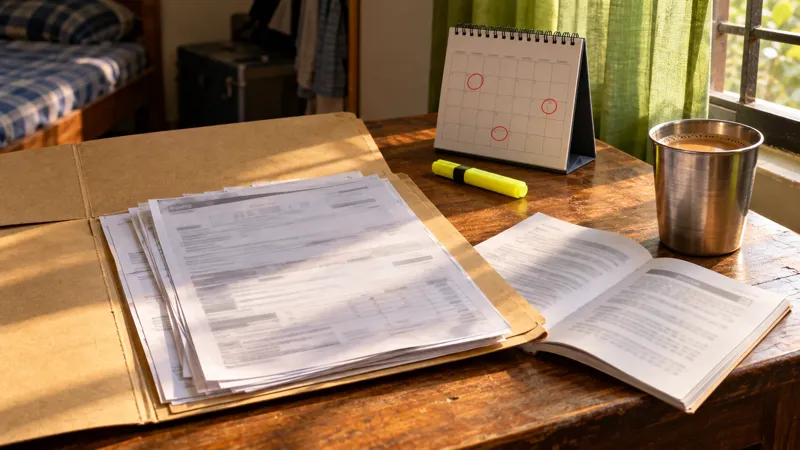
Say you file on the portal on Monday 2 November 2026. Counting calendar days, except the SGRC's 15 working days (weekdays only, ignoring campus holidays):
- Referral to the SGRC: 2 November + 15 days = 17 November 2026
- SGRC report: 15 working days after 2 November = Monday 23 November 2026 (three full weeks)
- Last day to appeal: 23 November + 15 days = 8 December 2026
- Ombudsperson target if you appeal on that day: 8 December + 30 days = 7 January 2027
From complaint to Ombudsperson order is 28 days of November, 31 of December and 7 of January: about 66 days. Regulation 8(ix) says the institution shall comply with the Ombudsperson's recommendations. One caution from regulation 8(x): a complaint found false or frivolous can lead to action against the complainant, so keep to facts you can show.
Which body handles which warden complaint?
Inside the college, the SGRC and the Ombudsperson handle general grievances and the ICC handles sexual harassment. Outside it, UGC's e-Samadhaan portal covers UGC-regulated institutions, AICTE's grievance cell covers approved technical colleges, CPGRAMS reaches government authorities, and the police handle threats and assault.
| Level / body | Covers | Where to file | Cost | Deadline |
|---|---|---|---|---|
| Chief warden / hostel committee | First written complaint about a warden | Letter or email, with acknowledgement | None | Set by your hostel rules |
| Students' Grievance Redressal Committee | The 18 grievance types in UGC reg. 3(1)(f) | Institution's online grievance portal | None in the regulations | Referral within 15 days; report preferably within 15 working days |
| University Ombudsperson | Appeals against SGRC decisions | Appeal through the university | None in the regulations | Appeal within 15 days; resolution target 30 days |
| Internal Complaints Committee | Sexual harassment, including in hostels | Written complaint to the ICC | None in the regulations | File within 3 months (+3); inquiry within 90 days |
| UGC e-Samadhaan | Student grievances against UGC-regulated institutions (not ragging) | samadhaan.ugc.ac.in; helpline 1800-111-656 | None stated | "Time-bound"; no day count published |
| AICTE grievance cell | Students of AICTE-approved technical institutions | [email protected] | None stated | Ombudsman to redress within one month of appeal |
| CPGRAMS | Service grievances against central and state public authorities | pgportal.gov.in or its mobile app | None stated | Ordinarily 21 days; appeals ordinarily 30 days |
| Police | Threats, assault, abuse meant to provoke violence | Nearest police station | None | Not applicable |
Notes on the outside routes:
- UGC e-Samadhaan is the step when the college has no working SGRC, misses the 15-day referral, or ignores an Ombudsperson order. Under regulation 10 of the 2023 regulations, UGC can withhold grants or recommend withdrawal of a college's affiliation for repeated non-compliance.
- AICTE: its Public Grievance Redressal Cell FAQ says approved technical colleges must run a Grievance Redressal Committee, with appeals to an Ombudsman named by the affiliating university. General grievances go to the email on its Centralized Support System page; the FAQ asks for complaints about breaches of AICTE norms as a signed hard copy posted to the PGR Cell at AICTE headquarters in New Delhi.
- CPGRAMS suits central universities and other government-run institutions. Under the DARPG guidelines of 23 August 2024, a grievance lodged on 1 December 2026 should be answered by 22 December 2026 (21 days). Rate the reply "Poor" to open an appeal.
- Police: threats of harm can be criminal intimidation (section 351) and abuse meant to provoke a fight can be intentional insult (section 352) under the Bharatiya Nyaya Sanhita, 2023. The UGC regulations leave such cases to criminal law, so a police complaint can run alongside your college grievance.
What if the warden's conduct is sexual harassment?
Complain in writing to your institution's Internal Complaints Committee within three months of the incident, or of the last incident in a series. UGC's 2015 regulations treat hostels as part of the campus and name hostel wardens as accountable. The ICC must finish its inquiry within 90 days and protect your identity throughout.
The UGC sexual harassment regulations, notified on 2 May 2016, define the campus to include hostels, residences and dining halls. Regulation 3(16) says hostel wardens and provosts must be brought within the domain of accountability. The ICC is chaired by a senior woman faculty member, at least half its members are women, three elected students sit on it in student cases, and the vice-chancellor, registrar, deans and heads of department cannot be members. The same time limits appear in sections 9 and 11(4) of the POSH Act, 2013.
Worked through for an incident on 5 October 2026, using regulations 7 and 8:
- Three-month filing deadline: 5 January 2027. The ICC can extend this by up to three more months, to 5 April 2027, if it records why you could not file earlier.
- If the ICC receives your complaint on 20 October 2026, it sends a copy to the warden within seven days (by 27 October), and the warden has ten days to reply.
- Inquiry complete: 20 October + 90 days = 18 January 2027. Report within ten days: 28 January 2027.
- Regulation 8(4) gives the executive authority 30 days to act: 27 February 2027. Either side can appeal within 30 days of the recommendations.
While the inquiry runs, the institution can grant you leave of up to three months with full protection and order the warden to keep away from you. If there was physical assault, also go to the police; the ICC must help you do so.
How do you complain against a private hostel?
If the hostel is privately owned and not run by your college, the SGRC and the Ombudsperson cannot act against its owner or warden. Your routes are consumer law for poor service and overcharging, food safety officials for mess hygiene, the municipal body for building issues, and the police for threats or harassment.
That is the short answer to how to give a complaint against private hostels. Check who runs it first: a hostel the college manages, or lists in its prospectus as college accommodation, can still bring the college's duties into play. A purely private one is a business:
- Overcharging, services not delivered, or fines with no written basis: see how to file a consumer complaint against a PG or hostel online.
- Stale, unhygienic or unsafe mess food: see complaining about PG or hostel food quality to FSSAI.
- Parents handling it from another city can use the checklists in our parents' guide to a child's first hostel.
For what a fair hostel routine and a reasonable warden look like in the first place, our complete guide to hostel life in India is a useful reference point.
Your first move this week
Open your college website today and find three things: the hostel rule book, the fines section of the prospectus, and the SGRC page with its portal link. Then write a one-page dated account of what the warden did, attach your receipts and screenshots, and send it to the chief warden with a request for a written reply. If nothing changes, that same document becomes your complaint against hostel warden conduct on the grievance portal, and the 15-day clock starts. College rules differ, so read this as general guidance rather than legal advice; if the institution ignores you at every level, a lawyer or the free NALSA helpline 15100 can tell you what your own case supports.


