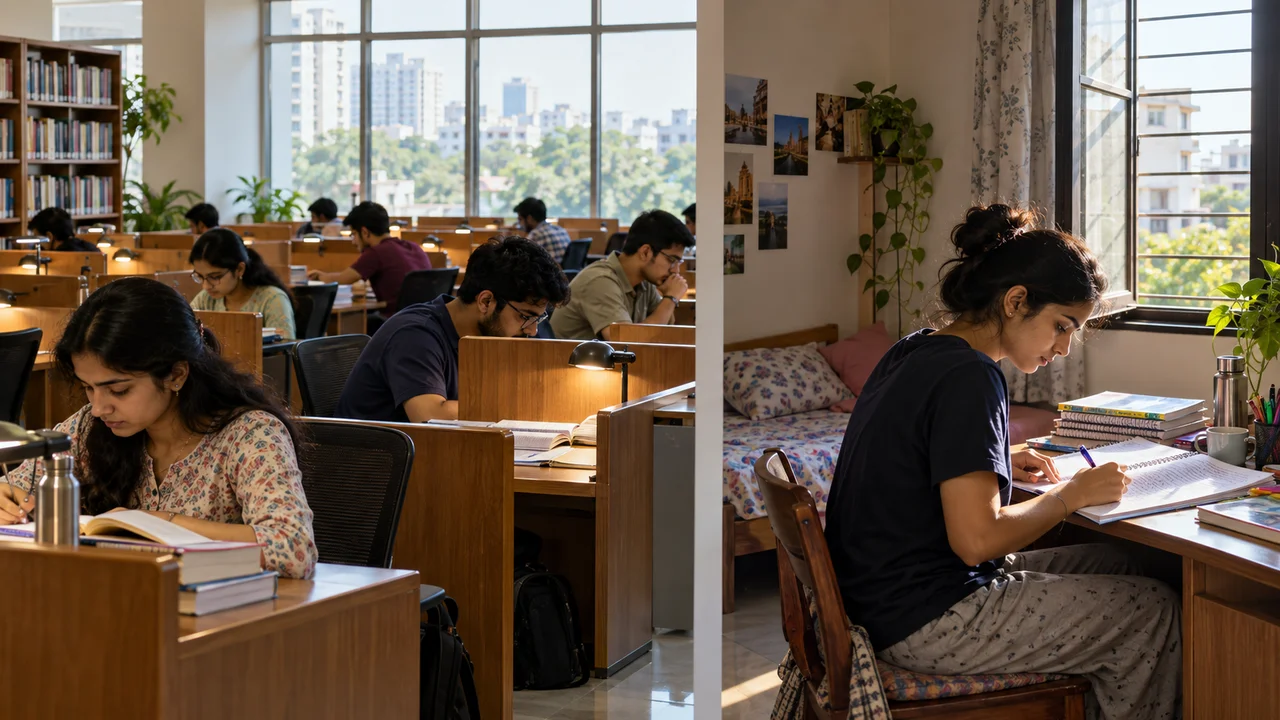
A single room is the better choice for exam preparation if you study in your room for long hours and need control over noise, light and sleep. A sharing room works well if you do most of your study in a library or coaching centre, have a compatible roommate and need to keep costs down. The choice isn't about which room is "better" in general. It's about where your focused hours actually happen and how much disruption you can absorb over months of preparation.
This comparison looks at focus, sleep, cost, accountability, wellbeing and safety, then gives a decision rule for each type of aspirant. If you're still choosing a city or area, start with the wider guide on accommodation for UPSC aspirants and other exam candidates, then come back here to settle the room type.
Key Takeaways
- Pick a single room if your room is your main study space and your schedule differs from most people around you.
- Pick a sharing room if you study mostly outside, need to cut rent, and can find a roommate on a similar timetable.
- Compare full monthly costs, not just rent: a cheaper shared bed plus a paid library seat can close the gap.
- Single rooms protect focus but can isolate you; plan regular human contact either way.
- Don't switch rooms in the weeks before an exam. Make the move during a lighter phase.
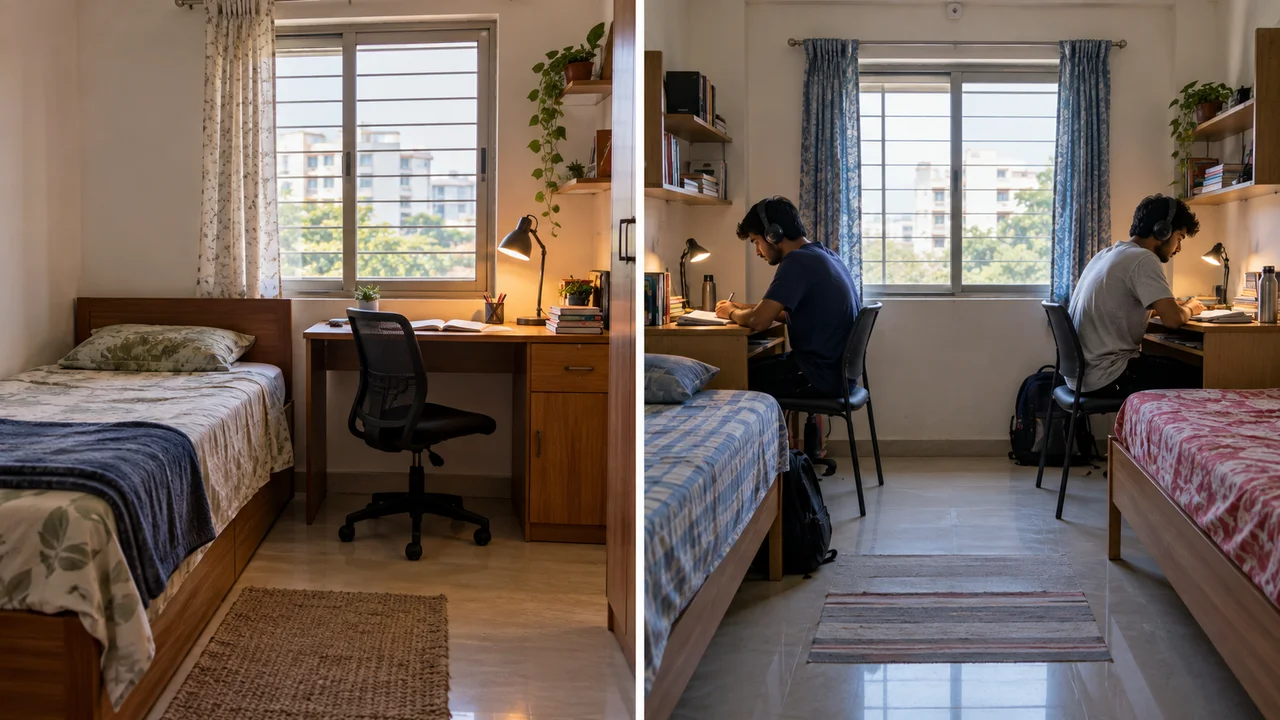
Quick comparison: single vs sharing room
The short version: a single room wins on control, a sharing room wins on cost and company. Here's how they stack up on the points aspirants ask about most.
| Factor | Single room | Sharing room |
|---|---|---|
| Best for | Long self-study hours in the room | Aspirants who study mainly in a library or class |
| Noise control | Fully yours | Depends on your roommate |
| Sleep schedule | Set your own | Must be negotiated |
| Rent per person | Higher | Lower |
| Accountability and peer contact | You have to create it | Built in, if the match is good |
| Risk of isolation | Higher | Lower |
| Privacy and storage | More | Less |
| Main risk | Loneliness, drifting routine | A mismatched roommate |
Which room gives better focus?
A single room gives better focus because nobody else decides when the room is noisy. You control calls, visitors, the fan, the light and the clock. For an aspirant doing answer writing or long reading blocks at a desk, that control is the main reason to pay more.
A sharing room can still support focus, but only when two things line up. Your roommate has to keep similar hours, and you both have to agree on quiet time. Even a considerate roommate brings phone calls, cooking smells, packing at odd hours and visitors. Headphones help with some of it, not all.
The gap narrows if your real study happens elsewhere. If you sit in a library from morning to evening, the room is mostly for sleep and short revision, and a calm shared room is enough. The trade-offs of that set-up are covered in self study library vs room, which is worth reading before you pay extra for a single.
Verdict: single room, unless your deep study happens outside the room.
Which room is better for sleep?
A single room wins on sleep because your schedule is the only one in play. Aspirants often shift their routine: early mornings before prelims, late nights during mains answer practice, or a mock-test timetable that doesn't match anyone else's.
In a sharing room, one person's 5 a.m. alarm is the other's broken sleep. Lights, typing and late calls add up over weeks. Short-term, you can manage. Over a year-long preparation cycle, poor sleep chips away at retention and mood.
Sharing works if you and your roommate are on the same exam or the same batch timing. Two aspirants with matching routines can sleep and wake together without friction.
Verdict: single room, or a sharing room with a roommate on the same timetable.
How do the costs compare?
A sharing room usually has lower rent per person, but the full monthly cost is what matters. We don't quote rent figures here because they vary widely by city, area and facilities. Instead, fill in this table with real quotes from the places you visit.
| Monthly line item | Single room (your figure) | Sharing room (your figure) | How to estimate it |
|---|---|---|---|
| Rent | Ask for the per-person rate in writing, and whether it changes mid-year. | ||
| Food or mess | Check if meals are included, how many per day, and the cost of opting out. | ||
| Electricity | Ask if it's metered per room or split. Shared AC or heater use raises it. | ||
| Internet | Ask whether Wi-Fi is included and test the speed during your visit. | ||
| Library or study space | Add this if you'd need a paid seat because the room isn't quiet enough. | ||
| Travel to coaching or library | Multiply the daily fare by your study days per month. | ||
| Deposit and one-time charges | Divide by the months you'll stay to compare fairly. |
Deposits and one-time charges differ by city. In Kota, ThePrint reported in February 2025 that the district's "Kota Cares" reforms said hostels shouldn't charge a security deposit or caution money and capped annual maintenance at Rs 2,000 (ThePrint). Other cities have their own norms, so ask each owner directly.
Verdict: sharing room on rent alone, but compare the totals before deciding.
Which room is better for accountability and motivation?
A sharing room wins on accountability when the roommate is a fellow aspirant. Seeing someone else at their desk makes it harder to waste a morning. You can quiz each other, swap notes and keep each other honest about the timetable.
A single room puts the whole routine on you. Some aspirants thrive on that. Others drift, sleep late and lose days without noticing. If you choose a single room, build structure outside it: fixed library hours, a study group or a daily check-in with a friend.
A badly matched roommate flips this advantage. Someone who isn't preparing, or who treats the room as a social space, will pull your routine down faster than solitude would.
Verdict: sharing room, if your roommate is also preparing seriously.
Which room is better for wellbeing?
A sharing room lowers the risk of isolation, which matters over long preparation cycles. Having another person around means someone notices if you skip meals or stop leaving the room.
A single room gives you space to rest without interruption, which also supports wellbeing. The risk is that weeks pass with little real conversation. If you choose one, plan regular contact with family, friends or a study group.
Whichever you pick, know where to get help. Tele-MANAS, the national tele mental health programme, runs 14416 and 1800-89-14416 and covers exam stress (Karnataka Health Department). In Kota, the administration's reforms include night room checks in hostels, per the ThePrint report linked above.
Verdict: sharing room for company; single room only with a deliberate plan for contact.
Does room type change safety?
Room type matters far less for safety than the building does. Single or shared, check that the room is above ground, the building has two ways out, fire equipment works and the window opens.
Delhi's coaching hubs show why. Three aspirants died on 27 July 2024 when a basement in Old Rajinder Nagar, used as a library but approved for parking or storage, flooded (The Tribune). A cheaper single room in a basement isn't a fair trade against a safe shared room upstairs.
Verdict: a tie. Choose the safer building first, then the room type.
Who should choose which room?
If your room is your study space, choose a single. If your room is mainly where you sleep, a well-matched sharing room is enough.
- UPSC aspirants on self-study: a single room for UPSC preparation usually pays off, because answer writing and long reading blocks need quiet and an uninterrupted schedule.
- Coaching-heavy aspirants (JEE, NEET, SSC batches): a sharing room with a batchmate often works, since most of the day is spent in class.
- CA students in articleship: office hours limit room study to evenings, so a sharing room can work if your roommate keeps similar hours. The CA articleship accommodation guide covers the move in more detail.
- First-time movers to a new city: start in a sharing room to build a support network, then move to a single in a lighter phase if you need more quiet.
If neither suits you, look for a sharing room in a building with a quiet common study hall, which gives you lower rent and a focused space.
Bottom line
Choose a single room if you'll spend most of your study hours in it and can plan your own social contact. Choose a sharing room if you study mostly outside, need to save money and can find a roommate on your timetable. In either case, check building safety first, fill in the full cost table, and avoid moving in the weeks before an exam. For UPSC CSE 2027, prelims are reported for 23 May 2027 (India TV), so confirm the date on the UPSC exam calendar and settle your room well before then.
Before you pay extra for a single room, run the numbers with UPSC Aspirant's Monthly Budget in Delhi. And if the cheaper single you've found is below ground, go through Basement Rooms and Libraries: A Safety Checklist for Aspirants first.