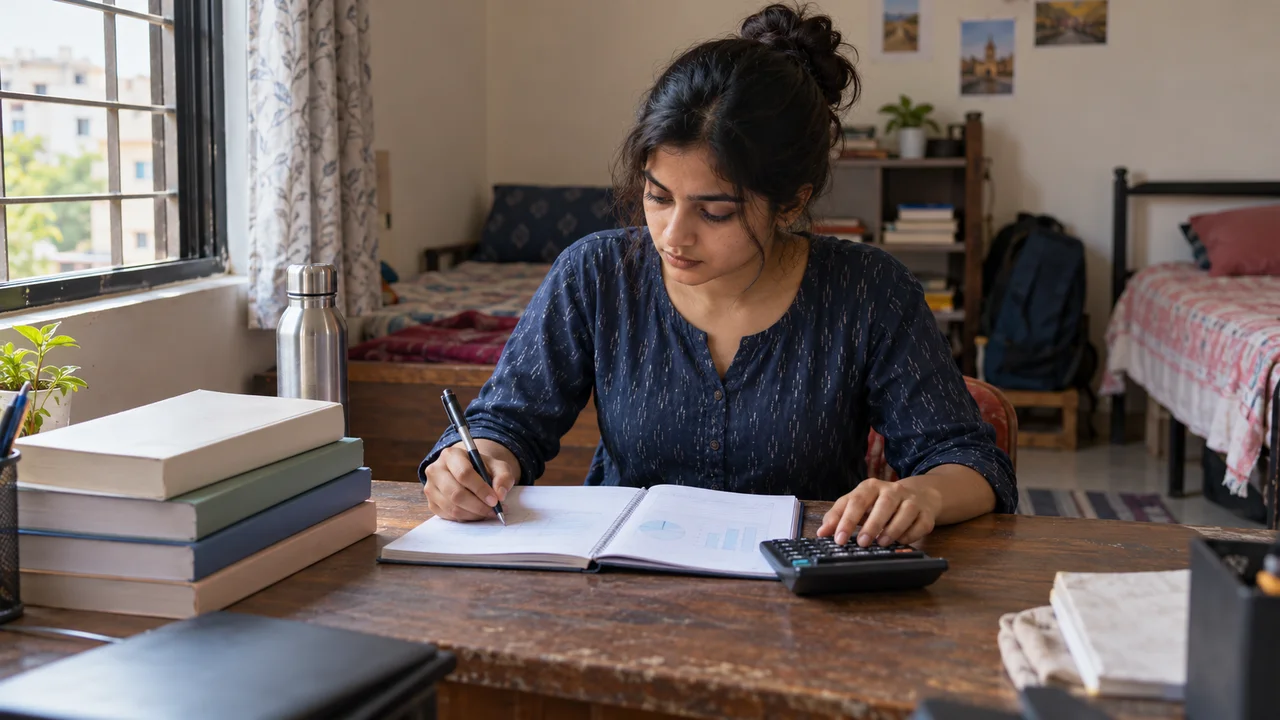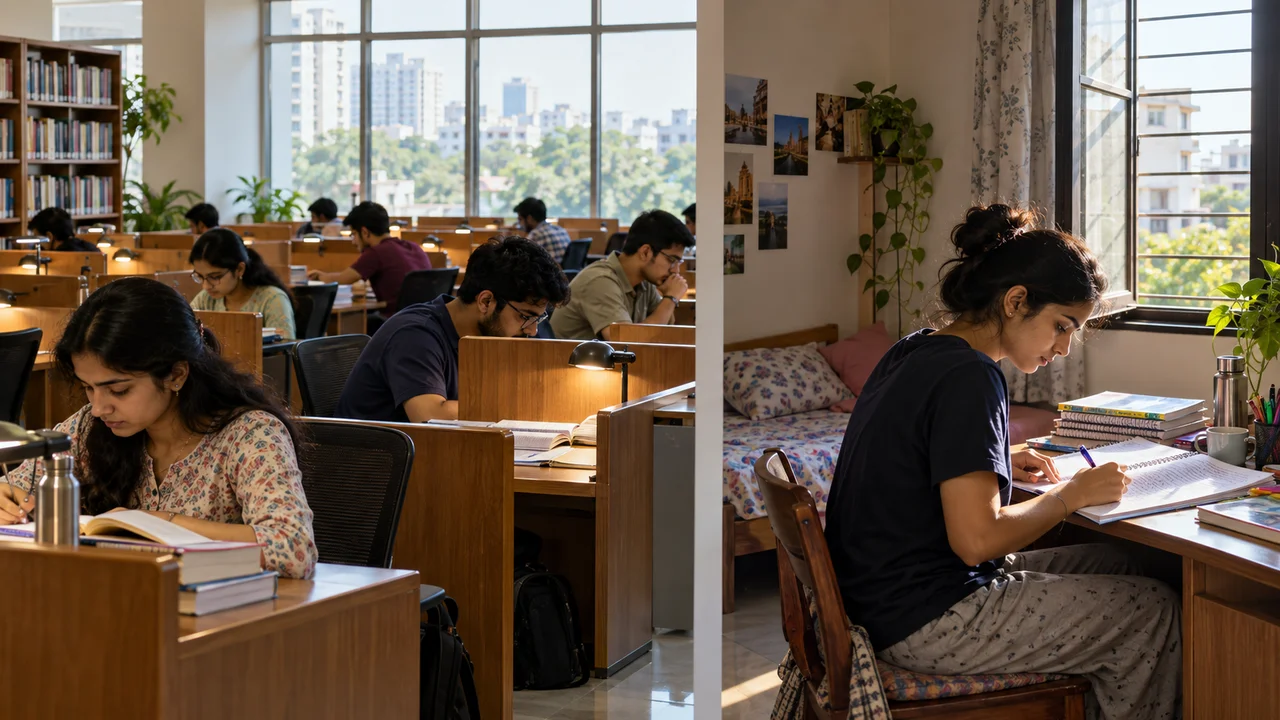
A self-study library usually beats your room for long, focused sessions, because it separates study from rest and puts you among people doing the same work. Your room wins on cost, flexibility and comfort, so many aspirants do best with a mix: the library for deep work, the room for revision and recovery. The choice matters more than it looks. If you're preparing for an exam like UPSC, you'll repeat the same routine for months, and small daily frictions add up.
This comparison covers focus, flexibility, comfort, safety, cost and motivation, then gives a decision rule by type of aspirant. It's a research-based comparison, not a test of particular libraries. If you're still choosing where to live, start with this guide to accommodation for UPSC aspirants, since a good room changes the whole equation.
Key Takeaways
- A self-study library helps most with focus and routine, especially if your room is shared, noisy or full of distractions.
- Your room wins on flexibility, comfort, rest and cost, and it doesn't need a commute.
- Check library safety before paying: a basement in Old Rajinder Nagar, Delhi, approved for parking or storage but used as a library, flooded on 27 July 2024 and three aspirants died.
- Compare costs with a fill-in budget: seat fee, deposits, commute and outside food against what it takes to fix your room.
- Many aspirants get the best result from a hybrid: library for deep work, room for revision.
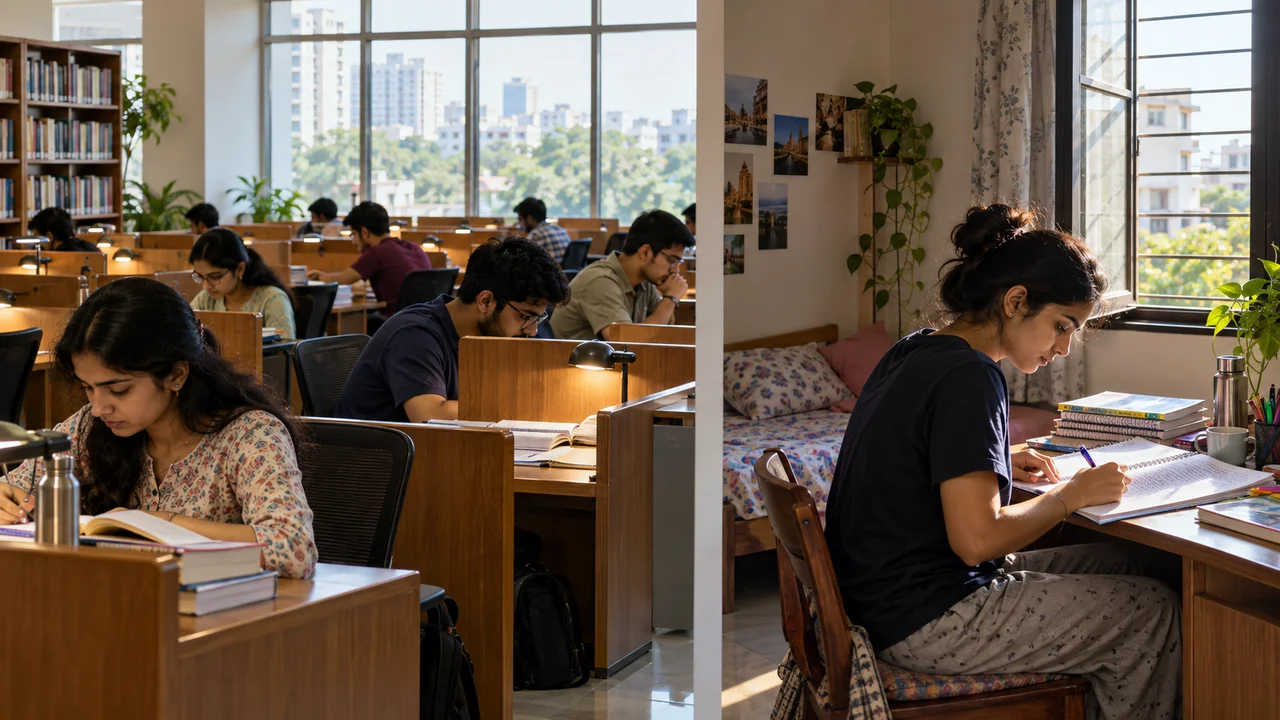
Self-study library vs room at a glance
The library wins on focus and routine, while the room wins on flexibility, comfort and cost. Safety needs checking in both, but libraries need more scrutiny because you don't control the building.
| Factor | Self-study library | Your room |
|---|---|---|
| Best for | Long reading blocks, mock tests, new topics | Revision, note-making, early or late sessions |
| Focus | Silence rules, no bed, no roommate chatter | Depends on roommates, noise and your phone habits |
| Flexibility | Fixed hours or shifts set by the library | Study whenever you like |
| Comfort and rest | Shared space, limited breaks, set seating | Your own chair, food and nap when needed |
| Safety control | You depend on the operator; basements need extra checks | You chose the building and know the exits |
| Cost | Seat fee plus commute and outside food | Already paid in your rent |
| Commute | Daily trip there and back | None |
| Motivation | Peers working around you | Self-driven only |
| Verdict | Wins for deep focus | Wins for cost and flexibility |
Which helps you focus better?
The library wins on focus, because it removes the cues that pull you away from study. There's no bed, no roommate starting a conversation and usually a firm silence rule. Sitting at the same desk every day also turns study into a habit rather than a decision you make each morning.
Your room can match that, but only if you control it. A single room with a proper desk, a window and a closed door works well for many aspirants. A shared room in a busy PG is another story: one roommate's phone call or late-night series can cost you an hour.
The room comes close when you're doing work that needs talking aloud, like answer practice, recall drills or recording yourself. Libraries don't allow that.
Verdict: the library, unless you have a quiet single room and the discipline to keep your phone out of reach.
Which gives you more flexibility?
Your room wins on flexibility, since you can study at any hour without travel or a booking. If you think best at 5 am or after dinner, the room is already open. You can switch between subjects, stretch, eat and get back to work in minutes.
Libraries run on their own hours and seating plans. Some sell shifts, others sell full-day seats, and the rules on breaks, food and guests differ from one library to the next. Ask for the timings and rules in writing before you pay, rather than relying on a banner outside.
The library still helps here in one way: fixed hours give a lazy week a structure it wouldn't otherwise have.
Verdict: the room, by a clear margin.
Which is better for comfort and health?
A good room is usually better for comfort and recovery, because you control light, air, food and rest. Long preparation is a marathon. Being able to eat a proper meal, take a short nap or step away when your head is full helps you keep going.
A library can be harder on the body. You sit for long blocks in a shared space, often with limited breaks. On the plus side, a well-run library may have better lighting, air conditioning or power backup than a cheap room, which matters in summer or during power cuts.
Whichever you pick, watch your stress levels as well as your hours. If preparation starts to feel too heavy, Tele-MANAS, the national tele mental health programme, covers exam stress on 14416 or 1800-89-14416.
Verdict: the room, if it has daylight, airflow and backup power; otherwise a well-run library can be the more comfortable option.
How do safety checks differ?
A library needs more safety checks than your room, because you're trusting a building and operator you didn't choose. Delhi's coaching hubs showed what can go wrong. On 27 July 2024, three aspirants died when a basement in Old Rajinder Nagar flooded, as reported by The Week. The space that flooded was itself a study library, even though its approval covered only parking or storage, The Tribune found.
Afterwards, the MCD sealed the basements of 13 civil services coaching centres in the area, News On AIR reported, and the Supreme Court took suo motu cognisance, according to Careers360. Fire is a risk too: in June 2023, students escaped a fire at a Mukherjee Nagar coaching building by climbing down ropes, The Tribune reported.
Before you pay for any library seat, check these points:
- Is the hall above ground? If it's a basement, ask what use the space is approved for.
- Are there two separate ways out, and are they kept clear?
- Can you see working fire extinguishers and exit signs?
- Does the hall have windows or proper ventilation, and does it feel overcrowded?
- What happens to water during heavy rain? Ask staff and other students.
Your room needs the same questions, but you've usually asked them already when you moved in.
Verdict: the room is easier to keep safe; a library is fine only once it passes these checks.
How do the costs compare?
Your room is the cheaper option, because its cost is already in your rent, while a library adds a seat fee and daily extras. Fees vary a lot by city, area and facilities, so this post doesn't quote figures. Fill in the table below with real quotes instead.
| Line item | Self-study library | Your room | How to estimate it |
|---|---|---|---|
| Seat or space fee | Rs ____ per month | Included in rent | Ask two or three nearby libraries for a written fee sheet for the shift you'd actually use. |
| Registration, deposit or locker | Rs ____ one time | Usually none | Ask whether any deposit is refundable and on what terms. |
| Commute | Rs ____ per month | None | Multiply your return fare by the number of study days a month. If you walk, put down the time instead. |
| Food and tea outside | Rs ____ per month | Mostly covered by mess or home cooking | Track one normal week of library snacks, then multiply by four. |
| Room upgrades | Not needed | Rs ____ one time | Price a desk lamp, a better chair, earplugs or a power backup if your room lacks them. |
| Total | Rs ____ | Rs ____ | Compare monthly totals, and spread one-time costs across your preparation months. |
A library also costs time. A long commute can eat into study hours that the library was meant to protect. For a fuller view of monthly spending, see this breakdown of UPSC preparation cost in Delhi.
Verdict: the room on cost, unless a small one-time upgrade can't fix what's wrong with it.
Which keeps you more motivated?
The library wins on motivation, because studying next to other serious aspirants makes it easier to keep going. On a bad day, seeing a full hall of people still reading is a quiet push. You also get informal access to notes, test-series tips and news about the exam calendar.
Your room relies on self-drive alone. Some aspirants thrive on that, especially those who join online study groups or follow a strict timetable. Others drift once they're alone with a bed and a phone.
There's a downside to the library crowd: constant comparison can add pressure. If you notice yourself measuring progress by other people's desks, take a step back.
Verdict: the library, for most aspirants.
Who should choose what?
Choose a self-study library if your room works against you; choose your room if it's quiet and you already keep a routine. Here's how that plays out for common situations.
- Full-time UPSC aspirants in a shared room: a self-study library for UPSC preparation is usually worth it. Fixed hours and silence suit the long reading load, as long as the hall passes the safety checks above.
- Aspirants in a quiet single room: study at home, and use a library only for mock tests or weeks when motivation slips.
- Working aspirants or CA students with long days: the room usually wins, because a commute to a library eats into limited evening hours.
- New arrivals in a coaching hub: try both for a couple of weeks before committing. This first month coaching checklist helps you plan that trial alongside settling in.
If neither works, the problem may be the room itself. Moving to a quieter place closer to your coaching centre can solve both issues at once.
Bottom line
| Category | Winner |
|---|---|
| Focus | Self-study library |
| Flexibility | Your room |
| Comfort and health | Your room (if it's well set up) |
| Safety control | Your room |
| Cost | Your room |
| Motivation | Self-study library |
| Overall | Hybrid: library for deep work, room for revision |
Your room wins more categories, but the library wins the one that matters most to many aspirants: sustained focus. Start with a short library trial, fill in the cost table with real quotes, and keep the library only if your study hours and output actually improve. If you're preparing for UPSC, plan your setup well before the reported prelims date of 23 May 2027, and confirm the dates on the UPSC exam calendar.
If your room is the weak link, Single or Sharing Room for Exam Preparation? helps you decide whether a quieter setup is worth paying for, and CA trainees juggling office hours can turn to Moving Cities for CA Articleship: Accommodation Guide.