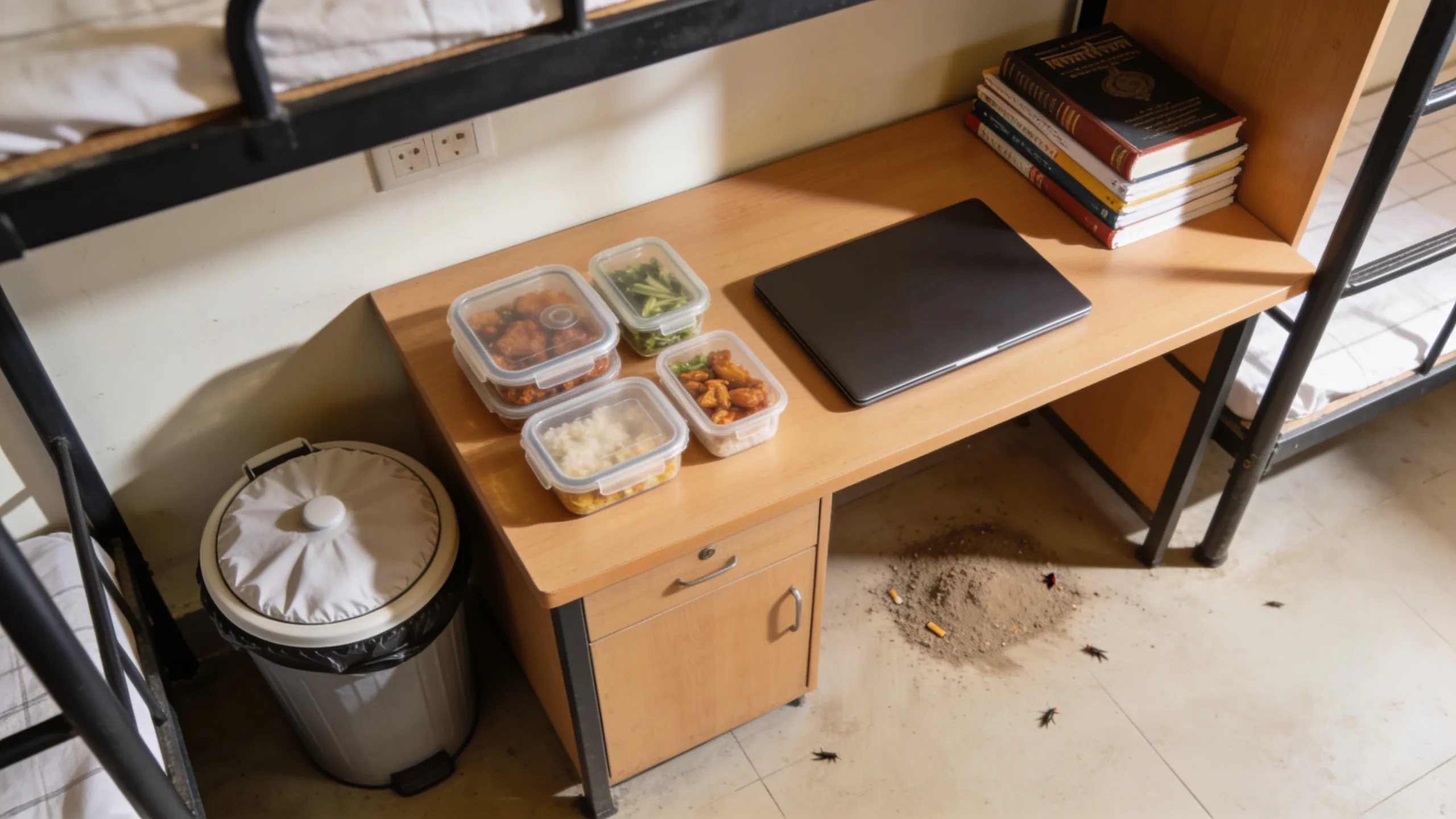
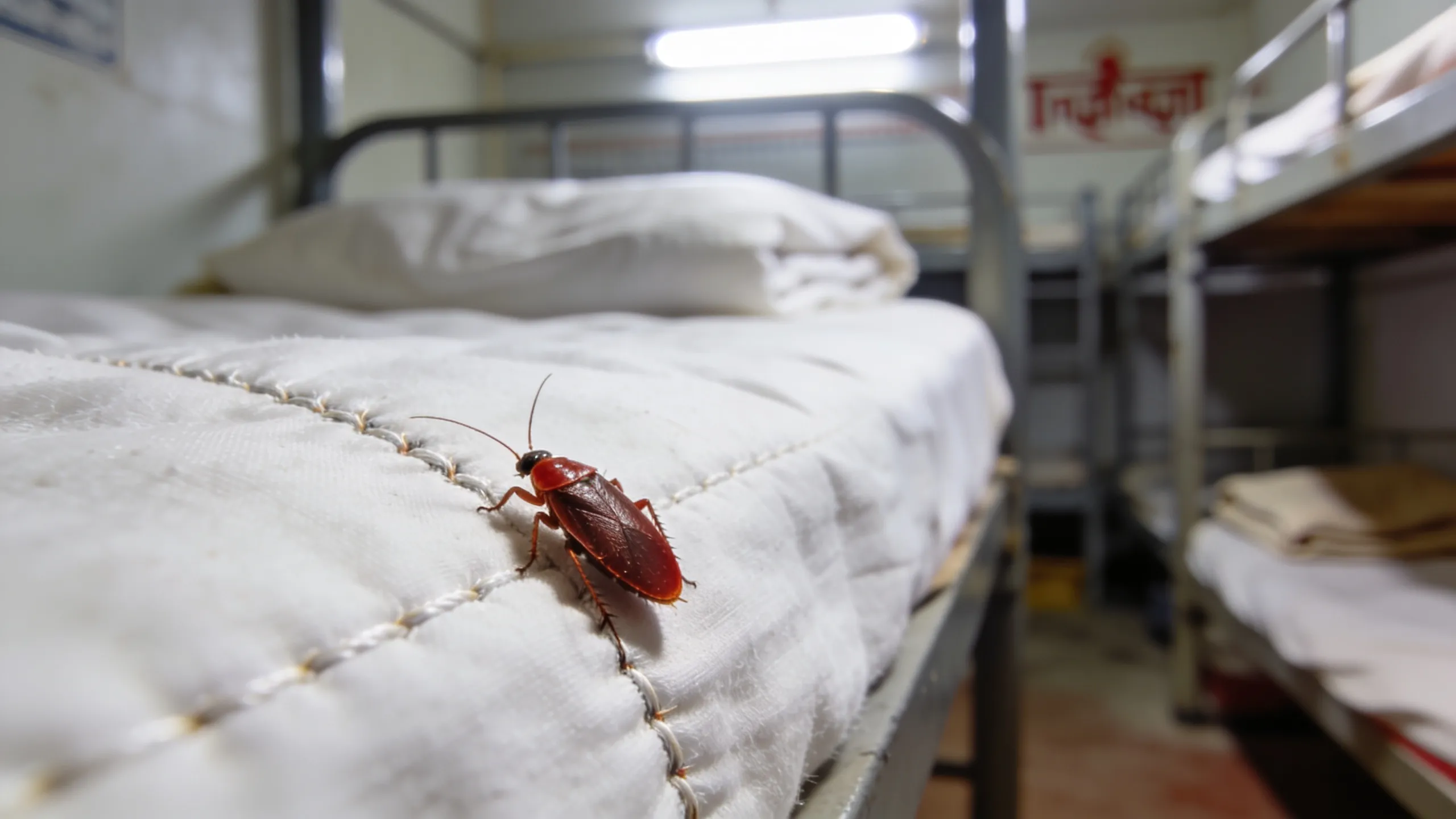
You wake up with small, itchy red bumps in a line across your arm. You check your bedsheet and find tiny rust-coloured spots. You lift the mattress corner and see them, small, flat, reddish-brown insects the size of an apple seed. Bed bugs. This is one of the most common pest problems in Indian hostels, and it spreads fast in shared living spaces. This guide on bed bugs hostel room how to get rid India covers identification, immediate actions, product recommendations, and how to get your hostel management to act.
Don't panic, but do act today. Bed bugs multiply quickly, a single female lays 200-500 eggs in her lifetime. Every day you wait, the problem gets harder and more expensive to fix.
How to Identify Bed Bugs in Your Hostel Room
Before you treat anything, confirm that you're dealing with bed bugs and not mosquito bites, fleas, or allergic reactions. Here's what to look for:
On Your Body
- Bite pattern: Small red bumps in a line or cluster (unlike random mosquito bites)
- Location: Arms, shoulders, neck, and legs, exposed skin while sleeping
- Timing: Bites appear overnight. Bed bugs feed between 2 AM and 5 AM.
- Itch level: Intensely itchy, more than a mosquito bite, and the itch lasts 3-5 days
On Your Bed and Room
- Rust-coloured spots on bedsheets, these are bed bug droppings (digested blood)
- Tiny white eggs (1mm, grain-of-rice shaped) in mattress seams, bed frame joints, and headboard crevices
- Live bugs in mattress folds, under the mattress, in bed frame screw holes, and behind the headboard
- Shed skins, translucent, papery shells from growing nymphs
- Sweet, musty smell, a heavy infestation produces a noticeable odour
Common Hiding Spots in Hostel Rooms
Check these locations carefully:
- Mattress seams and piping (top and bottom)
- Steel bed frame joints and welding points
- Wooden headboard cracks (if applicable)
- Behind picture frames or posters on the wall near the bed
- Inside power socket plates near the bed
- Along the junction of wall and floor behind the bed
- Inside the almirah if it's near the bed
- Curtain folds near the bed
Immediate Actions, First 24 Hours
Once you confirm bed bugs, take these steps immediately. Don't wait for management to respond.
Step 1: Isolate Your Bedding
Strip all bedsheets, pillowcases, and blankets. Put them in a plastic bag, seal it, and take them directly to the washing machine. Wash everything in the hottest water setting available (60 degrees Celsius or above kills bed bugs at all life stages). Dry in direct sunlight for 4-6 hours if you don't have a dryer.
Step 2: Vacuum the Mattress and Bed Frame
Use a vacuum cleaner on every surface of the mattress, top, bottom, sides, and seams. Vacuum the bed frame joints, the floor around the bed, and the wall behind the bed. After vacuuming, immediately empty the vacuum bag into a sealed plastic bag and dispose of it outside the building.
If your hostel doesn't have a vacuum cleaner, use a stiff brush to scrub the mattress seams and edges. This dislodges eggs and bugs that you can then sweep up.
Step 3: Spray the Bed Frame and Mattress Edges
Apply a bed bug spray (recommendations below) along all mattress seams, bed frame joints, and the wall-bed junction. Don't soak the sleeping surface, spray the edges and crevices where bugs hide.
Step 4: Encase Your Mattress
A mattress encasement is the single most effective long-term solution. It traps existing bugs inside (where they die without feeding) and prevents new bugs from entering.
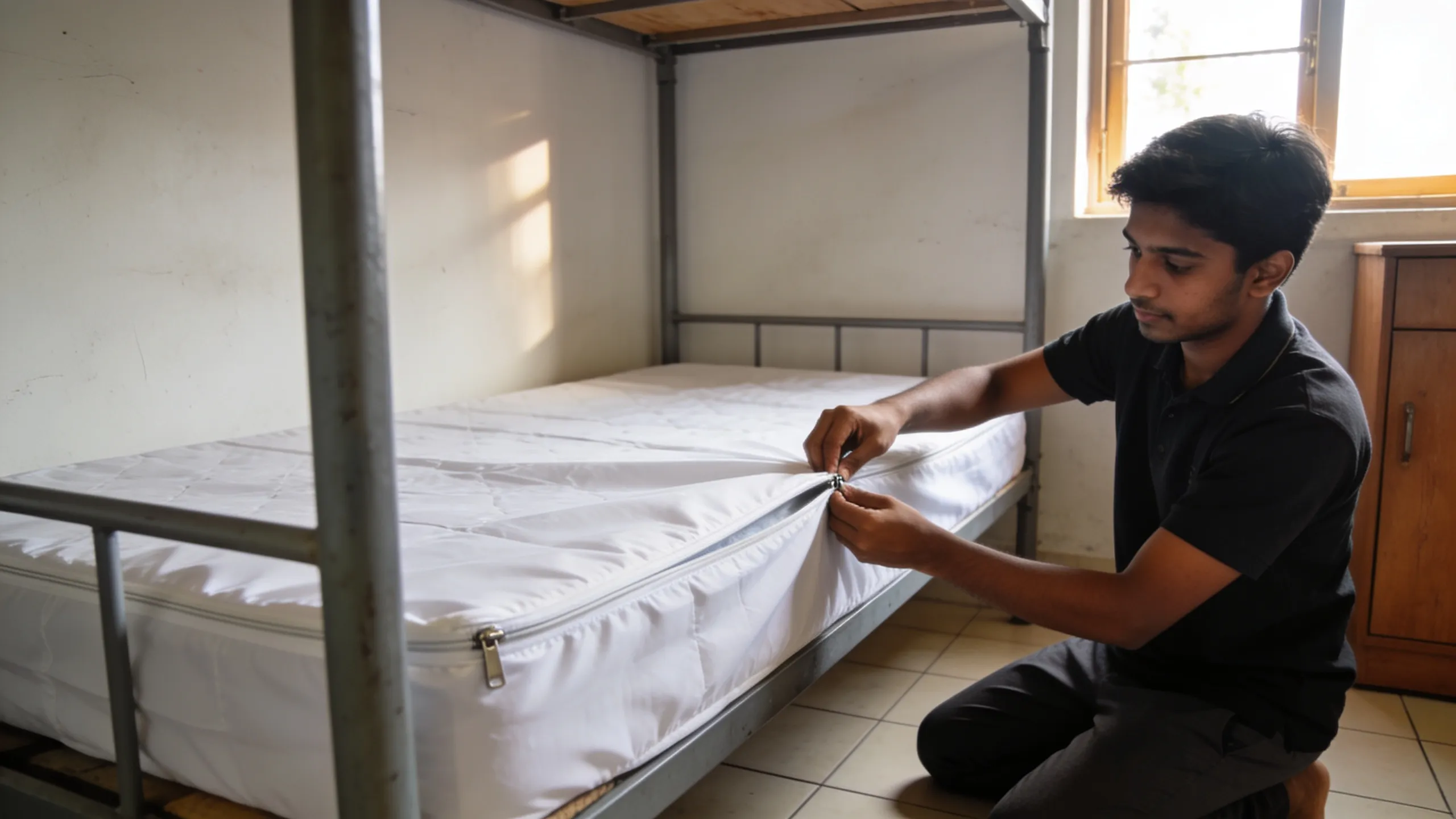 A mattress encasement traps bugs inside and keeps new ones out. Worth every rupee.
Products That Work, Tested Recommendations
Bed Bug Sprays (₹200–₹600)
- Laxman Rekhaa Bed Bug Spray (₹250), Water-based, low odour, safe for indoor use. Effective on contact. Spray along mattress seams and bed frame joints. Reapply after 7 days.
- HIT Bed Bug Killer (₹200), Widely available. Strong chemical smell that fades in 2-3 hours. Good for immediate knockdown.
- Mortein Power Gard Bed Bug Spray (₹350), Residual action up to 4 weeks. Slightly more expensive but lasts longer between applications.
Application tip: Spray in the morning after you strip the bed. Open windows for ventilation. Let it dry for 2 hours before putting sheets back. Repeat every 7 days for 3 weeks (to catch newly hatched nymphs from surviving eggs).
Mattress Encasements (₹800–₹2,000)
- Amazon Basics Bed Bug Proof Mattress Encasement (₹1,200), Full-zip, 100% polyester, fits standard single hostel mattresses. Look for "bed bug proof" specifically, regular mattress protectors have gaps.
- Sleepwell Mattress Protector with Zipper (₹900), Waterproof and bug-proof. Available in single-bed size.
Key feature: The encasement must have a full zipper that seals completely. A simple fitted cover or protector without a zipper doesn't work, bugs crawl in through gaps.
Diatomaceous Earth (₹300–₹500)
- Harris Diatomaceous Earth (₹400 for 500g), Food-grade, non-toxic powder. Sprinkle it along the bed frame legs, between the mattress and frame, and along wall-floor junctions near the bed.
- How it works: The microscopic powder damages the waxy coating on bed bug exoskeletons, causing them to dehydrate and die within 48 hours. It's safe for humans and pets. Reapply after sweeping or mopping.
Bed Bug Interceptor Traps (₹150–₹300 for 4-pack)
Plastic cups that go under each bed leg. Bugs crawling up from the floor get trapped in the cup and can't reach the bed. Check them weekly, they double as monitoring devices.
The 3-Week Treatment Plan
Bed bugs have a 7-10 day egg hatching cycle. A single treatment misses eggs. Follow this schedule:
| Week | Action |
|---|---|
| Day 1 | Strip, wash, vacuum, spray, encase mattress |
| Day 3 | Check for new activity. Reapply diatomaceous earth if swept away |
| Day 7 | Second spray application. Wash bedding again in hot water |
| Day 10 | Inspect mattress seams, bed frame, interceptor traps |
| Day 14 | Third spray application. Wash bedding again |
| Day 21 | Final inspection. If no new bites or signs for 7 days, the infestation is likely resolved |
If you still see bugs after 3 weeks of consistent treatment, the infestation has spread beyond your bed and professional pest control is needed.
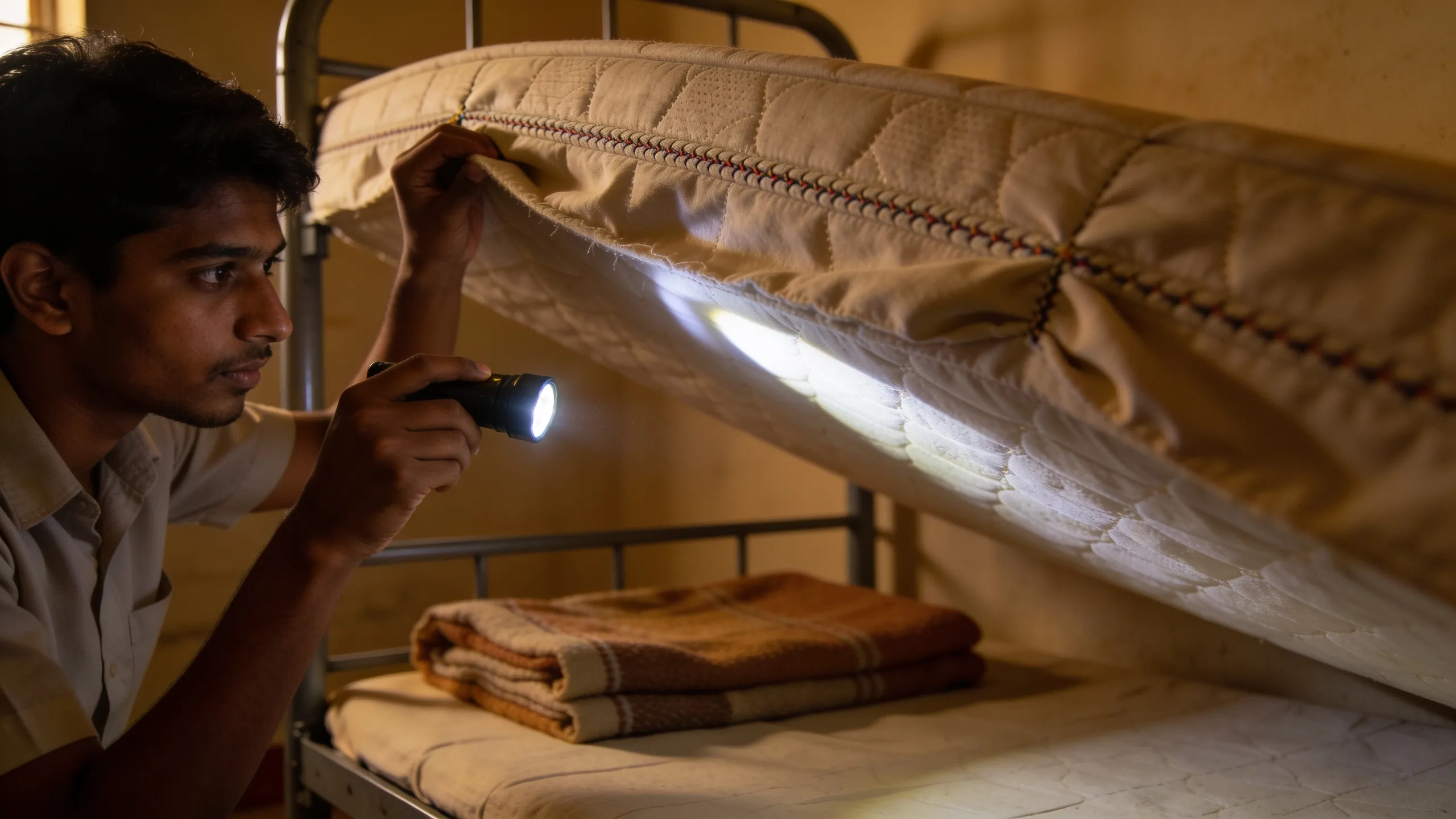 Check mattress seams with a flashlight. Bugs hide in folds, stitching, and piping during the day.
When to Demand Action from Hostel Management
You shouldn't be fighting a bed bug problem alone if you're paying rent. Here's how to escalate:
Step 1: Written Complaint
Send an email or WhatsApp message to the hostel owner or manager. Include:
- Photos of bites on your body
- Photos of bugs, droppings, or eggs on the mattress
- Dates when you first noticed the problem
- A clear request: professional pest control treatment for your room and adjacent rooms
A written complaint creates a timestamp. Verbal complaints are deniable.
Step 2: Demand Professional Pest Control
DIY treatment handles small, room-level infestations. But bed bugs travel through walls, wiring conduits, and shared furniture. If your neighbour's room is infested too, spraying your room alone is pointless, they migrate back within days.
Professional pest control for a single room costs ₹1,500–₹3,000. For a floor, ₹5,000–₹8,000. This is the hostel's responsibility, not yours. The owner is obligated to provide livable conditions.
Step 3: If Management Ignores You
If the owner dismisses your complaint or refuses pest control:
- File a complaint with the local municipal corporation, most cities have a health and sanitation department that handles pest complaints in residential buildings
- File a consumer complaint, if you're paying for a service (accommodation) and the provider refuses to maintain livable conditions, you can approach the consumer forum
- Withhold rent, as a last resort, some tenants withhold rent until the issue is fixed. This is legally grey but effective as build on. Document everything first.
- Move out, if the infestation is severe and management is unresponsive, breaking your lease may be worth the deposit loss. Your health comes first.
For dealing with other pests, read our cockroaches and pests in hostel room guide.
Prevention -- How to Avoid Bed Bugs in Your Hostel Room
Once you've dealt with an infestation, prevention is everything:
- Inspect any new hostel room before moving in. Check the mattress seams, bed frame joints, and wall-bed junction with a phone flashlight. Whether it's a PG in Malviya Nagar or a hostel in Koramangala, inspection applies everywhere.
- Use a mattress encasement from day one in any hostel. It's the best preventive investment.
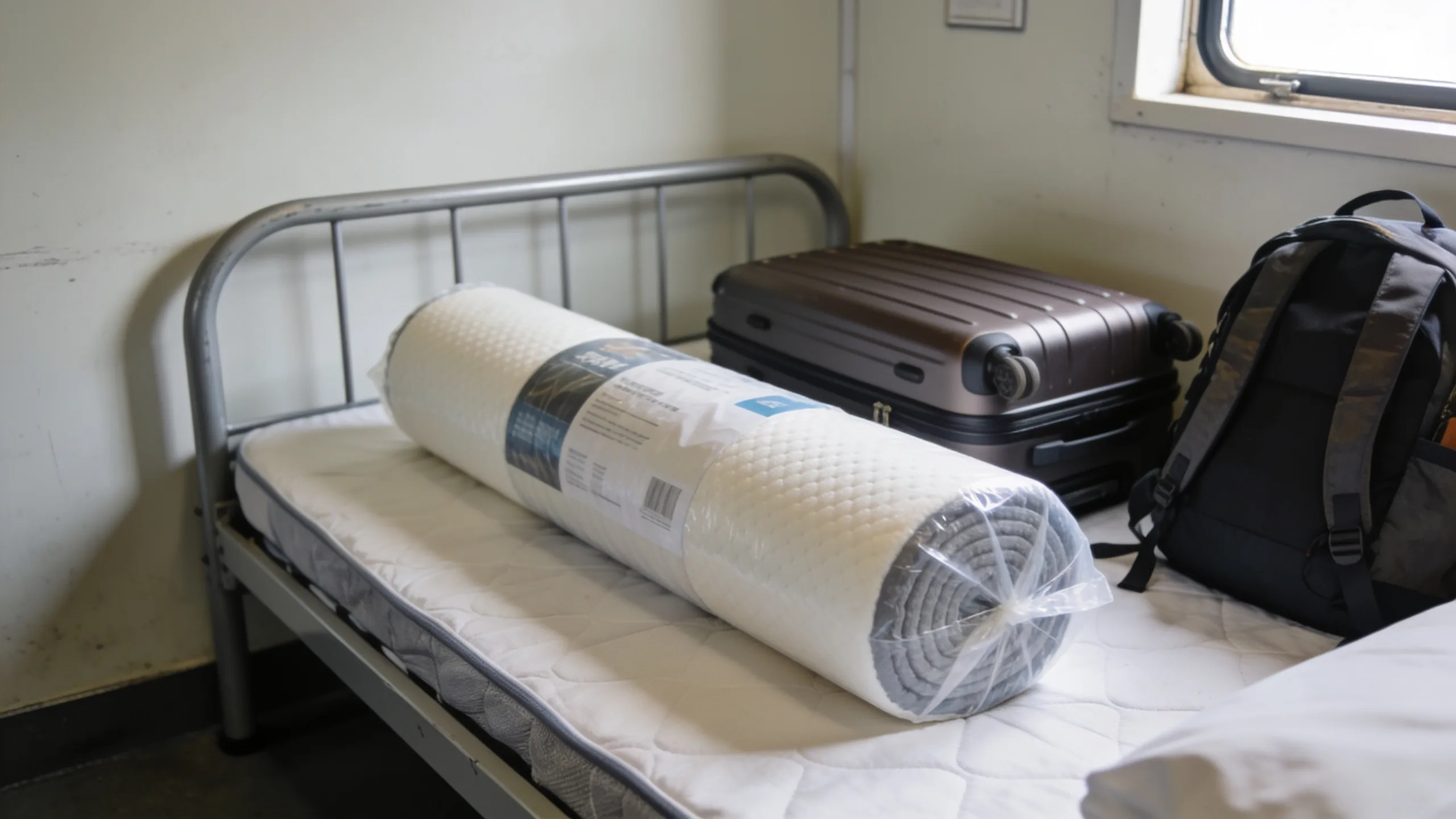
- Don't put your luggage on the bed when you first arrive. Place it on a hard surface (table or tiled floor) away from the bed.
- Wash secondhand bedding in hot water before using it. If the hostel provides a mattress, encase it immediately.
- Check your belongings when returning from travel. Bed bugs hitchhike in luggage, backpacks, and clothing.
- Keep the bed away from the wall if possible, even a 2-inch gap reduces the risk of bugs crawling from the wall to the bed.
A good mattress topper on top of an encasement also helps. Check our best mattress topper for hostel bed guide for options under ₹3,000. And regular cleaning is your first line of defence, see our hostel room cleaning routine for a weekly schedule.
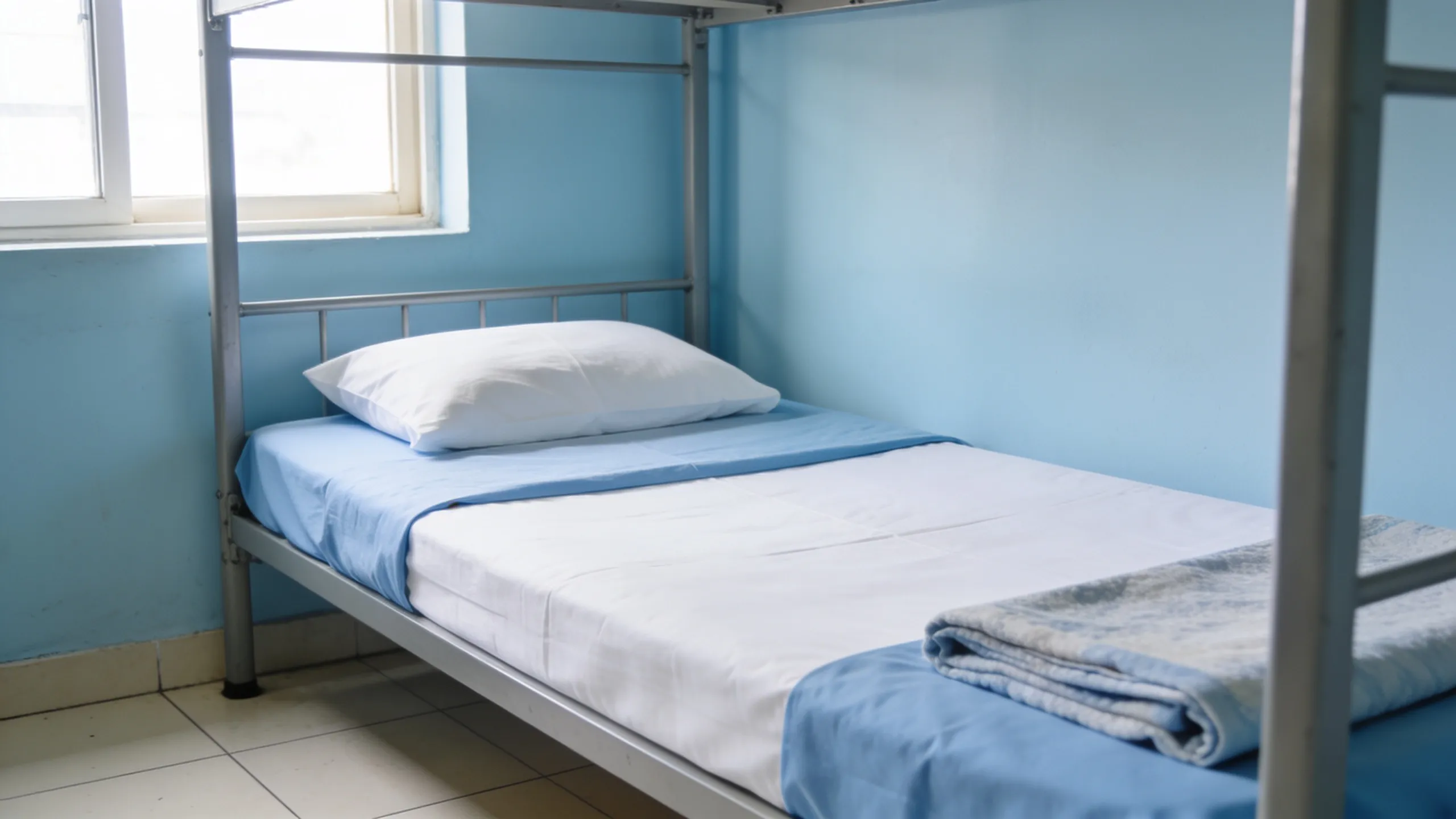 A clean bed with a sealed encasement and fresh sheets. Prevention costs less than treatment.
---
Finding a well-maintained hostel is the best prevention. Browse verified hostels in Mumbai and Delhi on Hostel360, listings include cleanliness ratings and real resident reviews so you can check conditions before signing up.