You spotted a cockroach scuttle across your desk at 2 AM. Or woke up with red, itchy welts on your arm. Maybe a rat chewed through your packet of Maggi. If you're living in a hostel in India, how to get rid of cockroaches in your hostel room is not a Google search, it's a survival skill. And cockroaches are just the beginning.
Hostel rooms attract pests for predictable reasons: shared kitchens, open drains, food stored in beds, and monsoon humidity. The good news? Most infestations are fixable with the right approach, and the ones that are not fixable are your hostel management's responsibility, not yours.
This guide covers the six most common hostel pests one by one: cockroaches, bed bugs, rats, ants, mosquitoes, and lizards. For each, you'll get DIY fixes that actually work, products worth buying, and clear signals for when to stop trying and escalate to your warden or a professional pest control operator (PCO).
Before you settle into any new hostel, run through a hostel room essentials checklist, half the pest battle is won by how you set up your room on day one.
Why Hostel Rooms in India Are Pest Magnets
Understanding why pests show up helps you stop them before they multiply. Hostels create a perfect storm:
- Shared walls and plumbing: One dirty room feeds pests into every adjacent room. Cockroaches travel through pipe gaps and electrical conduit holes.
- Monsoon season (June–September): Humidity spikes above 80% in most Indian cities. Cockroach breeding accelerates. Mosquitoes breed in any stagnant water, cooler trays, blocked drains, even a forgotten water bottle cap.
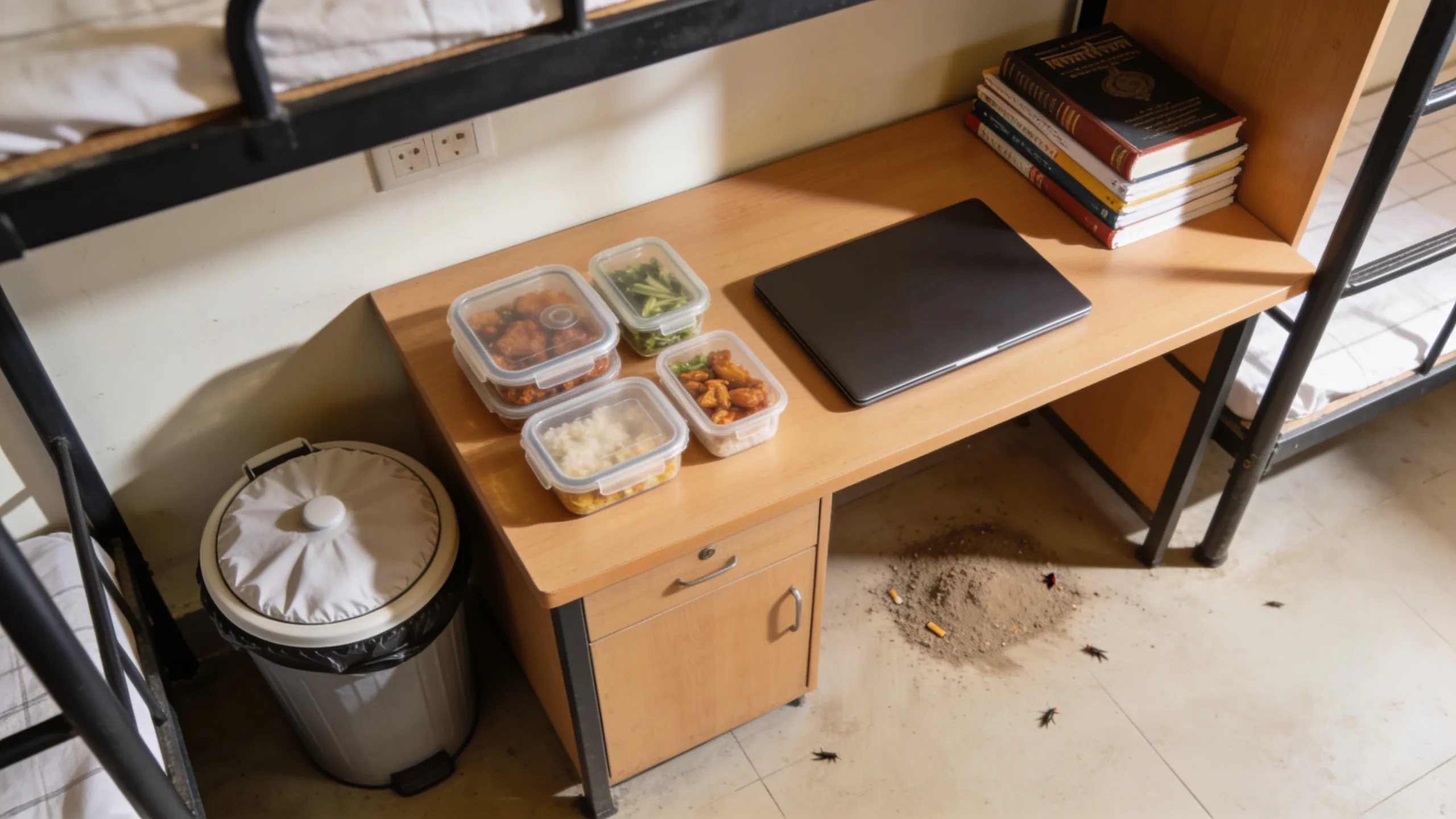
- Food storage habits: Biscuit packets under pillows, open dabba of namkeen, half-eaten Maggi left overnight. Every crumb is an invitation.
- Irregular deep cleaning: Many hostels mop floors daily but skip behind beds, under mattresses, and inside cupboard corners for weeks.
- Construction gaps: Older hostel buildings in cities like Delhi and Mumbai have wall cracks, broken window mesh, and gaps around AC pipes that let everything in.
Monsoon is peak pest season. If you're moving into a hostel between May and September, assume pests will test your room. Prepare before they arrive.
Cockroaches, The Most Common Hostel Pest
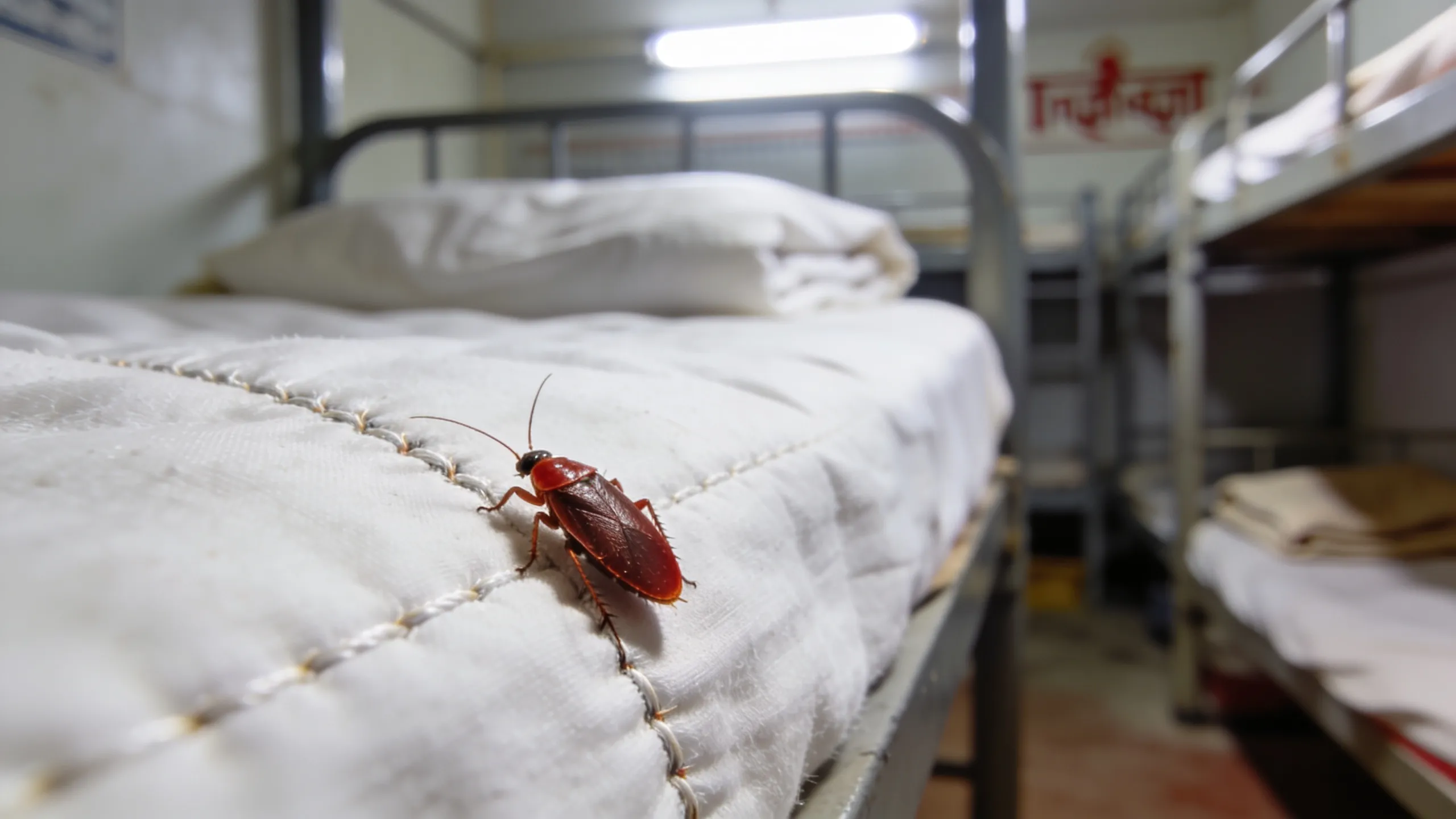
Cockroaches are the universal hostel complaint. Indian hostels deal with two species: the small German cockroach (light brown, loves kitchens and bathrooms) and the large American cockroach (reddish-brown, flies at your face, lives near drains).
DIY Fixes That Actually Work
Boric acid powder: The single most effective DIY cockroach killer. Mix boric acid powder with a pinch of sugar and a few drops of water to make small balls. Place them behind your cupboard, under the bed frame, near the bathroom drain, and behind the fridge (if your floor has a shared one). Cockroaches eat the bait, carry it back, and the colony dies within 1-2 weeks.
Cost: ₹40–₹60 for a 100g pack at any medical store.
Gel bait (Maxforce or Advion): If boric acid balls are too messy, buy a cockroach gel syringe. Apply tiny dots (rice-grain size) along baseboards, pipe entry points, and cupboard hinges. This is what professional PCOs use. One syringe lasts 2-3 months.
Cost: ₹250–₹400 per syringe on Amazon.
Seal entry points: Buy a tube of white silicone sealant (₹150–₹200) and seal every gap around your bathroom pipes, AC drain pipe, and electrical switchboards. This 30-minute job cuts cockroach entry by 70%.
What Does Not Work
- HIT spray kills cockroaches on contact but does nothing for the colony. You'll keep spraying forever.
- Naphthalene balls repel them temporarily. They come back as soon as the smell fades.
- Ultrasonic repeller devices, zero scientific evidence. Save your money.
When to Escalate
If you see more than 5 cockroaches daily despite clean room + boric acid + sealed gaps, the infestation is in the building's plumbing or walls. Write a dated complaint to your warden asking for a professional PCO visit. Hostels are required to maintain livable conditions, this is not optional maintenance.
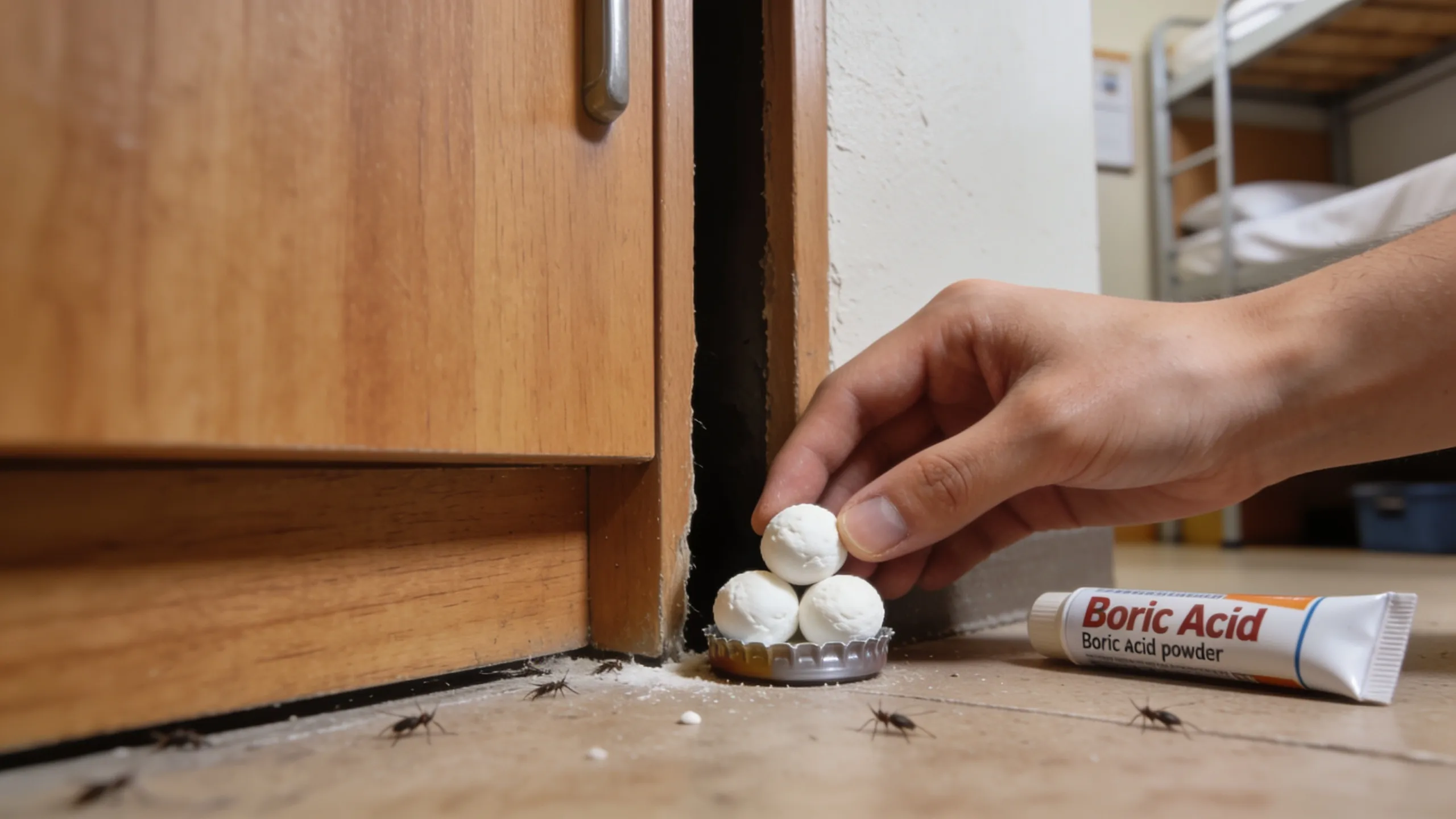 Boric acid bait balls behind your cupboard, the cheapest and most effective cockroach fix for any hostel room.
Bed Bugs, The Nightmare Pest Nobody Talks About
Bed bugs in hostel rooms across India are more common than anyone admits. They hide in mattress seams, bed frames, and even behind wall posters during the day. At night, they feed on your blood, leaving red, itchy welts in rows or clusters.
How to Confirm It Is Bed Bugs
Check these spots with your phone flashlight:
- Mattress seams and edges, look for tiny rust-colored spots (dried blood) or small white eggs
- Bed frame joints, wooden cots are worst; metal frames are better but not immune
- Behind headboards and wall-mounted shelves
- Inside pillow covers and curtain folds
If you see flat, oval, reddish-brown insects about the size of an apple seed, you've bed bugs.
DIY Containment (Not Cure)
Be honest: you can't fully eliminate bed bugs with DIY methods alone. But you can contain them while pushing management to act.
- Encase your mattress and pillow in zippered bed bug covers (₹400–₹800 on Amazon). This traps existing bugs inside and prevents new ones from nesting.
- Wash all bedding in hot water (60°C+) weekly. Sun-dry everything, direct UV kills bed bugs and eggs.
- Diatomaceous earth powder: Sprinkle food-grade DE along the bed frame base and behind the headboard. It damages bug exoskeletons. Takes 7-10 days to show effect.
- Keep luggage off the floor, use a metal luggage rack or hang bags on wall hooks.
When to Escalate (Immediately)
Bed bugs spread between rooms through shared walls and common furniture. One room's infestation becomes the entire floor's problem within weeks. Don't wait.
Write to your warden on the first confirmed sighting. Demand a professional heat treatment or chemical spray for your room AND adjacent rooms. If the hostel refuses, you've grounds for a room change or early lease termination. Document everything with photos and timestamps, this matters if you need to recover your security deposit later.
Rats & Mice, When the Problem Gets Serious
Rats in hostel rooms are less common than cockroaches but far more disruptive. They chew through food packaging, electrical wires, clothes, and books. A single rat can cause ₹2,000+ in damage overnight. Hostels near older city areas in Pune and Hyderabad with open drains report more rat issues.
DIY Fixes
Snap traps work better than glue traps in hostel rooms. Place them along walls (rats run along edges, not across open floor). Bait with peanut butter or a small piece of roti with ghee.
Cost: ₹80–₹150 per trap.
Steel wool for gaps: Rats can't chew through steel wool. Stuff it into every gap around pipes, drain holes, and door frames. Combine with sealant for a permanent fix.
Remove food sources completely: Store everything in airtight steel or thick plastic containers. No open packets. No crumbs. A rat won't stay where there's nothing to eat.
What Does Not Work
- Rat poison in a hostel room is dangerous. Poisoned rats die inside walls, creating a stench for weeks. Other residents might accidentally contact the bait. Avoid.
- Glue traps catch rats alive. You then have a panicking, squealing rat stuck to a board. Most students can't handle the disposal.
When to Escalate
Any rat sighting should be reported to the warden immediately. Rats indicate building-level gaps, broken drain covers, open garbage chutes, or unsealed basement entries. This is a structural problem, not your personal problem.
Ants, Small but Relentless
Ants follow sugar trails with military precision. One crumb of biscuit near your bed, and you'll have a line of a hundred ants within hours. Monsoon drives them indoors looking for dry ground.
Quick Fixes
- Wipe surfaces with vinegar-water solution (1:1 ratio). This breaks scent trails. Do this daily during monsoon.
- Ant chalk lines (Laxman Rekha brand, ₹10–₹15) around door frames, window sills, and shelf edges. Cheap, effective for 3-5 days per application.
- Borax + sugar bait: Mix equal parts borax and sugar with enough water to make a paste. Place in bottle caps near ant trails. Similar principle to boric acid for cockroaches, they carry it back to the colony.
- Seal food airtight: The single best ant prevention. Use clip-seal bags or steel containers for everything, biscuits, sugar, dry fruits, even tea powder.
When to Escalate
Ants rarely need professional treatment. If they're coming through wall cracks, seal the cracks. If they're coming from a shared kitchen or dining area, that's a management problem, submit a written complaint.
Mosquitoes, Disease Risk, Not Just Annoyance
Mosquitoes in Indian hostels carry dengue, malaria, and chikungunya. This is not about comfort; it's a health issue. Hostel rooms in Bangalore during monsoon or in Chennai year-round need active mosquito management.
DIY Protection
- Plug-in liquid vaporizers (Good Knight, All Out): ₹80–₹120 for the device, ₹50–₹70 per refill lasting 30-45 nights. Run it every night.
- Mosquito net for your bed: The most reliable protection if your room has poor window mesh. Foldable nets cost ₹300–₹600 on Amazon and work without electricity.
- Eliminate standing water: Check your cooler tray, AC drip tray, flower pots, and any container that holds water. Empty and dry them weekly.
- Camphor tablets in a warm water bowl: An old but effective room repellent. Place 2-3 camphor tablets in a bowl of warm water near your bed. Replace daily.
When to Escalate
If mosquitoes are breeding in common areas, blocked roof drains, stagnant sump water, overgrown garden, report it to the warden in writing. Hostel management is responsible for common-area maintenance. In municipal areas, you can also file a complaint with the local municipal corporation for stagnant water breeding grounds.
Lizards, Harmless but Unwelcome
Let us be clear: lizards eat mosquitoes and cockroaches. They're technically helpful. But most students don't want them crawling on walls at night or hiding behind photo frames.
Coexistence or Removal
- Eggshells near windows: Lizards dislike the smell. Place crushed eggshells on window sills and near entry points. Replace every few days.
- Garlic cloves at entry points: Strong garlic smell is a mild deterrent. Place peeled cloves near gaps and windows.
- Reduce their food source: If you eliminate cockroaches and mosquitoes, lizards leave on their own. They follow the food chain.
- Naphthalene balls near wall gaps: Unlike cockroaches, lizards are genuinely repelled by naphthalene. Place balls near pipe gaps and behind furniture.
When to Escalate
You don't need to escalate for lizards. If lizard numbers are excessive (5+ in your room), it means there's a massive insect population feeding them, which is the real problem to solve.
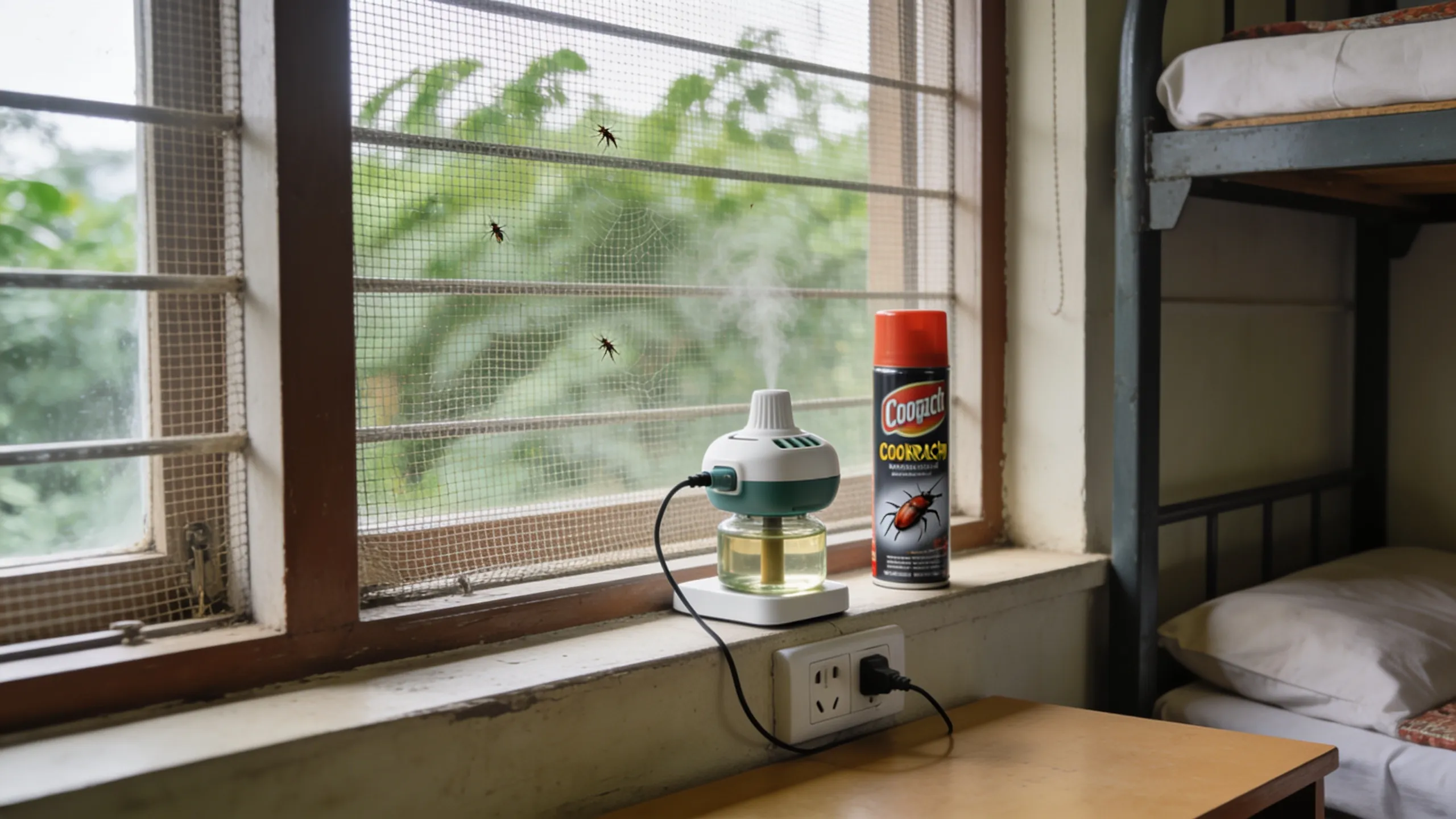 Mosquito mesh on windows plus a liquid vaporizer at night, this two-layer approach stops 95% of mosquitoes.
Monsoon Pest Prevention, Your Monthly Checklist
Monsoon (June–September) is when all pest problems multiply. Run this checklist on the 1st of every month:
| Task | Time Needed | Cost |
|---|---|---|
| Refresh boric acid bait balls | 15 min | ₹40 |
| Re-seal any cracked pipe gaps with silicone | 20 min | ₹0 (one-time purchase) |
| Empty and dry cooler/AC drip trays | 5 min | Free |
| Wipe all surfaces with vinegar solution | 10 min | ₹20 |
| Check mattress seams for bed bug signs | 5 min | Free |
| Replace Laxman Rekha chalk lines | 10 min | ₹15 |
| Wash and sun-dry bedding | 30 min | Free |
| Refill mosquito vaporizer liquid | 2 min | ₹60 |
| Total | ~90 min/month | ~₹135 |
Spend 90 minutes once a month. That's less time than you'll spend dealing with one bad infestation.
Products Worth Buying, Quick Reference
| Product | Use Case | Cost | Where to Buy |
|---|---|---|---|
| Boric acid powder (100g) | Cockroach bait | ₹40–₹60 | Medical store |
| Advion cockroach gel syringe | Cockroach colony kill | ₹250–₹400 | Amazon |
| White silicone sealant tube | Seal pipe/wall gaps | ₹150–₹200 | Hardware store |
| Bed bug mattress encasement | Bed bug containment | ₹400–₹800 | Amazon |
| Diatomaceous earth (food grade) | Bed bugs, ants | ₹200–₹350 | Amazon |
| Snap trap (2-pack) | Rats | ₹150–₹250 | Amazon/local |
| Steel wool roll | Seal rat entry gaps | ₹60–₹100 | Hardware store |
| Laxman Rekha chalk | Ants | ₹10–₹15 | Any kirana store |
| Good Knight liquid vaporizer + refill | Mosquitoes | ₹130–₹190 | Supermarket |
| Foldable mosquito net | Mosquitoes (bed) | ₹300–₹600 | Amazon |
Total starter kit cost: approximately ₹1,200–₹1,800. A professional PCO visit costs ₹1,500–₹3,000 per room, and you might still need to do most of the above.
When Your Hostel Must Act, Know Your Rights
You're responsible for keeping your room clean and not attracting pests. But the hostel is responsible for:
- Building-level pest control: Regular fumigation of common areas, kitchens, and bathrooms
- Structural maintenance: Sealing building cracks, fixing broken drain covers, maintaining window mesh
- Responding to complaints: A written pest complaint must get a response within 48-72 hours
If your hostel ignores repeated pest complaints, document everything. Dated photos, written complaints (WhatsApp messages count as written record), and any health issues caused by pests. This documentation strengthens your case if you need to break your lease or demand your deposit back.
Before signing a PG rental agreement, check if pest control frequency is mentioned. Good hostels specify quarterly PCO visits as part of maintenance.
Key Takeaways
- Boric acid bait is the most cost-effective cockroach solution, ₹40 and 15 minutes beats months of spraying HIT
- Bed bugs need professional treatment. Contain with mattress covers and escalate immediately
- Seal every pipe gap, drain hole, and wall crack. Prevention beats treatment every time
- Monsoon months (June–September) need monthly pest prevention, block 90 minutes on the 1st
- Your hostel is legally responsible for building-level pest control. Document and escalate in writing
- Total DIY pest prevention kit costs ₹1,200–₹1,800, cheaper than one PCO visit
- Eliminate food sources: airtight containers, no open packets, clean surfaces daily