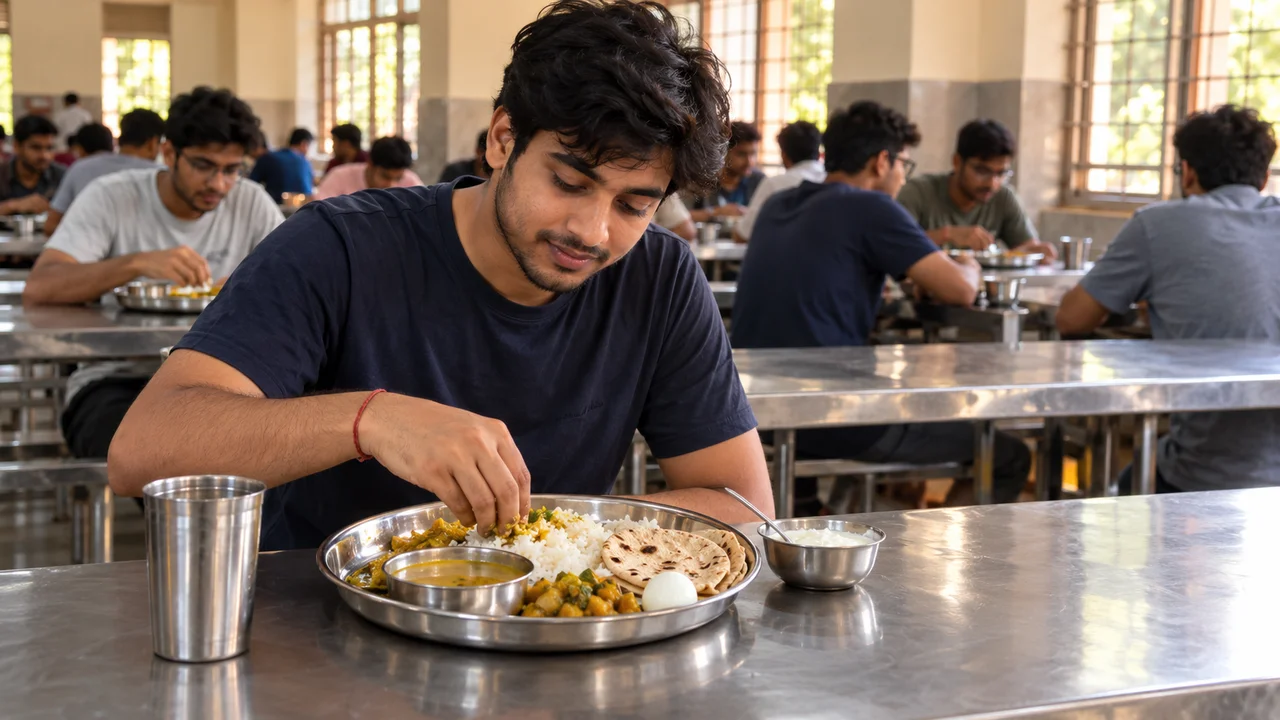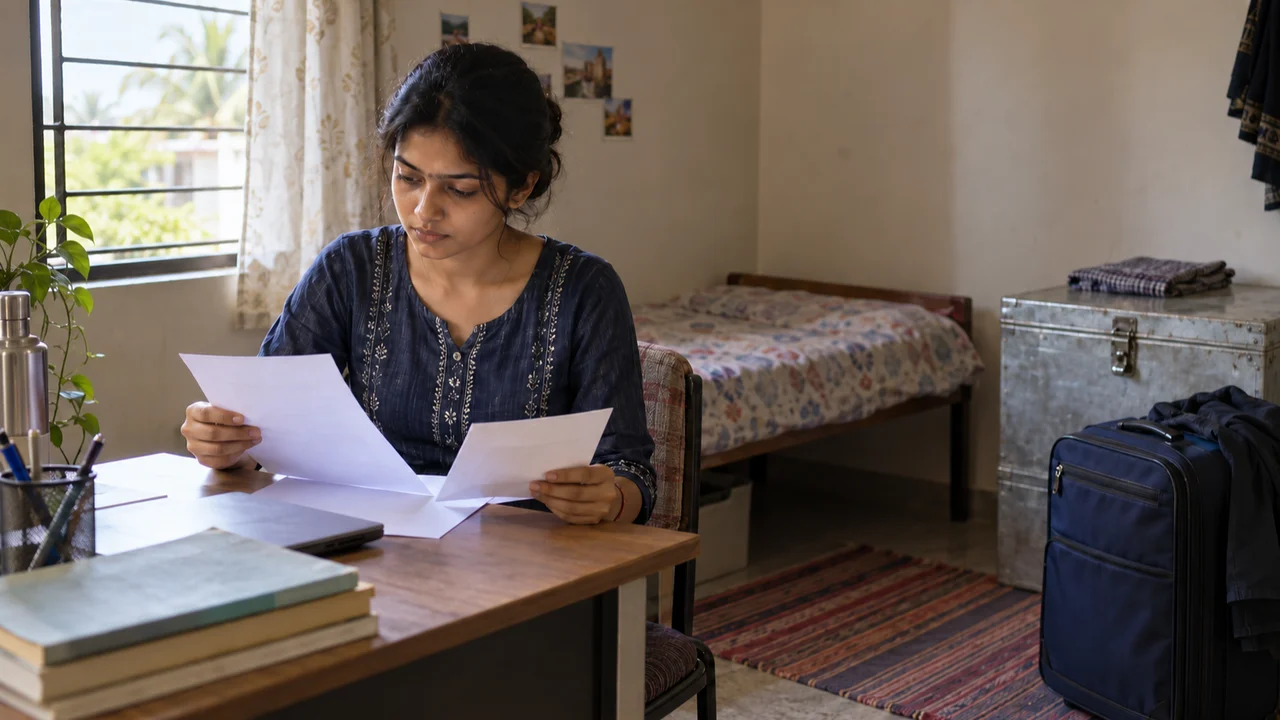

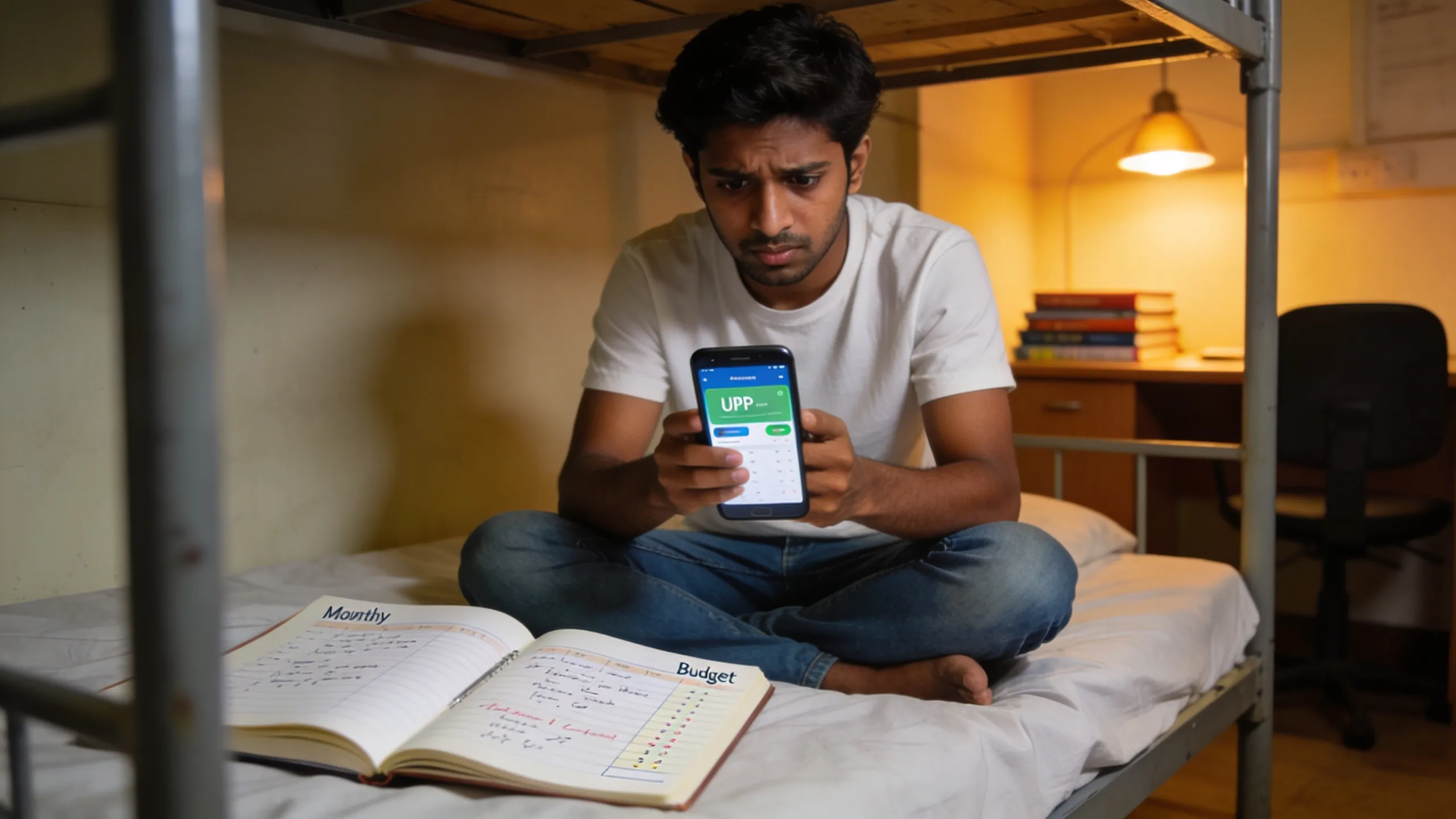
I spent four years in hostels during engineering. The first semester, I ran out of money three weeks in, not because my parents were stingy, but because I had zero system for tracking where it went. Canteen chai, random Flipkart orders, that one friend's birthday party I "had" to attend. It all added up without me noticing.
By the second year, I had a spreadsheet. By the fourth year, I had a system. That shift, from winging it to actually knowing my numbers, changed everything. Not just financially, but in how much mental bandwidth I freed up by not worrying about money constantly.
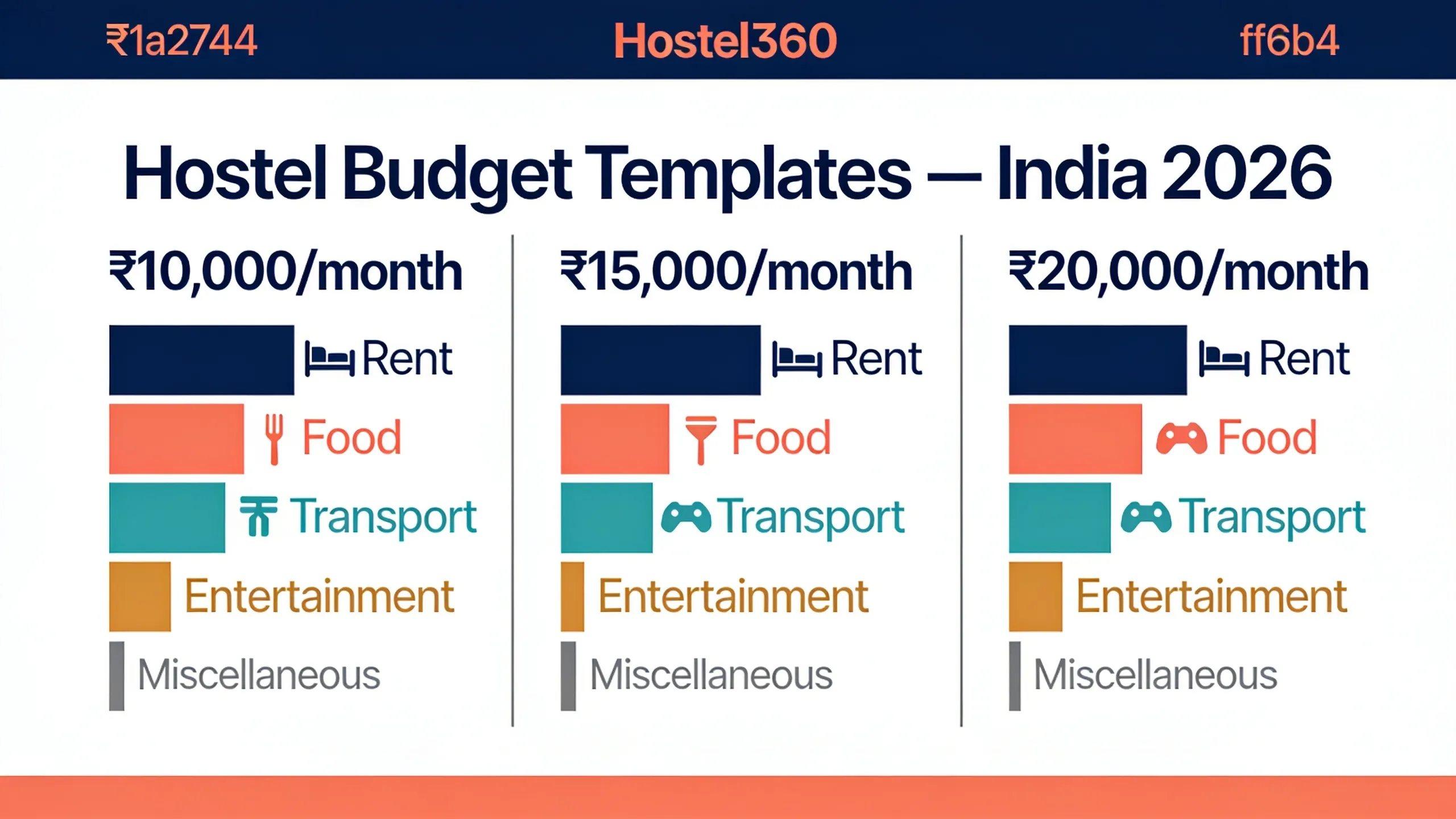
This is the framework I wish someone had handed me on day one, along with the numbers to calibrate it against: city-wise cost ranges, three ready-to-use monthly templates at ₹10,000, ₹15,000 and ₹20,000, and the specific tactics that actually moved my spending. Realistic target if you apply most of it: ₹2,500–₹4,500 saved every month, without gutting your social life.
Why Budgeting Matters More in a Hostel Than Anywhere Else
Living at home, your expenses are mostly invisible. Food appears. Electricity gets paid. You rarely see the full picture.
A hostel strips that safety net away. Suddenly, you are making every spending decision, what to eat, whether to take an auto or walk, whether that late-night delivery order is worth it. Without a framework, each of these micro-decisions drains willpower. And when willpower runs out, the wallet opens. The classic symptom is borrowing ₹2,000 from a roommate in the last week of the month, every month, without ever having bought anything expensive.
Budgeting is not about restriction. It is about making intentional choices before the moment arrives, so you are not relying on self-control alone. Three real benefits I experienced:
- Reduced anxiety. Knowing exactly how much you can spend this week removes the constant background hum of "am I running out?"
- Better decisions. When you see that food is eating 45% of your budget, you start cooking more or picking the mess over ordering out, not out of guilt, but out of clarity.
- Compound confidence. Managing small amounts well now builds the muscle for managing larger amounts later, your first salary, rent for your own flat, investments.
What Hostel Life Actually Costs, City by City
Most hostel budget planning goes wrong at step one, because students calibrate against a friend living in a completely different market. Rent for a shared room in Mumbai can equal a single room in Jaipur. Before you plan, know the range you are planning inside.
These are realistic ranges for a student in a shared room eating mostly mess food.
| Expense Category | Mumbai | Bangalore | Delhi | Pune | Jaipur | Hyderabad |
|---|---|---|---|---|---|---|
| Rent (shared room) | ₹7,000–₹11,000 | ₹6,000–₹10,000 | ₹5,500–₹9,000 | ₹5,000–₹8,500 | ₹4,000–₹7,000 | ₹4,500–₹8,000 |
| Food (mess + outside) | ₹3,000–₹5,000 | ₹2,500–₹4,500 | ₹2,500–₹4,000 | ₹2,000–₹4,000 | ₹2,000–₹3,500 | ₹2,000–₹3,500 |
| Transport | ₹1,500–₹3,000 | ₹1,200–₹2,500 | ₹1,000–₹2,500 | ₹800–₹2,000 | ₹600–₹1,500 | ₹800–₹2,000 |
| Laundry | ₹300–₹600 | ₹300–₹500 | ₹200–₹500 | ₹200–₹400 | ₹150–₹400 | ₹200–₹400 |
| Phone and data | ₹300–₹600 | ₹300–₹600 | ₹300–₹600 | ₹300–₹600 | ₹300–₹500 | ₹300–₹500 |
| Entertainment | ₹500–₹1,500 | ₹500–₹1,500 | ₹500–₹1,200 | ₹400–₹1,000 | ₹300–₹800 | ₹400–₹1,000 |
| Miscellaneous | ₹500–₹1,000 | ₹500–₹1,000 | ₹400–₹800 | ₹300–₹700 | ₹300–₹600 | ₹300–₹700 |
| Monthly Total | ₹13,100–₹22,700 | ₹11,300–₹20,600 | ₹10,400–₹18,600 | ₹9,000–₹17,200 | ₹7,650–₹14,300 | ₹8,500–₹16,100 |
These ranges cover most student situations. Where you land inside them depends on how often you eat out, whether your hostel fee includes meals, and whether you commute daily. If you are still weighing where to live, note that the difference between a hostel and a PG shapes your monthly cost structure more than almost any other single decision.
The Five Expense Categories Every Hostel Student Should Track
Before you can budget, you need to know what you are budgeting for. Every hostel student's spending falls into five core buckets.
1. Rent and Accommodation
Almost always your biggest fixed expense, hostel fee, mess charges (if bundled), and any security deposit amortised over your stay. Because it is fixed and predictable, it is the easiest category to plan for.
If you are still searching for a hostel, pay attention to what is included in the rent. A slightly higher rent that bundles meals, Wi-Fi, and laundry can be cheaper overall than a low rent with everything as an add-on. Ask what is bundled at every place you shortlist, whether that is PGs in Malviya Nagar or somewhere else entirely.
2. Food and Groceries
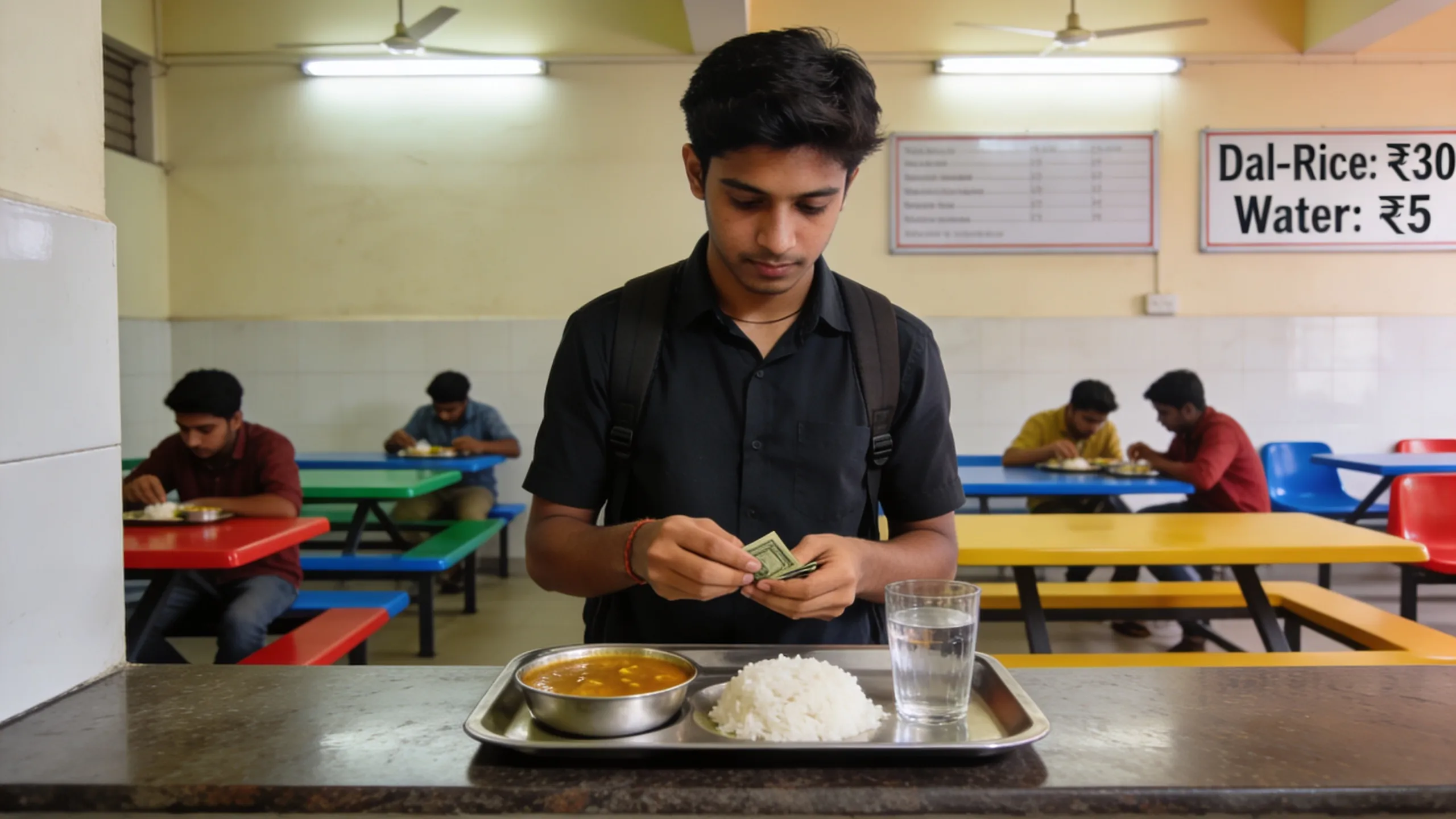
This is where most budgets quietly bleed. The mess fee is fixed, but everything on top, chai runs, snacks, weekend restaurant meals, late-night delivery orders, is variable and sneaky. In my experience, untracked food spending was always the biggest gap between what I thought I spent and what I actually spent.
It is also the category with the most room to recover, which is why it gets its own section further down.
3. Transport
Daily commute to college, weekend trips, autos when you are running late. If your hostel is close to campus, this might be minimal. If it is not, it can quietly become a significant monthly drain. Track it separately so you can see the real cost of that "cheaper hostel that is just a little farther away."
4. Personal and Lifestyle
Phone recharge, subscriptions, clothes, grooming, going out with friends. This is the "everything else" bucket, and it is where intentionality matters most. None of these are bad expenses, but they need to be chosen, not defaulted into.
5. Emergency and Irregular Costs
Medical expenses, unexpected travel home, a broken laptop charger, semester exam fees, textbooks. These do not happen every month, but when they hit, they hit hard if you have not set anything aside. This is the category most first-time budgeters forget entirely.
Three Budget Templates: ₹10,000, ₹15,000 and ₹20,000 a Month
Categories alone are abstract. Here are three complete monthly plans. Find the one closest to your allowance, copy it, then adjust, the point is to start from a structure that already balances instead of a blank page.
Template 1: Tight Budget, ₹10,000 a Month
This works in Jaipur, Hyderabad, and smaller cities. It is possible in Pune and Delhi with a genuinely cheap room. Rooms at that rent are real: hostels and PGs in Mansarovar, Jaipur's largest student area, include shared rooms from around ₹4,000.
| Category | Amount | Notes |
|---|---|---|
| Rent | ₹4,500 | Triple or quad sharing, no AC |
| Food | ₹2,500 | Mess meals only, no delivery apps |
| Transport | ₹800 | Bus pass or cycle |
| Phone and data | ₹300 | Basic validity pack |
| Laundry | ₹200 | Self-wash, dhobi once a month |
| Miscellaneous | ₹700 | Stationery, medicine, haircut |
| Emergency buffer | ₹1,000 | Do not touch unless it is an actual emergency |
| Total | ₹10,000 |
At this level you skip delivery apps entirely and the mess is your primary source of food. Electric kettle meals fill the gaps on days the mess disappoints.
Template 2: Moderate Budget, ₹15,000 a Month
Works in most cities. In Mumbai it covers the basics with very little entertainment.
| Category | Amount | Notes |
|---|---|---|
| Rent | ₹6,500 | Double sharing, cooler or fan |
| Food | ₹3,500 | Mess plus two or three outside meals a week |
| Transport | ₹1,500 | Metro or bus pass plus occasional auto |
| Phone and data | ₹400 | Mid-tier data plan |
| Laundry | ₹400 | Dhobi weekly |
| Entertainment | ₹800 | One movie, occasional chai outings |
| Miscellaneous | ₹900 | Personal care, stationery |
| Emergency buffer | ₹500 | Keep this non-negotiable |
| Total | ₹15,000 |
This is the most common bracket, and the one where discipline around food delivery decides everything. Three delivery orders a week at ₹200 each is ₹2,400 a month, more than your entertainment, laundry and miscellaneous budgets put together.
Template 3: Comfortable Budget, ₹20,000 a Month
Comfortable in every city. In Mumbai it buys a decent twin-sharing room with some breathing room.
| Category | Amount | Notes |
|---|---|---|
| Rent | ₹9,000 | Twin sharing, AC or good cooler |
| Food | ₹4,500 | Mess plus regular outside meals |
| Transport | ₹2,000 | Pass plus auto or cab as needed |
| Phone and data | ₹500 | Generous data plan |
| Laundry | ₹500 | Dhobi, or a portable washing machine that pays for itself |
| Entertainment | ₹1,500 | Movies, cafes, occasional trip |
| Gym or fitness | ₹500 | Optional, campus gym or budget gym |
| Miscellaneous | ₹1,000 | Personal care, subscriptions |
| Emergency buffer | ₹500 | Non-negotiable |
| Total | ₹20,000 |
The honest difference between ₹15,000 and ₹20,000 is comfort, not survival. If you are on the higher number, the opportunity is not more spending, it is a savings rate you will thank yourself for later.
The 50/30/20 Rule, Adapted for Hostel Students
Templates give you a starting point. The 50/30/20 rule gives you a way to reason about your own numbers when the templates do not fit: 50% of income on needs, 30% on wants, 20% on savings. It needs adjustment for the student context because your "income" is usually a fixed monthly allowance, not a salary.
The Student-Adapted Split
- 60%, Non-Negotiables (Needs). Rent, mess fees, transport to college, phone recharge, essential groceries. For most hostel students, needs run higher than 50% because rent alone takes a large chunk. That is normal, adjust the other two categories down proportionally.
- 25%, Lifestyle (Wants). Eating out, entertainment, subscriptions, clothes, going out with friends. Having a defined amount prevents both guilt-spending and overspending.
- 15%, Savings and Emergency Buffer. Even on a tight budget, carving out something here is critical. Split it further: 10% into an emergency fund and 5% into actual savings you do not touch.
The exact percentages are not sacred. If your rent pushes needs to 70%, go with 70/20/10. The principle is what matters: know what is non-negotiable, set a boundary on discretionary spending, and always pay your future self something.
When the Numbers Do Not Add Up
If needs alone consume 80% or more, that is not a budgeting failure, it is a signal. It might mean the hostel is too expensive, or that you need to find some income (tutoring, freelancing, part-time work) to create breathing room. A budget is a diagnostic tool. It tells you the truth so you can act on it.
How to Actually Track Your Spending
A budget only works if you track against it. Whatever method you pick, log into five buckets, food, transport, shopping and subscriptions, phone and internet, lifestyle and miscellaneous. Five is enough granularity to find a leak and few enough that you will keep doing it.
Here are three approaches, from simplest to most structured. Pick the one you will actually stick with.
Method 1: The Notebook (Zero Setup)
Carry a small notebook. Every time you spend, write the amount and category. At the end of each week, total it up. The physical act of writing creates a friction that makes you more conscious of each purchase. I started here, and it worked surprisingly well.
Method 2: A Simple Spreadsheet (My Favourite)
Create a Google Sheet with columns for Date, Description, Amount, Category, Payment Method, and Running Total. Add a formula that calculates your remaining budget per category, and open it from your phone.
A few rows of a real month look like this:
| Date | Category | Description | Amount | Running Total |
|---|---|---|---|---|
| 1 June | Rent | Monthly rent paid | ₹6,500 | ₹6,500 |
| 1 June | Phone | Recharge | ₹399 | ₹6,899 |
| 3 June | Food | Delivery, dinner | ₹180 | ₹7,079 |
| 5 June | Transport | Metro card recharge | ₹500 | ₹7,579 |
| … | … | … | … | … |
Add a summary row at the top: total budget minus the sum of each category equals what remains. Do not over-engineer it.
Method 3: A Budgeting App
Several apps work well in India, some auto-read your bank SMS messages, others let you enter expenses manually with category tagging. The key is to pick one and actually open it daily. An unused app is worse than no app because it creates a false sense of "I have a system."
Whichever method you choose, the non-negotiable habit is this: log every expense within 24 hours. If you wait until the end of the week, you will forget half of it, and your budget becomes fiction.
Seven Money Traps That Catch Hostel Students
I have seen (and fallen into) all of these. Naming them is half the battle.
1. The "It's Only ₹70" Trap
Two chai and one snack a day is roughly ₹70. Each purchase feels insignificant, and none of them are memorable. Over a month that is ₹2,100, gone, with nothing to show for it. Move to alternate-day chai and snacks and you are at about ₹1,050, a clean ₹1,000 a month saved from a habit you will barely notice changing. Small, untracked purchases are the single biggest budget killer for students.
2. Peer Pressure Spending
Your friend group decides to eat out. You were not planning to, but saying no feels awkward. The fix is not to become a hermit, it is to have a "going out" budget within your Wants category and stick to it. When it is done for the month, suggest cheaper alternatives.
3. Subscription Creep
A streaming service, a music app, a news app, a fitness app, cloud storage. Each one is "only" a small amount per month, but four apps typically land between ₹500 and ₹900 per person. Audit these quarterly, cancel anything you have not opened in two weeks, and share group plans where possible.
4. The Delivery App Convenience Tax
Ordering in costs meaningfully more than eating the same meal at the restaurant. A ₹150 thali becomes a ₹200-plus order once delivery fees, packaging charges, platform fees and surge pricing stack up. Reserve delivery for genuine need, not convenience.
5. Sale-Shopping Without a List
Big Billion Days. Amazon sales. "70% off" notifications. If you did not need it before the sale, you do not need it during the sale. The discount is not saving money, it is spending money you were not going to spend.
6. Not Accounting for Irregular Expenses
Semester exam fees, textbooks, a trip home for a family event. These are predictable if you think ahead. At the start of each semester, list known upcoming irregular expenses and divide that total by the number of months to set aside a portion each month.
7. Ignoring the Security Deposit
When you move into a hostel, you often pay a refundable deposit. Budget as if that money is gone for the duration of your stay. If you get it back, treat it as a bonus, and read up on how deposit refunds actually work in India before you move in, not on your way out.
Food: The Biggest Lever You Have
Food is where budgets crack first, and it is also where the fastest recovery lives. You are not careless, you are busy, tired, and hungry, and that combination pushes a one-tap order at the worst possible time.
Here is the monthly math for one person in a metro city:
| Eating model | Typical daily spend | Monthly spend (30 days) | Notes |
|---|---|---|---|
| Mess (two meals) plus basic breakfast | ₹90–₹140 | ₹2,700–₹4,200 | Cheapest, if the quality is manageable |
| Hybrid: mess plus simple room cooking | ₹120–₹180 | ₹3,600–₹5,400 | Better variety, still controlled |
| Delivery-heavy (8–12 orders a month) | ₹220–₹350 | ₹6,600–₹10,500 | The biggest leak for most students |
The hybrid model wins for most people: mess for routine meals, room backups for missed timings, delivery only for genuinely social plans. Committing to mess food five days a week and saving outside eating for weekends is worth ₹2,000–₹3,000 a month on its own.
If your mess timings are strict, keep oats, poha, eggs, chana and soup in stock. That single habit prevents panic orders more reliably than any amount of willpower. For deeper tactics on making mess food work, see my hostel food survival guide, and for actual recipes, the electric kettle cooking guide. If you have the space, an appliance or two worth buying replaces three or four delivery orders a week, around ₹1,500 a month recovered.
Split a Backup Tiffin Plan With Roommates
Most cities have low-cost monthly tiffin services. Instead of everyone placing random solo orders on bad-mess days, two or three roommates share one backup plan:
- Monthly tiffin backup: ₹2,400
- Split across three roommates: ₹800 each
- Avoid four delivery orders at ₹200 each and you have broken even, everything after that is profit
The Weekend Arithmetic
Weekend spending quietly wrecks the month. One casual Sunday can include a cafe breakfast, lunch out, evening snacks and a delivery dinner: ₹700–₹1,000. Across four weekends that is ₹2,800–₹4,000.
Cook two of those weekends instead, splitting with one other person:
- Groceries for four Sundays: ₹1,200–₹1,600 total
- Per-person share: ₹600–₹800
- Monthly saving per person: ₹2,000 or more in many cases
You do not have to stop going out. Cap outside meals at two weekends a month and the leak closes on its own.
One more habit that costs nothing: split delivery orders. A ₹300 biryani feeds two people; a ₹150 thali feeds one. When someone in the room is ordering anyway, coordinating beats duplicating.
Transport: Where Convenience Quietly Compounds
Transport leaks grow almost as fast as food leaks, and for the same reason: the auto is the default when you are late.
| Commute mode | Typical monthly spend | Best use case |
|---|---|---|
| Metro or bus pass | ₹1,000–₹2,200 | A fixed daily route to college or office |
| Auto, two rides a day, short distance | ₹3,000–₹7,000 | Late nights and emergencies, not a daily default |
| Two-wheeler (fuel plus maintenance share) | ₹1,800–₹3,200 | Medium distances where parking is easy |
If a pass covers your route, buy it, passes typically run 30–40% cheaper than paying daily fares, and they remove the decision entirely. Autos are the backup plan, not the base plan.
Three Tactics That Cut the Bill
- Carpool with hostel-mates. Two solo auto rides a day at ₹120, across 22 days, is ₹5,280. Split the same ride three ways and you are at roughly ₹1,760, close to ₹3,500 saved per person, depending on route.
- Ask for shared autos. At most auto stands, a shared seat costs ₹10–₹20 for a route where a private auto charges ₹80–₹150. It takes one question.
- Cycle short distances. If your college is within 3 km of your hostel in Pune or Bangalore, a used cycle at ₹2,000–₹3,000 pays for itself in about two months and never asks for surge pricing.
Run the Walking-Radius Maths Before You Sign
A room that is ₹1,000 cheaper but 5–6 km farther usually costs more once you add the commute. I have watched people take the higher rent near their route and come out ahead: rent up ₹900, travel down ₹2,700, net saving ₹1,800 a month, plus 45 minutes of their day back. When you compare options in Delhi or any metro, filter by proximity to your route before you filter by price. In Jaipur the same maths favours staying inside the college belt, which is why hostels and PGs in Jagatpura fill up with Manipal and JECRC students.
Rent: The One Number You Can Actually Negotiate
Every other category on this page is about behaviour. Rent is different, it is a single conversation that can move ₹500–₹1,000 a month for the rest of your stay, which is more than most students save through a whole month of discipline elsewhere.
The best time to ask is off-season, roughly October to December, or when you are committing for six months or more. My guide to negotiating PG rent has the exact scripts, including what to offer in exchange so the ask does not land as a demand.
Shopping, Subscriptions and Phone Bills
This category hurts because the spending is scattered across a dozen apps in small amounts, which makes it nearly invisible until you total it up.
Share OTT and Music Plans
Four roommates paying separately across three or four apps typically spend ₹500–₹900 each. The same coverage through shared group plans runs ₹120–₹300 per person, a ₹300–₹600 monthly saving for a ten-minute conversation. Appoint one person in the room as subscription manager and settle up on UPI monthly.
Buy Groceries on Three Channels, Not One
No single channel is always cheapest. Split them by purpose:
- Monthly wholesale run: atta, rice, oats, detergent, toiletries
- Local market: vegetables, fruit, small top-ups
- Quick-delivery apps: emergencies only
One bulk run plus one weekly refill saves most students ₹600–₹1,200 a month. Combine the bulk run with roommates for non-perishables, detergent, cleaning liquids, tea and coffee, long-shelf snacks, and you get bulk pricing plus a shared trip.
Fix Your Recharge Before You Fix Anything Else
Plenty of hostel students recharge as though they have no Wi-Fi, then stay connected to hostel internet all day. Typical avoidable overspend: ₹300–₹700 a month.
- Open your telecom app and review the last 30 days.
- If you used less than half your quota on most days, downgrade at the next recharge.
- Keep Wi-Fi as the default for app updates and downloads.
This takes five minutes and is the single fastest win on this page.
Use Student Discounts Aggressively
Your college ID is a discount card you are almost certainly under-using. Software (GitHub Student Pack, Microsoft, Adobe), exam-prep subscriptions, transport cards, bookstores, and some restaurants all offer student pricing. Search the brand name plus "student discount India" before you check out. Five minutes of research at the start of a semester pays off for months.
Sell Your Old Books, Buy Second-Hand First
Every semester, cupboards fill with finished textbooks and unused accessories. Sell what you are done with, buy second-hand for the next term where you can, and swap with seniors and juniors. Students who work this cycle routinely recover ₹1,500–₹4,000 per semester.
Digital Payment Guardrails
UPI made spending frictionless, which is exactly the problem. A few settings change the default:
- Set a daily UPI limit. Most payment apps allow this. Set ₹500 a day and impulse overspending becomes physically inconvenient rather than a matter of willpower.
- Use cashback only on spending you had already planned. Recharges, utility payments, grocery runs in genuine offer windows, that is worth ₹200–₹600 a month. Buying something you did not need in order to earn cashback is not saving; it is a discount on a mistake.
- Pay rent digitally and screenshot every transaction. That paper trail is what wins a deposit refund dispute months later.
- Delete Buy Now Pay Later apps. Simpl, LazyPay and similar cards make spending invisible, and invisible spending is precisely what a hostel budget cannot absorb.
Building an Emergency Fund
Every hostel student should hold ₹3,000–₹5,000 that is genuinely untouchable. Not because emergencies are likely, but because the alternative is borrowing at exactly the moment you have least leverage:
- Medical. A doctor visit plus basic medicine runs ₹500–₹1,500. An emergency room visit without insurance runs ₹3,000–₹10,000.
- Travel. A last-minute train ticket home costs ₹800–₹2,500 depending on the city.
- Deposit gaps. Some hostels delay refunds by months, and you often need the new deposit before the old one comes back.
Start at ₹500 a month. In six months you have ₹3,000, which covers most situations. Keep it in a separate bank account rather than as cash in your room, and if you do keep cash, follow the basics in my hostel safety guide and split it across two places.
Habits That Make Saving Stick
I am not going to tell you to skip your morning coffee. These are the habits that produced durable savings for me.
The 24-Hour Rule
Want something non-essential above ₹500, roughly a day and a half of food? Wait 24 hours. If you still want it tomorrow, buy it. You will be surprised how often the urge simply evaporates. Pair it with a no-late-night-carts policy and non-essential spending drops by ₹1,500–₹2,000 a month for most people. This single habit probably saved me more than anything else on this page.
Batch Your Social Spending
Instead of five small unplanned outings through the week, consolidate into one or two planned hangouts. A Saturday dinner you budgeted for feels better than five canteen visits you did not.
Choose Entertainment That Is Social but Cheap
Weekend spending is often boredom spending. College fests and department events, public libraries and reading rooms, evening walks with your hostel group, sports grounds and campus clubs, you still get the social time, at a fraction of a default mall-and-cafe plan.
Cook When You Can
If your hostel allows basic cooking, even just a kettle and a small cooker, learning five or six simple meals meaningfully changes your food line. Maggi and eggs are hostel staples for a reason, but the students who eat well cheaply have a slightly longer repertoire than that.
Automate Your Savings
The moment your monthly allowance arrives, move your savings percentage to a separate account. If the money is not in your spending account, you will not spend it. This works at every income level, forever.
The Monthly Review Ritual and a Seven-Day Reset
Tracking daily is important, but the real insight comes from the review. Set aside 30 minutes at the end of each month and ask four questions:
- Where did reality differ from my plan? If food consistently runs over, that is data, either raise the allocation and cut elsewhere, or find the specific behaviour driving it.
- What surprised me? Unexpected expenses reveal blind spots. Add them to next month's forecast.
- What can I optimise? Not eliminate, optimise. Maybe you walk twice a week instead of taking an auto every day.
- Am I on track with savings? Even if the answer is no, knowing beats guessing.
If You Want to Start This Week
You do not need a full month to get value. A seven-day reset works:
- Days 1–7: log everything into the five buckets, in your notes app, at the moment you pay.
- Day 7: run a ten-minute review. Mark your three largest totals, your three most avoidable spends, and the trigger behind each one, tired, late, social pressure, or poor planning.
- Plug one leak per category. Food: keep a backup meal kit in the room. Transport: buy the pass and start a carpool group. Shopping: pick one no-buy day a week. Internet: downgrade at the next recharge.
- Set one realistic target. Not "I will save everything", a specific number like ₹2,500 a month, repeated for 90 days.
The goal is never perfection. Some months will go over. The goal is awareness and iteration: every month you review, your estimates get better.
What a Realistic Before-and-After Looks Like
Here is the whole system applied to a student on the ₹15,000 bracket who was overspending and borrowing by the 25th. Rent is excluded because it does not change month to month.
| Category | Before | After | Monthly saving |
|---|---|---|---|
| Food (delivery-heavy) | ₹5,600 | ₹3,500 | ₹2,100 |
| Transport (auto by default) | ₹2,700 | ₹1,500 | ₹1,200 |
| Subscriptions and shopping leaks | ₹1,300 | ₹800 | ₹500 |
| Phone and data overspend | ₹800 | ₹450 | ₹350 |
| Lifestyle impulse buys | ₹1,400 | ₹900 | ₹500 |
| Total (excluding rent) | ₹11,800 | ₹7,150 | ₹4,650 |
That is the full-effort version, and not every line will apply to you. Capture half of it and you are still keeping ₹2,300 a month, ₹27,600 across a year, on an allowance you already had.
When to Ask for Help
This is important and often unspoken. If you consistently cannot cover basic needs, rent, food, essential supplies, that is not a budgeting problem. That is a funding gap, and no spreadsheet will fix it.
- Talk to your parents honestly. Many families can adjust if they understand the real numbers. Show them your budget, the data makes the conversation easier.
- Check your college's financial aid office. Many institutions have emergency funds or work-study programs that students never apply for because they do not know they exist.
- Look for part-time income. Tutoring juniors, content writing, campus event management. Even a small, regular side income creates meaningful breathing room.
- Talk to your hostel warden or management. Some hostels offer flexible payment plans or can connect you with scholarships.
Asking for help is not a failure. Running out of money silently and letting it affect your health, studies, or mental state, that is the real cost.
Build Your Own Budget: The Blank Template
The three templates above are starting points. This is the version you fill in with your own numbers, because your city, your mess arrangement and your commute are yours alone.
| Category | Sub-Items | Your Monthly Amount | % of Total |
|---|---|---|---|
| Rent & Accommodation | Hostel fee, mess charges, deposit (amortised) | ||
| Food (Beyond Mess) | Canteen, snacks, eating out, groceries, delivery | ||
| Transport | Daily commute, autos, weekend travel, fuel | ||
| Personal & Lifestyle | Phone, subscriptions, clothes, grooming, outings | ||
| Academic | Stationery, prints, textbooks, exam fees | ||
| Emergency Fund | Medical, unexpected travel, repairs | ||
| Savings | Money you do not touch | ||
| TOTAL | 100% |
Fill this out on the first of each month. Compare it against actuals at the end. Repeat. That is the entire system.
Key Takeaways
- Your city sets the range before you make a single choice, a Jaipur budget runs at roughly half a Mumbai one, so calibrate against your own market, not a friend's.
- Start from a template that already balances (₹10,000, ₹15,000 or ₹20,000) and adjust, instead of budgeting from a blank page.
- Food is the biggest controllable line. Mess five days a week plus room cooking beats a delivery-heavy month by ₹2,000–₹3,000.
- Buy the commute pass and carpool. Autos as a daily default cost ₹3,000–₹7,000 a month; a pass costs ₹1,000–₹2,200.
- Rent is the only number a single conversation can move, ₹500–₹1,000 a month, for the rest of your stay.
- Set a ₹500 daily UPI limit and delete Buy Now Pay Later apps. Invisible spending is the enemy of a fixed allowance.
- Build a ₹3,000–₹5,000 emergency fund at ₹500 a month, in a separate account, and treat it as untouchable.
- Track for one full month in five buckets. You cannot plug a leak you have not located.
- Apply the 24-hour rule to anything non-essential above ₹500, the cheapest habit on this list and the most effective.
Budgeting is not about being cheap or depriving yourself. It is about knowing your numbers so you can spend on what genuinely matters to you and cut what does not. The students who figure this out early, during hostel life, when the stakes are relatively low, carry that skill into careers, families, and financial decisions that are orders of magnitude larger.
Start this month. Open a spreadsheet, or grab a notebook. Write down your five categories. Track for 30 days. The clarity alone is worth it, and while you are at it, compare hostel rents in your city before you renew, because that is the one line item where a single decision beats a year of discipline.
Sources & Methodology
- City-wise student living expenses (₹6,000–₹12,000) synthesized from a sample of 350+ student accommodation listings across Tier-1 and Tier-2 educational hubs.
- Cost-of-living indices and utility expenses benchmarked using open data estimates from Numbeo and consumer expenditure patterns documented by the Ministry of Statistics and Programme Implementation (MoSPI).
- The 50/30/20 budget framework adapted specifically for non-earning student demographics based on practical financial planning models published by Investopedia.
Data Freshness: Expense benchmarks compiled in August 2024; figures are calibrated bi-annually.