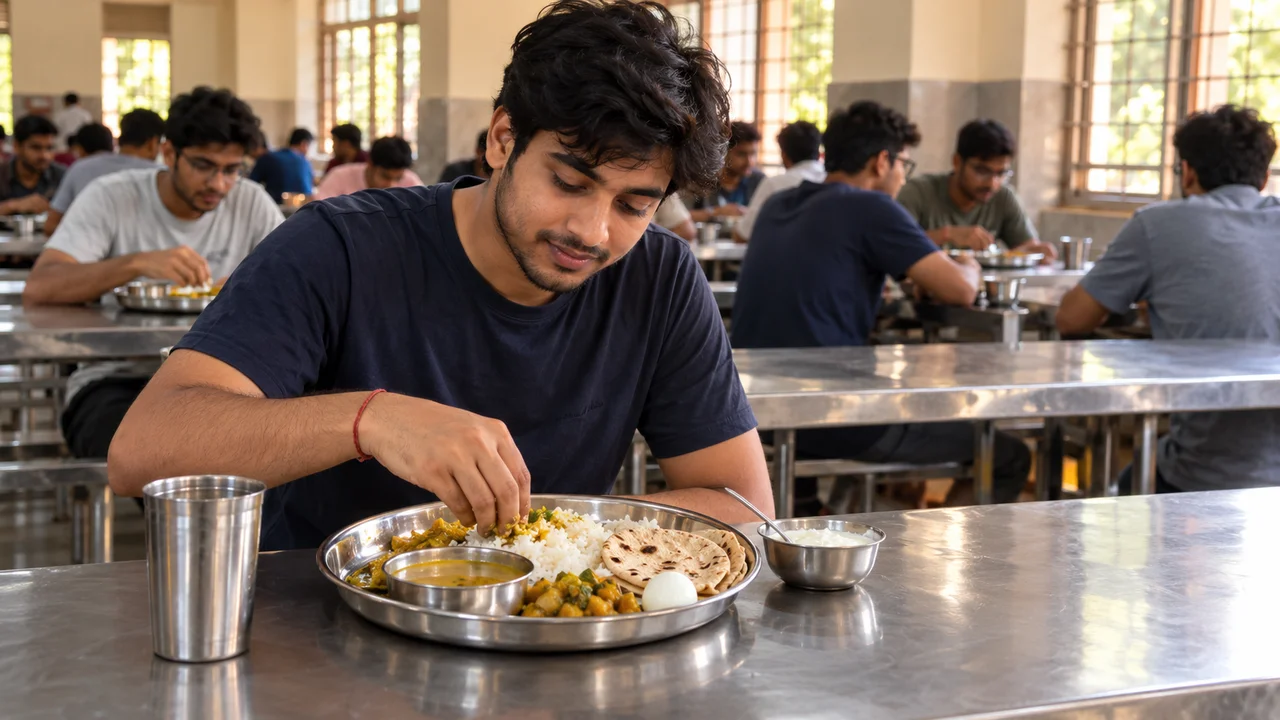
Food is the thing students complain about most and miss from home the most. I know this because every hostel visit I do, every feedback form we read at Hostel360, every late-night message from a first-year student, it always circles back to food. "The dal is watery." "I'm sick of the same paneer every Thursday." "I haven't had a proper home-cooked meal in three months."
I get it. Moving to a new city is hard enough. Doing it on a student budget while trying to eat something that doesn't make you miserable is a whole separate challenge. But here's the thing: you can eat well in a hostel. Not restaurant-well, but genuinely decent food that keeps you healthy, doesn't wreck your budget, and maybe even makes you feel a little less homesick.
This hostel food survival guide is everything I've learned from visiting hostels across India, talking to students, and honestly, from my own hostel days. Let's get into it.
Key Takeaways
- Eat one meal in the mess before you book the hostel. That single plate tells you more than any brochure or review.
- A student who plans lands at ₹3,500 to ₹6,500 a month on food. A student who doesn't plan lands at ₹8,000 to ₹14,000, almost entirely on delivery apps.
- A ₹1,500 to ₹2,500 kettle-and-spices starter kit pays for itself within one month of skipped Swiggy orders.
- Tiffin services cost ₹2,500 to ₹4,500 a month for two meals a day, and a 3-day trial before committing is non-negotiable.
- Eggs, dal, peanuts and bananas cover almost every nutritional gap in mess food for under ₹40 a day. Skip the protein powders.
- Put mess complaints in writing. Verbal complaints vanish, written ones create a trail you can escalate to FSSAI.
1. How to actually evaluate mess food before you move in
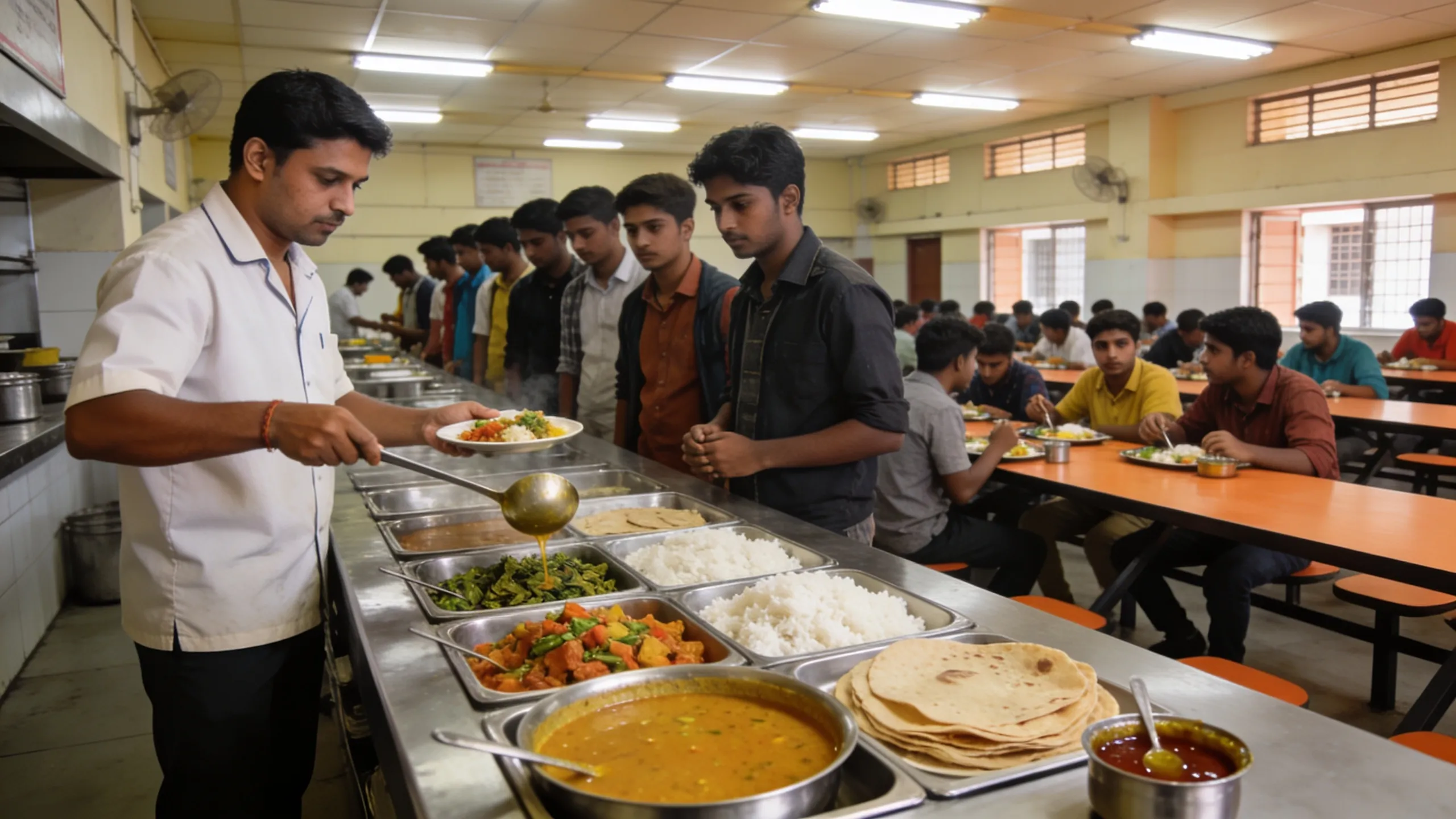
Ask to eat one meal in the mess before you pay anything. Every time I visit a hostel for the first time, that's the first thing I request, and you'd be amazed how much a single plate tells you about the whole operation.
Here's what to look for while you're there:
- Variety in the weekly menu. Ask to see the menu chart on the wall. If it's the same rotation of rajma-chawal and aloo-gobhi with no regional variety, you'll be bored inside two weeks. A good mess rotates 15 to 20 different dishes across a week and changes the menu seasonally.
- The state of the kitchen. Ask if you can look inside. If management refuses, that's a red flag the size of a billboard. Look for covered dustbins, separate chopping boards for veg and non-veg, clean gas burners, and food stored off the floor in covered containers. Cockroaches in the kitchen means cockroaches in your food.
- How the food is served. Self-service from open vats that have been sitting for three hours, or served fresh in batches? Food held lukewarm for hours is nutritionally flat and a stomach bug waiting to happen.
- Talk to current residents, but ask the right question. Don't ask "is the food good," because everyone says "it's okay." Ask "how many times a week do you skip mess and order outside?" If the answer is four or five, you have your answer.
- Check whether feedback goes anywhere. A mess committee, a complaint register that actually gets read, a WhatsApp group where the warden responds. Messes without accountability get worse over time, never better.
- Ask about timings, not just quality. A mess that closes at 8:30 PM is a problem if your classes or lab sessions run till 8. Mismatched timings are the single most common reason students end up ordering in every night.
One pattern I've noticed consistently: hostels with in-house cooks serve better food than those outsourcing to contractors. The in-house team hears the complaints directly at dinner. A contractor is optimising for cost per plate, usually ₹40 to ₹60 of ingredients, not for your taste buds.
Takeaway: if they won't let you eat a meal or see the kitchen before you book, assume the worst and keep looking.
2. The tiffin service option, your best backup plan
A tiffin service costs ₹2,500 to ₹4,500 a month for two meals a day in most Indian cities, and it's the single best fix when your mess is hopeless and cooking isn't allowed. Almost every student neighbourhood in India has aunties and small caterers running monthly dabba services.
What to check before you commit:
- Price and what's included. ₹2,500 to ₹4,500 a month for lunch and dinner is the typical band. Single meals run ₹50 to ₹80. Ask whether roti count is fixed or unlimited, because that's where the cheap plans disappoint.
- Delivery point. Some deliver to your hostel gate, others only to a pickup point 500 metres away. At 9 PM in July, that difference matters.
- Customisation. Can you skip days when you go home? Switch to veg on certain days? Reduce spice? Good services say yes to at least two of these.
- A 3-day trial. Always. Never pay a full month upfront to a service you haven't tasted. Any legitimate operator will agree to this.
- Container hygiene. Steel dabbas beat plastic every time. Look at the condition of the containers when they arrive, and whether they're washed between customers.
The fastest way to find a good one is to ask third-year students. They've already tried and discarded five services before landing on the one that works. In Pune, Hyderabad and Bangalore, apps like Masala Box and Homely plus local WhatsApp groups connect you to home cooks directly. Jaipur has a strong tiffin network too, especially around PGs in Mansarovar, where several services deliver right to the gate.
Takeaway: a tiffin service at ₹3,500 a month is almost always cheaper than the ₹8,000 you'd spend ordering in when the mess disappoints you.
3. Cooking in your hostel room: the electric kettle setup
An electric kettle and about ₹1,800 of basics can genuinely change your food situation, even in a room with no kitchen. I know it sounds implausible. Hear me out.
The starter kit:
| Item | Cost | Why it matters |
|---|---|---|
| Electric kettle, 1.5L wide-mouth steel | ₹700-₹1,500 | Wide mouth means a spoon and sponge fit inside |
| Small cutting board and knife | ₹250-₹400 | Chopping onion on a plate never works |
| Two steel bowls with lids and a long spoon | ₹300-₹450 | Cook in the bowl, not on the heating plate |
| Spice basics: salt, chilli, haldi, chaat masala, jeera | ₹250-₹400 | The entire difference between edible and good |
| Optional: mini induction cooktop and one pan | ₹1,900-₹3,200 | Only if your hostel permits it |
Total for the basics: roughly ₹1,500 to ₹2,500. If it stops you ordering in even eight times, it has already paid for itself.
Five kettle recipes that actually work:
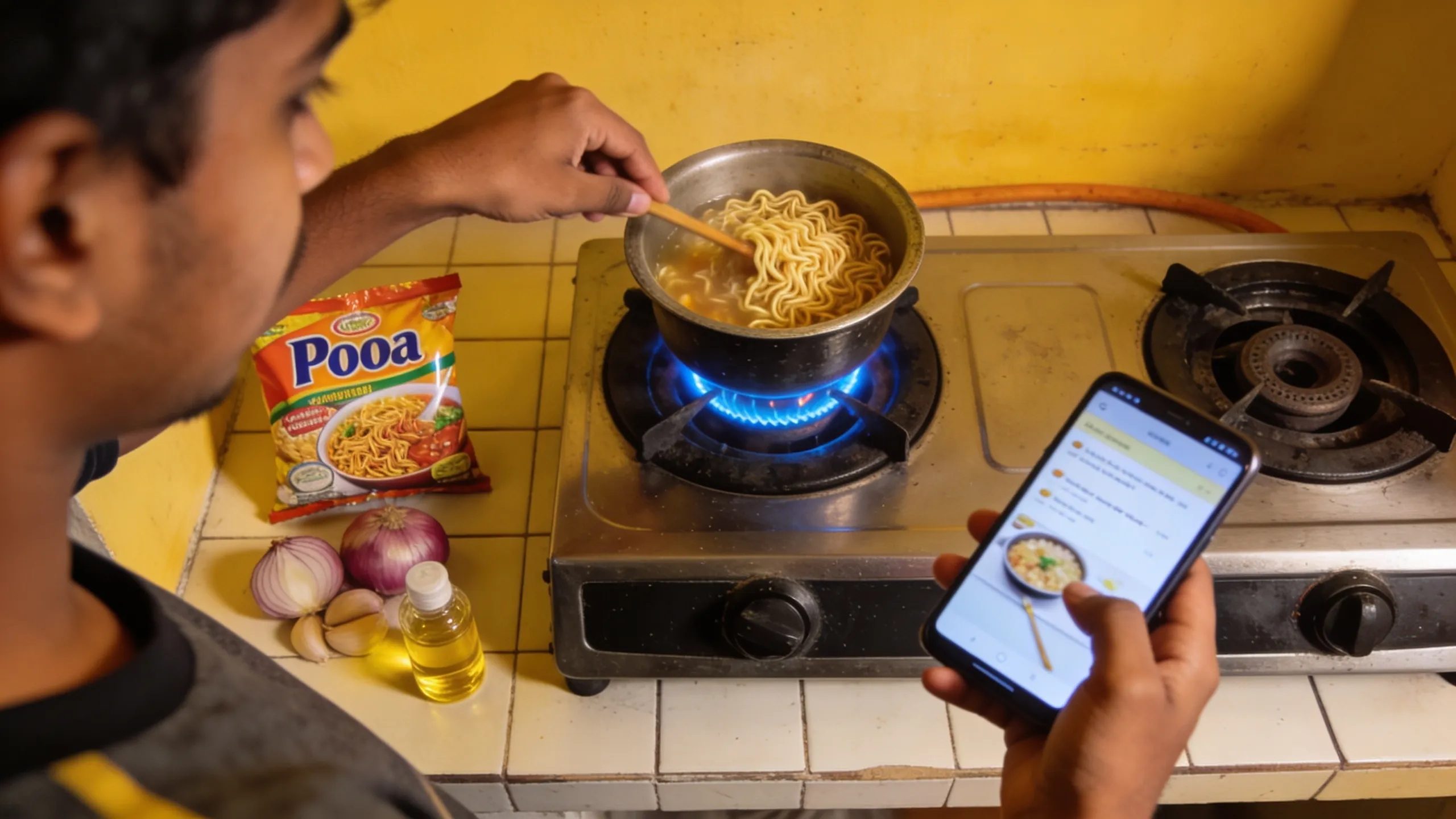
Masala Maggi, about ₹22. Boil water in the kettle, add chopped onion, a few peas, the noodle cake and tastemaker into a heat-safe bowl. Cover for 3 to 4 minutes. Squeeze lemon on top. Seven minutes start to finish.
Poha, about ₹15. Rinse and drain flattened rice, then let it sit 10 minutes. Boil water with a little oil, mustard seeds, turmeric, chopped onion and peanuts. Pour over the poha, cover 2 minutes. Lime and sev to finish. Tastes like a proper morning.
Boiled eggs, about ₹16 for two. Drop 2 to 4 eggs into the kettle with water, boil 10 to 12 minutes, peel, sprinkle chaat masala and black salt. That's 12 to 14 grams of protein for the price of half a samosa, and it's the easiest hostel meal that exists.
Oats upma, about ₹18. Boil water with a spoon of oil, mustard seeds, curry leaves, chopped onion and tomato. Stir in instant oats, cover 2 minutes. Filling, quick and genuinely healthy.
Vegetable soup, about ₹25. Chop whatever you have: tomato, carrot, a handful of spinach. Boil with salt, pepper and a pinch of turmeric for 10 minutes, then mash roughly. Perfect for the 1 AM study sessions in December.
If your hostel allows an induction cooktop, your options open up dramatically: khichdi, dal, fried rice, egg bhurji, basic sabzi. A single induction plate runs ₹1,500 to ₹2,500 and pays for itself within a month. For the full list of what a kettle can and can't do safely, our guide to hostel cooking hacks with an electric kettle has 22 recipes with costs and timings.
Takeaway: check the written appliance policy before you buy anything. A confiscated kettle helps nobody.

4. Street food, and how to eat it without regretting it
You're going to eat street food, so learn to pick the right cart rather than pretending you'll abstain. Some of the best meals in India cost ₹30 to ₹80 and come from a cart with three plastic stools next to it.
Rules I swear by:
- The crowd test. A line of locals means high turnover, and high turnover means the food hasn't been sitting around. An empty stall at 7 PM on a Friday is telling you something.
- Watch the oil. Pitch black and smoking means it's been reused for days. Fresh oil is amber. Walk away from black oil, always.
- Time of day matters. Eat during peak hours, roughly 1 to 2:30 PM and 6:30 to 9 PM. Bacteria counts climb in food that's been out for hours, so late-night stalls are a gamble unless you know them.
- Water and ice are the real villains. Far more students get sick from contaminated water in pani puri, lemon soda or ice in juice than from the actual cooked food. Sealed bottles only, and skip the water-based items from vendors you don't know.
- Cooked beats raw. A hot, freshly fried samosa is almost always safer than pre-cut fruit that's been sitting in open air attracting flies.
- Ease in if the city is new to you. Your stomach needs two to three weeks to adjust to local water and spice levels. Don't go all-in on street biryani on day three in Hyderabad. Build up.
Keep a strip of Norflox-TZ (₹40 to ₹70) and a few ORS sachets (₹20 to ₹25 each) in your drawer. The one time you need them will be 11 PM on a Sunday, and you'll be very glad they're there.
Takeaway: the cart with the queue and the amber oil is nearly always safe. The empty one with black oil nearly always isn't.
5. What hostel food actually costs each month
Plan for ₹3,500 to ₹6,500 a month on food beyond your mess fee if you have any kind of system, and ₹8,000 to ₹14,000 if you don't. Parents ask me constantly how much to send, and the honest answer is that the number depends far less on the city than on whether the student has a plan.
| Eating pattern | Monthly cost | What it looks like day to day |
|---|---|---|
| Mess only | ₹2,500-₹4,500 | All three meals in the mess, occasional chai outside |
| Tiffin service, two meals | ₹2,500-₹4,500 | Dabba lunch and dinner, mess breakfast or skipped |
| Mess plus kettle cooking | ₹3,500-₹5,500 | Own breakfast and snacks, mess for lunch and dinner |
| Mess plus regular eating out | ₹5,500-₹8,000 | Mess most days, 8 to 10 outside meals a month |
| Mostly ordering in | ₹8,000-₹14,000 | 15 to 20 delivery orders a month at ₹150-₹250 each |
See that last row? That's where most students land by month three without a plan. ₹180 here, ₹220 there, a ₹40 delivery fee, and suddenly a third of your monthly allowance is going to apps. Open your UPI history and add up one week of food spending. The number is usually a shock.
The fix isn't discipline, it's friction. If breakfast takes seven minutes in your room and costs ₹18, you won't order a ₹200 sandwich. For a full picture of where the rest of your money goes, our student budget planning guide breaks down every hostel expense.
Takeaway: track one week of food spending honestly. Almost everyone finds ₹2,000 a month they didn't know they were spending.
6. Nutrition on a budget, and what actually matters
You need three things mess food usually doesn't give you: protein, produce and water. You don't need a nutritionist and you don't need supplements unless a doctor says so. You just need to not live on Maggi and biscuits, which is exactly what happens in the first semester.
Protein. Mess food is heavy on carbs (rice, roti, potato) and light on protein. Fix it cheaply: eggs at ₹7 to ₹9 each are the best value protein in India, ask for a second serving of dal at every meal, keep roasted chana and peanuts around at ₹40 to ₹60 for 200g, and keep a jar of peanut butter (₹180 to ₹250 for 340g) in your room. That's 25 to 30 extra grams of protein a day for under ₹40.
Fruits and vegetables. Most students eat almost none. Bananas are the easy win: ₹50 to ₹70 a dozen, available everywhere, no refrigeration needed, and a perfect study snack. Buy whatever fruit is in season, because seasonal is always cheapest. A weekly trip to the local sabzi mandi instead of the supermarket cuts your produce bill by 30 to 50 percent.
Water. This sounds boring, but dehydration is behind a huge share of the "I feel tired and can't focus" complaints I hear. Keep a one-litre bottle on your desk and finish it twice during study hours. Add lemon or a pinch of salt if plain water bores you.
Snacks worth stocking: roasted chana and peanuts (₹40-₹60 for 200g, high protein), bananas (₹5-₹8 each), makhana (₹90-₹130 for 100g), peanut butter and bread (₹250 covers a week of breakfasts), instant oats (₹18-₹25 a sachet), curd from the local dairy (₹35-₹45 for 400g), and a small pack of trail mix (₹200-₹300, ration it across the week).
Skip protein powders and expensive health bars unless you're specifically training for something. Eggs, dal, peanuts and a banana cover your basics at a fraction of the cost.
Takeaway: two eggs and a banana at breakfast fixes most of what's wrong with a mess-only diet, for about ₹25 a day.
7. Adjusting to regional food, the part nobody warns you about
Give yourself three to four weeks before you decide the local food is bad. A student from Ludhiana landing in Chennai is going to have a rough fortnight, and so is a Coimbatore student landing in Delhi. Spice levels, rice-versus-roti ratios, cooking oils (coconut in Kerala, mustard in Bengal, groundnut in Gujarat) all register in your stomach before they register in your head.
And nothing hits harder than missing the specific sambar your mother makes, or the pickle that went with everything at home.
What actually helps:
- Get a courier from home. Pickles, masalas, dry snacks. A jar of homemade achaar transforms bland mess dal, and it costs nothing but postage.
- Find the students from your region. There's always a group, and they already know the closest thing to home food within two kilometres.
- Learn to cook one comfort dish. One dish from home, made once a week on your kettle or induction plate, does more for your mood than any amount of Swiggy.
- Pick an area with a mixed student crowd. Regional grocery shops and tiffin cooks cluster where students from many states live, the way they do around Jagatpura in Jaipur. That's a genuine factor worth weighing when you choose a locality.
Takeaway: the sambar that tasted strange in week one will taste normal by week four. Give your palate the time it needs.
8. Exam season eating, when habits fall apart
During exams, food habits go off the rails in a predictable pattern: skipped meals, chai and biscuits as a meal replacement, junk food at 2 AM, and then no focus during the paper at 9 AM.
Four simple rules hold it together:
- Never skip breakfast, even if it's just two bananas and a glass of milk. Blood sugar crashes at 11 AM are self-inflicted.
- Stock your snacks before the study marathon starts, not at midnight when your only option is a delivery app.
- Cap tea and coffee at three cups a day. Beyond that you're borrowing sleep you'll need before the exam.
- Eat light at night. Khichdi beats midnight parathas when you have to be functional at 6 AM.
Takeaway: buy your exam-week snacks on the weekend before. That one decision prevents most of the damage.

9. When mess food stops being an annoyance and becomes a hazard
Put it in writing the moment it crosses from bad to unsafe. Some mess problems are just irritating. Others are health issues, and the line is clearer than people think.
Escalate if you find insects or foreign objects in the food, if several residents fall ill after the same meal, if expired ingredients are in use, or if the kitchen is visibly unhygienic. In those cases:
- Document it with photos, timestamped, before anything gets cleared away.
- File a written complaint. Email, WhatsApp message, or an entry in the complaint register with your signature and the date. Verbal complaints disappear. Written ones create a trail.
- Get other residents to file too. One complaint is a fussy student. Eight complaints is a problem management has to answer for.
- Escalate to FSSAI (the Food Safety and Standards Authority of India) through their online portal if the hostel keeps ignoring you. Attach your photos and your complaint history.
I've seen hostels improve dramatically after two or three written complaints. Management responds to paper trails in a way they never respond to grumbling in the dining hall.
Takeaway: photograph first, complain in writing second, escalate third. In that order.
Your first month food plan
If I were moving into a hostel tomorrow, this is exactly how I'd sequence it:
- Week 1: Eat only mess food. Give it an honest try, note which days are good, and ask seniors which meals to skip.
- Week 2: Buy the ₹1,800 kettle and spice kit. Stock your mini-pantry and start making your own breakfast.
- Week 3: Trial two or three tiffin services. Identify two street food vendors you trust near campus.
- Week 4: Settle into the routine and track every rupee you spend on food. That number becomes your real monthly budget.
The goal isn't perfection. It's having enough options that you're never stuck eating something you hate or spending money you don't have.
Looking for a hostel where food is actually taken seriously? Find hostels with great mess food on Hostel360. We list meal details, kitchen photos and real student reviews, so you know what you're signing up for before you pay a deposit.