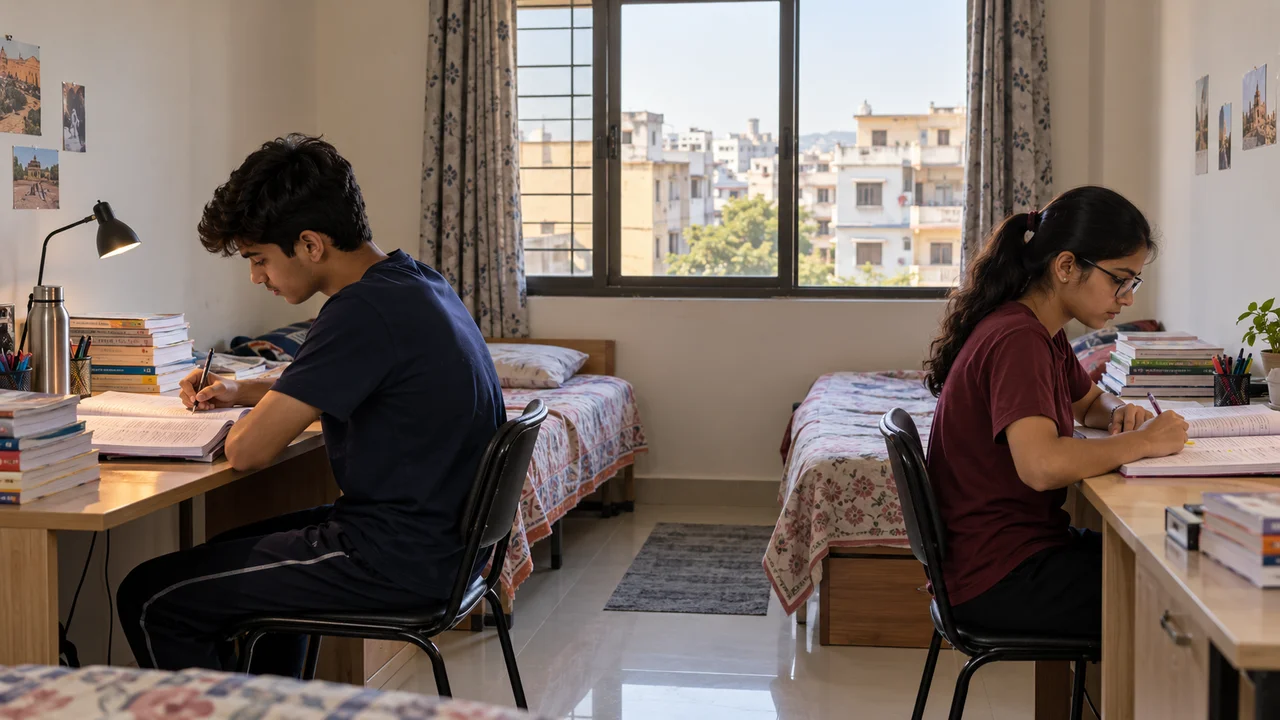
You can handle coaching pressure in Kota by keeping a steady daily routine, staying connected to people you trust and asking for help early instead of waiting for things to get worse. If stress ever feels too heavy to carry, call Tele-MANAS on 14416 or 1800-89-14416 and talk to a trained counsellor. Pressure during NEET or JEE preparation is common, and feeling low, anxious or stuck doesn't mean you're weak or failing. It means you're human and carrying a lot.
This guide is for students and parents. It covers where to find support in Kota, what the rules say about class hours and refunds, how to build a routine that protects your sleep and sanity, and what to look for in a hostel. If you haven't arrived yet, our guide to moving to Kota for coaching covers the practical setup first.
Key Takeaways
- Save Tele-MANAS (14416 or 1800-89-14416) in your phone today. It covers exam stress and you don't need to be in crisis to call.
- Central guidelines from 2024 cap coaching classes at 5 hours a day and expect centres to provide counsellors.
- Sleep, meals and one daily break do more for your scores than an extra hour of late-night revision.
- Under Kota's local reforms, hostels are expected to train staff in student support and run night room checks, so ask about these before you book.
- Leaving a course is allowed: central guidelines provide for a pro-rata refund within 10 days, including hostel and mess fees.

Where to Get Help in Kota Right Now
The fastest help is a phone call to Tele-MANAS on 14416 or 1800-89-14416. It's the national tele mental health programme, and its listing on the Karnataka Health Department's Tele-MANAS page includes exam stress among the concerns it handles. You don't need a diagnosis or a "big enough" problem to call.
If you're having thoughts of harming yourself, please don't wait. Call Tele-MANAS now, tell your warden or a friend nearby, or go to the nearest hospital emergency department. Those feelings can pass, and people who've felt this way have come through it with support.
| Support | How to reach it | What to know |
|---|---|---|
| Tele-MANAS | 14416 or 1800-89-14416 | National helpline; covers exam stress |
| Kota Police Student Cell | 9530442778 | Number reported by Telangana Today in 2023; confirm locally |
| Coaching centre counsellor | Ask at your centre's front office | Central guidelines expect centres to provide counsellors |
| Hostel warden | In person, any time | Kota hostel staff are expected to have gatekeeper training |
| Arrival help desks | Kota railway station and bus stand | Set up under the "Kota Cares" initiative |
Rajasthan's coaching law also provides for a 24x7 counselling helpline, according to Careers360. The bill was passed by the Assembly in September 2025, so check its current status and the helpline's details with the district administration.
Before You Begin: Notice the Early Signs
Stress is easier to handle when you catch it early, so learn your own warning signs. Everyone's look a little different, but these are common ones to watch for in yourself or a roommate:
- Sleeping much less or much more than usual
- Skipping meals or eating only junk late at night
- Avoiding friends, calls home or the mess
- Feeling hopeless after every test, or comparing yourself to toppers all day
- Saying things like "nothing will change" or "everyone would be better off without me"
That last one is serious. If you hear it from a friend, stay with them, listen without judging and help them call Tele-MANAS on 14416. Tell the warden too. Asking someone directly whether they're okay won't make things worse; it shows them someone noticed.
Step 1: Know Your Rights on Class Hours and Breaks
By the end of this step, you'll know the limits your coaching centre is expected to follow. Many students assume 10-hour coaching days are normal. Under the rules, they aren't.
- Check the daily cap. The Ministry of Education's Guidelines for Regulation of Coaching Centres 2024 limit classes to 5 hours a day.
- Look for a weekly off. The Select Committee version of the Rajasthan bill, summarised by PRS Legislative Research, also caps classes at 5 hours a day and adds a weekly off.
- Raise it if your schedule breaks these limits. The same bill sets up District Committees chaired by the District Magistrate, which is the right place to ask about compliance.
You'll know this step worked when you can look at your timetable and say whether it fits the rules. A weekly off is time to rest, not a catch-up day for backlogs.
Step 2: Build a Routine That Protects Sleep and Meals
By the end of this step, you'll have a simple daily plan with fixed anchors for sleep, food and a break. A routine takes decisions off your plate, which leaves more energy for studying.
- Fix your sleep and wake times first, and build everything else around them. Late-night cramming tends to cost more the next morning than it gives.
- Eat at the mess at set times, even on test days. Skipped meals make focus and mood harder to manage.
- Schedule one non-study break daily: a walk, a call home, music or a game with friends.
- Split self-study into blocks with short pauses rather than one long stretch.
- Keep one evening a week light, ideally on your weekly off.
Check yourself after a week. If you're waking up tired most days, move bedtime earlier before you add any study hours.
Step 3: Pick a Hostel That Looks After Students
By the end of this step, you'll have a checklist of support features to ask any Kota hostel about. Where you live shapes how lonely or supported you feel, so it matters as much as distance from your coaching campus.
Under the "Kota Cares" initiative launched in December 2024, ThePrint reported that the administration expects hostels to:
- Get staff certified in gatekeeper training, so they can spot a student in distress and connect them to help
- Run night room checks
- Appoint female wardens for girls' hostels
- Install CCTV and biometrics and hold a fire NOC
- Not charge a security deposit or caution money, with annual maintenance capped at Rs 2,000
Ask the owner or warden about each one, and ask who you'd call at night if you felt unwell. Money worries add to stress, so get a clear breakdown of rent, mess, electricity and laundry before you pay. Our explainer on hostel charges in Kota lists the components and the questions to ask.
Step 4: Stay Connected and Keep Money Stress Low
By the end of this step, you'll have a small support circle and a budget that doesn't keep you up at night. Isolation and money anxiety feed each other, and both are fixable.
- Set a regular call time with family, and agree that some calls won't be about marks.
- Make one or two friends in your hostel or batch you can eat with or walk with.
- Track spending weekly. A plan for Kota student monthly expenses helps you avoid the end-of-month panic.
- Know your exit option. If coaching isn't working, central guidelines reported by Business Today provide for a pro-rata refund within 10 days, including hostel and mess fees.
You'll know this step is working when there's at least one person in Kota you'd text on a bad day.
Step 5: Talk to Someone Before a Bad Week Becomes a Bad Month
By the end of this step, you'll have spoken to a counsellor or helpline at least once, even if things feel okay. Making the first call when you're calm makes the next one much easier.
- Find out who your coaching centre's counsellor is and when they're available.
- Save Tele-MANAS (14416 and 1800-89-14416) and, after confirming it locally, the Kota Police Student Cell number in your phone.
- Book a session after a tough test result rather than sitting alone with it.
- Tell one trusted person what you've decided, so they can check in.
Step 6: Make a Plan for Test Days and Low Days
By the end of this step, you'll have a short written plan for the days that hit hardest. Weekly test results and rank lists are where pressure often spikes.
- Write down three things that calm you, such as a walk, a call or a favourite song.
- Write the names and numbers of two people you can reach.
- Add Tele-MANAS: 14416 or 1800-89-14416.
- Remind yourself that one test is one data point, and plenty of students change direction and do well.
Keep the plan on your phone and on paper near your desk.
Common Mistakes to Avoid
The most common mistake is waiting until things feel unbearable before telling anyone. Here are others worth avoiding.
- Treating sleep as optional. It feels like lost study time, but tired revision sticks less. Protect your sleep window first.
- Hiding marks from parents. Fear of disappointing them builds quietly. Share results early and talk about the plan, not just the number.
- Thinking you have to stay no matter what. Switching batches, taking a break or going home are valid choices, and refund rules exist for them.
- Brushing off a friend who seems withdrawn. A simple "are you okay?" and a nudge towards 14416 can matter a lot.
What Success Looks Like
If this is working, you're sleeping at regular times, eating properly and have at least one person and one helpline you'd contact on a hard day. Scores will still go up and down. The difference is that a bad week no longer knocks you flat. As a stretch goal, check in on one batchmate each week; looking out for each other is one of the best protections a hostel floor can have.
Bottom Line
Coaching pressure in Kota is real, but it doesn't have to run your life. Keep your class hours within the rules, protect sleep and meals, live somewhere with trained and caring staff, and talk to someone early. Save 14416 now, share it with your roommate, and use it whenever you need to. Your health matters more than any rank.
Where a student lives shapes how much day-to-day support they get, which is why PG or Hostel in Kota: Which Suits a Coaching Student? and the Kota Hostel Checklist for Parents: What to Verify Before Paying are worth reading alongside this one.